Summary | Excerpt | Reviews | Readalikes | Genres & Themes | Author Bio
Critics' Opinion:
Readers' Opinion:
First Published:
Sep 2008, 800 pages
Paperback:
Sep 2009, 800 pages

In the end, the Anglo-Virginians introduced a form of chattel slavery unknown
in their home country—a system of bondage based upon race. This was indeed a
brave new world. Proceeding on an ad hoc basis, the colonists put together rules
and customs to accommodate the new society taking shape. There was no direct
precedent from their home country for doing what they did; in fact, it required
them to break rather quickly with one important long-held tradition and
understanding that they had carried with them across the Atlantic Ocean. That
fateful deviation from English tradition—one that would set the course of
Elizabeth Hemings's life and the lives of her descendants—was the Virginia
colonists' decision to abandon the English tradition that determined a person's
status by the status of the father. In England you "were" what your father
"was." A person could be born free or as a member of a group of "unfree" people
who existed during various points in English history—for example, a villein
(serf) attached to the land of a lord or to the lord himself. Inventing the
rules of slavery, in 1662, Virginians decided to adopt the Roman rule partus
sequitur ventrem, which says that you were what your mother was. This
important departure from tradition had enormous consequences for the progress of
slavery and the mapping of Virginia's racial landscape. Why take this route?
Although the preamble to the legislation states the impetus for the law—"doubts
have arisen whether children got by an Englishman upon a Negro woman should be
slave or ffree"—there is no language explaining exactly why, in the context of
Virginian colonial society, the ways of ancient Rome should emerge as superior
to the more readily available and familiar English tradition. There are some
reasonable speculations.
One way to think about it is to imagine what might have been the course of
slavery in Virginia had the colonists followed their English tradition. White
men, particularly the ones who made up the House of Burgesses, the legislature
in colonial Virginia, were the masters of growing numbers of African women,
owning not only their labor but their very bodies. That these women sometimes
would be used for sex as well as work must have occurred to the burgesses.
Inevitably offspring would arise from some of these unions. Even white males who
owned no slaves could contribute to the problem by producing, with enslaved
black women, children who would be born free, thus destroying a critical
component of the master's property right: the ability to capture the value of
the "increase" when female slaves gave birth.
That exact situation was at issue in 1655, when a mulatto woman, Elizabeth
Key, who later married her lawyer, successfully sued for her freedom on the
basis of the fact that her father was English. This case, and probably others
that never made it to court but would have been part of the social knowledge of
the community, caught the burgesses' attention, and they acted to close this
possible escape route out of slavery for one potentially large category of
people of African origin: the children of white fathers and enslaved mothers.
The law passed in the wake of Key's case actually had two components—the new
rule determining status through the mother and a provision for doubling the fine
for mixed-race couples who engaged in sex over those levied against unmarried
same-race couples. The historian Warren M. Billings, who was the first to do
extensive work on the case, saw the law as a strong anti-race-mixing measure.
"Writing a seldom used civil law doctrine, partus sequitur ventrem,
into the statute indicates the depth of the lawmakers' desire to prevent
miscegenation." While the double fine reflects a wish to discourage mixed-race
sex, the same cannot be said for partus sequitur ventrem. The doctrine
assured that white men—particularly the privileged ones who passed the law, who
would not likely have been haled into court for fornication even with white
women—could have sex with enslaved women, produce children who were items of
capital, and never have to worry about losing their property rights in them.
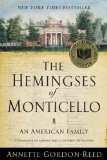
Excerpted from The Hemingses of Monticello © Copyright 2008 by Annette Gordon-Reed. Reprinted with permission by W. W. Norton. All rights reserved.


The Flower Sisters
by Michelle Collins Anderson
From the new Fannie Flagg of the Ozarks, a richly-woven story of family, forgiveness, and reinvention.
The House on Biscayne Bay
by Chanel Cleeton
As death stalks a gothic mansion in Miami, the lives of two women intertwine as the past and present collide.

The Funeral Cryer by Wenyan Lu
Debut novelist Wenyan Lu brings us this witty yet profound story about one woman's midlife reawakening in contemporary rural China.
Your guide toexceptional books
BookBrowse seeks out and recommends the best in contemporary fiction and nonfiction—books that not only engage and entertain but also deepen our understanding of ourselves and the world around us.