Summary | Excerpt | Reviews | Readalikes | Genres & Themes | Author Bio
Critics' Opinion:
Readers' Opinion:
First Published:
Sep 2008, 800 pages
Paperback:
Sep 2009, 800 pages

In the end the physical differences—skin color, facial features, and hair
type—between Africans and English people in Virginia helped create and maintain
a critical dividing line. What the Africans "did" became less important than
what they "were" as signaled by their physical appearance. Even if Africans
chose to adopt the mores of the English, they could never overcome the powerful
view that the differences between the groups were elemental and largely
insurmountable. As a result, the lowliest indentured white servants could be,
and were, encouraged to identify with their white masters while distancing
themselves from the blacks with whom they worked.
Some historians have seen early examples of cooperation between Africans and
white indentured servants in the seventeenth century as evidence that racial
prejudice was a creature of slavery and argue that the institution taught white
colonists to look down upon black people. They also suggest that the colonists'
willingness to allow some of the early Africans to be freemen while others were
enslaved for life reveals a degree of flexibility in race relations, and that
flexibility suggests racial attitudes had not been firmly set. Highlighting
the variable experiences of the earliest blacks in Virginia is much less useful
than keying in on the one constant in the lives of whites from Jamestown to
Appomattox: they were never to be designated as chattel who passed their
condition down to their children, and their children's children, in perpetuity.
Significantly, this distinction between black and white was drawn well before
Virginia became bound to slavery as the economic foundation of its society.
And why wouldn't it have been? The Virginia colonists did not exist in a
vacuum. They were travelers in the Atlantic world of which slavery was so much a
part. Who Africans were, and how they had been used in that world for centuries,
was well known to them. Long before the English got involved, the Portuguese had
enslaved Africans, as had the Spanish. Englishmen certainly heard tales of the
Arabs' enslavement of Africans that began centuries before Europeans even
thought of the notion. The ease and swiftness with which blacks were written out
of the social compact indicates that notions of essential difference and
inferiority took hold very early on in the Virginia experiment. As more Africans
arrived and the commitment to the economic system of slavery grew deeper, the
perceived differences between whites and blacks provided a workable excuse for
widening the social gap between indentured white servants and blacks, until that
gap became a yawning chasm.
Religion played a role in the process as well. The English colonists, of
course, were Christians. Some Africans had converted to Christianity even before
their arrival in the New World, but the overwhelming majority of them had not.
They had their own religious traditions, and whether those traditions were
animist or Islamic, those who adhered to them were, in the eyes of the English,
"heathens." At first, this difference was offered to explain why Africans alone
were eligible for chattel slavery. Christianity is an evangelical religion of
faith, not blood, and carries in its very heart the expectation that multitudes
will become Christian through the ritual of baptism. The question arose, "What
happens when an African heathen becomes a Christian?" Shouldn't that wipe away
the stain of slavery? Some masters who wanted to free their slaves thought so,
and for a time their actions appeared to threaten—albeit in a minor way—the
stability of the institution. The Church of England shut down that avenue of
emancipation when it confirmed that baptism of a slave into the Christian faith
did not require the emancipation of that slave, an understanding that Virginia
codified in law. Christians could, in good conscience, hold other Christians in
bondage.
Excerpted from The Hemingses of Monticello © Copyright 2008 by Annette Gordon-Reed. Reprinted with permission by W. W. Norton. All rights reserved.


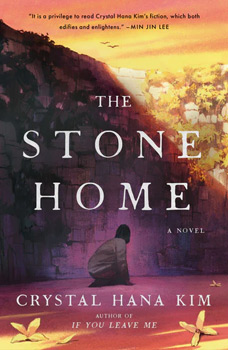
The Stone Home
by Crystal Hana Kim
A moving family drama and coming-of-age story revealing a dark corner of South Korean history.
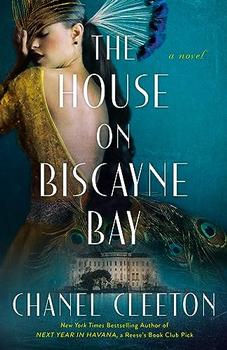
The House on Biscayne Bay
by Chanel Cleeton
As death stalks a gothic mansion in Miami, the lives of two women intertwine as the past and present collide.
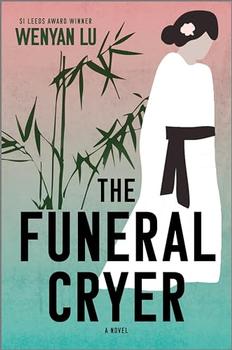
The Funeral Cryer by Wenyan Lu
Debut novelist Wenyan Lu brings us this witty yet profound story about one woman's midlife reawakening in contemporary rural China.
Your guide toexceptional books
BookBrowse seeks out and recommends the best in contemporary fiction and nonfiction—books that not only engage and entertain but also deepen our understanding of ourselves and the world around us.