Summary | Excerpt | Reviews | Beyond the Book | Readalikes | Genres & Themes | Author Bio
Critics' Opinion:
Readers' Opinion:
First Published:
Feb 2009, 352 pages
Paperback:
Jan 2010, 416 pages
 Book Reviewed by:
Amy Reading
Buy This Book

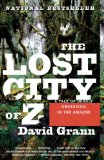
Fawcett pushed forward with his gear. His trunks were loaded with guns, canned food, powdered milk, flares, and handcrafted machetes. He also carried a kit of surveying instruments: a sextant and a chronometer for determining latitude and longitude, an aneroid for measuring atmospheric pressure, and a glycerin compass that could fit in his pocket. Fawcett had chosen each item based on years of experience; even the clothes he had packed were made of lightweight, tear-proof gabardine. He had seen men die from the most innocuous seeming oversight-a torn net, a boot that was too tight.
Fawcett was setting out into the Amazon, a wilderness nearly the size of the continental United States, to make what he called "the great discovery of the century"-a lost civilization. By then, most of the world had been explored, its veil of enchantment lifted, but the Amazon remained as mysterious as the dark side of the moon. As Sir John Scott Keltie, the former secretary of the Royal Geographical Society and one of the world's most acclaimed geographers at the time, noted, "What is there no one knows."
Ever since Francisco de Orellana and his army of Spanish conquistadores descended the Amazon River, in 1542, perhaps no place on the planet had so ignited the imagination-or lured men to their death. Gaspar de Carvajal, a Dominican friar who accompanied Orellana, described woman warriors in the jungle who resembled the mythical Greek Amazons. Half a century later, Sir Walter Raleigh spoke of Indians with "their eyes in their shoulders, and their mouths in the middle of their breasts" - a legend that Shakespeare wove into Othello:
Of the Cannibals that each other eat,
The Anthropophagi and men whose heads
Do grow beneath their shoulders.
What was true about the region-serpents as long as trees, rodents the size of pigs-was sufficiently beyond belief that no embellishment seemed too fanciful. And the most entrancing vision of all was of El Dorado. Raleigh claimed that the kingdom, which the conquistadores had heard about from Indians, was so plentiful in gold that its inhabitants ground the metal into powder and blew it "thorow hollow canes upon their naked bodies untill they be al shining from the foote to the head."
Yet each expedition that had tried to find El Dorado ended in disaster. Carvajal, whose party had been searching for the kingdom, wrote in his diary, "We reached a [state of] privation so great that we were eating nothing but leather, belts and soles of shoes, cooked with certain herbs, with the result that so great was our weakness that we could not remain standing." Some four thousand men died during that expedition alone, of starvation and disease, and at the hands of Indians defending their territory with arrows dipped in poison. Other El Dorado parties resorted to cannibalism. Many explorers went mad. In 1561, Lope de Aguirre led his men on a murderous rampage, screaming, "Does God think that, because it is raining, I am not going to destroy the world?" Aguirre even stabbed his own child, whispering, "Commend thyself to God, my daughter, for I am about to kill thee." Before the Spanish crown sent forces to stop him, Aguirre warned in a letter, "I swear to you, King, on my word as a Christian, that if a hundred thousand men came, none would escape. For the reports are false: there is nothing on that river but despair." Aguirre's companions finally rose up and killed him; his body was quartered, and Spanish authorities displayed the head of the "Wrath of God" in a steel cage. Still, for three centuries, expeditions continued to search, until, after a toll of death and suffering worthy of Joseph Conrad, most archeologists had concluded that El Dorado was no more than a delusion.
Fawcett, however, was certain that the Amazon contained a fabulous kingdom, and he was not another soldier of fortune or a crackpot. A man of science, he had spent years gathering evidence to prove his case-digging up artifacts, studying petroglyphs, and interviewing tribes. And after fierce battles with skeptics Fawcett had received funding from the most respected scientific institutions, including the Royal Geographical Society, the American Geographical Society, and the Museum of the American Indian. Newspapers were proclaiming that Fawcett would soon startle the world. The Atlanta Constitution declared, "It is perhaps the most hazardous and certainly the most spectacular adventure of the kind ever undertaken by a reputable scientist with the backing of conservative scientific bodies."
Excerpted from The Lost City of Z by David Grann Copyright © 2009 by David Grann. Excerpted by permission of Doubleday, a division of Random House, Inc. All rights reserved. No part of this excerpt may be reproduced or reprinted without permission in writing from the publisher.




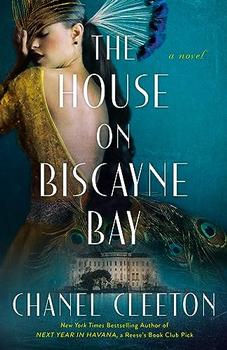
The House on Biscayne Bay
by Chanel Cleeton
As death stalks a gothic mansion in Miami, the lives of two women intertwine as the past and present collide.

The Flower Sisters
by Michelle Collins Anderson
From the new Fannie Flagg of the Ozarks, a richly-woven story of family, forgiveness, and reinvention.

The Funeral Cryer by Wenyan Lu
Debut novelist Wenyan Lu brings us this witty yet profound story about one woman's midlife reawakening in contemporary rural China.
Your guide toexceptional books
BookBrowse seeks out and recommends the best in contemporary fiction and nonfiction—books that not only engage and entertain but also deepen our understanding of ourselves and the world around us.