Summary | Excerpt | Reviews | Beyond the Book | Readalikes | Genres & Themes | Author Bio

 Book Reviewed by:
Beth Hemke Shapiro
Buy This Book

"But those were tough times for me. By the time I gave my mother money out of my small pay envelope at the end of the week, for my room and board, and then some more for the household expenses, there was not much left over. My hearing brother and sisters did not have steady work. My mother and father were the janitors of our building, so they had little ready cash. It broke my heart to see my mother on her hands and knees, shuffling up and down the hallways, washing the wooden floors with hot, soapy water she dragged along behind her in a big wooden bucket. Her hands were always red and raw. To this day I can't get the memory of her chafed hands out of my mind. When I finally got my union card and made good union wages, I could give her enough money every month so she didn't have to do that anymore. You can't
imagine how proud I was that I, her deaf son, could do that for her."
As an apprentice, he explained to me, he worked the night shift. It was known as the
"lobster shift," for no reason that he was ever able to explain to me. As a boy, I reasoned that since he worked nights while everyone else was asleep, including fish in the ocean, it must be that lobsters were awake during those hours, and so the name.
Being a printer was the only job my father ever had, and he loved it. He would work for the newspaper until he retired over forty years later. In all that time he worked side by side with hearing co-workers, but he never really knew them. Like most in the hearing world, they treated him as if he were an alien—primitive, incapable of speech, and lacking human thought: a person to be avoided if possible, and if not, ignored.
After an apprenticeship of many years, my father was issued a union card. It was the proudest moment of his life. It was tangible proof that he was as good as any hearing man. Even in the dark days of the Depression, when one out of four men were out of work, he, a deaf man, could support himself.
And, he reasoned, he could also support a wife. My father was tired of being alone in this hearing world. It was time, he thought, to create his own silent world. A world that would begin with a deaf wife.
One bleak winter day, while we were sitting at the kitchen table, the rain sleeting against the windows of our Brooklyn apartment, his hands told me the rest of his story, in which began my story:
"Sarah was a young girl. She had many friends. She liked to have fun."
"I first noticed her at the beach in Coney Island. She was always laughing.
"All the deaf boys were crazy about Sarah. Even the hearing boys."
"There were many handsome boys on the beach. All the young boys had muscles and chocolate tans. They could jump and leap over each other's back. They could do handstands."
"I was older. I didn't have muscles. I couldn't stand on my hands if my life depended on it. I didn't have a brown tan. I would get sunburned. My skin turned red. And then I would peel."
"It didn't matter. The handsome young boys with their chocolate skin and big muscles only wanted to have fun with Sarah. They were not serious boys. They had no jobs. So they had plenty of time to play, and make muscles, and get brown skin from the sun."
"I was a serious man. I had a job. A good job. The best job. I was no longer an apprentice printer. I had a union card, just like the hearing workers."
"I didn't want Sarah just to have fun. I wanted a wife for all time. I wanted a mother for my children. I wanted a partner forever. We would be two deaf people in the hearing world. We would make our own world. A quiet world. A silent world."
"We would be strong together, and strong for our children."
Then, just as the rain stopped and thin rays of sunlight striped the tabletop, my father smiled to himself, his hands thinking . . .
"Maybe we would have a little fun before the children came." Lost in reverie, his hands, bathed in golden light, now lay silent on the kitchen table. Time passed. I sat and watched his still hands, waiting patiently for them to continue his story. I loved the quiet time we spent together, and I loved the stories his hands contained.
Excerpted from Hands of My Father by Myron Uhlberg Copyright © 2008 by Myron Uhlberg. Excerpted by permission of Bantam, a division of Random House, Inc. All rights reserved. No part of this excerpt may be reproduced or reprinted without permission in writing from the publisher.






The Flower Sisters
by Michelle Collins Anderson
From the new Fannie Flagg of the Ozarks, a richly-woven story of family, forgiveness, and reinvention.
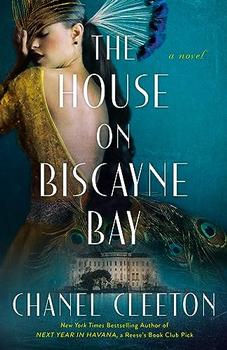
The House on Biscayne Bay
by Chanel Cleeton
As death stalks a gothic mansion in Miami, the lives of two women intertwine as the past and present collide.

The Funeral Cryer by Wenyan Lu
Debut novelist Wenyan Lu brings us this witty yet profound story about one woman's midlife reawakening in contemporary rural China.
Your guide toexceptional books
BookBrowse seeks out and recommends the best in contemporary fiction and nonfiction—books that not only engage and entertain but also deepen our understanding of ourselves and the world around us.