Summary | Excerpt | Reviews | Beyond the Book | Readalikes | Genres & Themes | Author Bio
Critics' Opinion:
Readers' Opinion:
First Published:
Oct 2008, 304 pages
Paperback:
Jul 2009, 304 pages
 Book Reviewed by:
Beth Hemke Shapiro
Buy This Book

Excerpt
The Big Necessity
Of all the peoples of the world, the Chinese are probably the most at home with their excrement. They know its value. For 4,000 years they have used raw human feces to fertilize fields. China's use of "night soil," as the Chinese rightly call a manure that is collected after dark, is probably the reason that its soils are still healthy after four millennia of intensive agriculture, while other great civilizations—the Maya, for one—floundered when their soils turned to dust.
Sanitation professionals sometimes divide the world into fecal-phobic and fecal-philiac cultures. India is the former (though only when the dung is not from cows); China is definitely and blithely the latter. Nor is the place of excrement confined to the fields. It has featured prominently in Chinese public life and literature for at least a thousand years.
In the Communist era, excrement took on political importance, because Party policy decided excrement was essential for the Great Agricultural Leap Forward. Andrew Morris, a historian at California Polytechnic, relates the story of night-soil carrier Shi Chuanxiang, who in 1959 was a star speaker at the Communist Party's National Conference of Heroes. Shi Chuanxiang worked for the exploitative gangs who controlled Beijing's night-soil collection. Customers showed their appreciation for his work by calling him "Mr. Shitman" or "Stinky Shit Egg."
These days, this national interest takes the form of serious investment into an unusual alternative fuel. Along with all the other stunning statistics China can provide, it can also claim to be the world leader in making energy from human excrement.
Biogas, as this energy is known, can be produced from the fermentation of any organic material, from wood to vegetables to human excreta. In an oxygen-free digester, which acts somewhat like a human stomach, micro-organisms break down the material into sugar and acids, which then become gas. Mostly methane, with carbon dioxide and a little hydrogen sulfide, biogas can be used as fuel for cooking hobs, lights, and, sometimes, showers. It can also be converted into electricity. The slurry that remains from the digestion process is good fertilizer and considerably safer than raw excrement.
At last count, if official figures are reliable, 15.4 million rural households in China are connecting their toilets to a biogas digester, switching on their stoves a few hours later and cooking with the proceeds. India has installed several million digesters, though they run on cow dung, and there are only so many cows. China has a billion humans, and that means a billion suppliers of a cheap and inexhaustible supply of clean energy.
Perched on a bed in her office in Xi'an, Wang Ming Ying explains why she was convinced enough by biogas to change her life. A tiny woman fizzing with energy, she now runs the Shaanxi Mothers environmental association. For her, it began with the trees. As an official in a government propaganda office, she was sent to the UN women's conference in Beijing in 1995, and it changed her life. "I saw," she tells me, "how the poverty of women is directly related to the deterioration of the environment." Poor rural women try to clear more land for crops by cutting down forests. This brought on soil erosion, so more forest was cleared for new crop land. It was a vicious cycle that no one knew how to escape.
Wang Ming Ying set off to northern Shaanxi province "to see what was going on." She found hillsides empty of trees and farmers devoid of hope. "I thought that if a woman has education or not, we can do environmental protection together." She decided to form an organisation of women. Mothers, actually. "Mothers are key: they can influence the family."
Excerpted from The Big Necessity by Rose George. Copyright © 2008 by Rose George. Excerpted by permission of Metropolitan Books, a division of Macmillan. All rights reserved. No part of this excerpt may be reproduced or reprinted without permission in writing from the publisher.




The Flower Sisters
by Michelle Collins Anderson
From the new Fannie Flagg of the Ozarks, a richly-woven story of family, forgiveness, and reinvention.
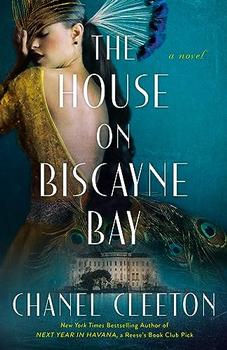
The House on Biscayne Bay
by Chanel Cleeton
As death stalks a gothic mansion in Miami, the lives of two women intertwine as the past and present collide.
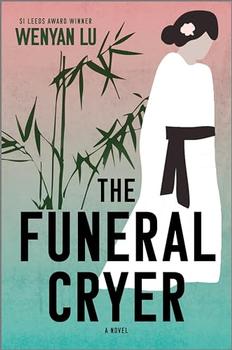
The Funeral Cryer by Wenyan Lu
Debut novelist Wenyan Lu brings us this witty yet profound story about one woman's midlife reawakening in contemporary rural China.
Your guide toexceptional books
BookBrowse seeks out and recommends the best in contemporary fiction and nonfiction—books that not only engage and entertain but also deepen our understanding of ourselves and the world around us.