
-
Your next favorite book
is waiting.
Summary | Excerpt | Reading Guide | Reviews | Beyond the Book | Readalikes | Genres & Themes | Author Bio
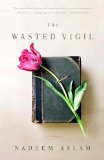
 Book Reviewed by:
She entered a room and stopped when she saw the book that had detached itself from the ceiling and fallen with the thump she had heard. The disturbed dust of the floor was still in movement around the book.
She picked it up and, setting the candle down, wrested out the nail. Opening the book on the floor she began to read, sitting chin-on-knee beside it.
Tell the earth-thieves
To plant no more orchards of death
Beneath this star of ours
Or the fruit will eat them up.
In the garden Marcus opens his eyes, feeling as though someone has drawn near and blocked his sunlight, but there is no one. Letters and messages, and visits, are received from the departed. And so occasionally, and for a fraction of a second, it is not strange to expect such a thing from those who have died. It lasts the shortest of durations and then the mind recalls the facts, remembers that some absences are more absolute than others.
It was in the darkness of the night, in 1980, that the band of Soviet soldiers had broken into the house to pick up Zameen. The cold touch of a gun at his temple was what awoke Marcus. The darkness was cross-hatched with the silver beams of several flashlights. Qatrina, beside him, came out of her sleep on hearing his sounds of confusion. In those initial moments of perplexity she thought this might be a repeat of what had happened the previous week, when a patient was brought to the house in the middle of the night, the victim of a Soviet chemical weapon from the day before, his body already rotting when he was discovered in a field an hour after the attack, his fingers still looped with the rosary he had been holding. He must have been in unimaginable pain, and though he couldn’t speak the stare from him was so strong it verged on sound.
The couple were not allowed to switch on the light but there appeared to be about ten soldiers. From their voices Marcus could tell they were in their teens or early twenties. He wondered if they were deserters, frightened young boys running away from the Soviet Army, running away from the Soviet Union. People from East Germany, even from as far away as Cuba, came to Kabul and then defected to the West. His mind was jolted out of this consideration when they asked for his daughter by name.
Qatrina’s grip on his forearm tightened. There had been reports of Soviet soldiers landing their helicopter to abduct a girl and flying away with her, parents or lovers following the trail of her clothing across the landscape and finally coming across her naked bone-punctured body, where she had been thrown out of the helicopter after the men had been sated.
Two of the soldiers could speak a broken Pashto and they were asking for Zameen and would give no explanation as to how they knew her or why they had come for her. There followed moments of rancour and violence towards Marcus and Qatrina. The men had searched the house before waking them, and had been unable to locate the girl.
A soldier stayed with them while the others spread out through the house once again, their voices low: it was a time of war and they always had to be alert to the possible presence of rebels near by. Some were searching the garden and the orchard, others Marcus’s perfume factory which stood beyond the garden, a voice drifting up now and then. There was great urgency in them, and Marcus thought of the night the previous year when the Soviet Army had entered Kabul, the Spetsnaz commandos running through the corridors of the Presidential Palace looking for the president, whom they immediately put to death when they found him.
Marcus and Qatrina managed to engage the Pashto-speaking soldier in a conversation.
“Your daughter is sympathetic to the insurgency. Her name is on the list we have been given by an insider.”
“There must be some mistake,” Marcus said through the cut mouth.
Excerpted from The Wasted Vigil by Nadeem Aslam Copyright © 2008 by Nadeem Aslam. Excerpted by permission of Knopf, a division of Random House, Inc. All rights reserved. No part of this excerpt may be reproduced or reprinted without permission in writing from the publisher.





It is among the commonplaces of education that we often first cut off the living root and then try to replace its ...
Click Here to find out who said this, as well as discovering other famous literary quotes!

Can you name the title?
Test your book knowledge with our daily trivia challenge!
Your guide toexceptional books
BookBrowse seeks out and recommends the best in contemporary fiction and nonfiction—books that not only engage and entertain but also deepen our understanding of ourselves and the world around us.


