Summary | Excerpt | Reviews | Beyond the Book | Readalikes | Genres & Themes | Author Bio
Critics' Opinion:
Readers' Opinion:
First Published:
Jul 2008, 256 pages
Paperback:
Aug 2009, 272 pages
 Book Reviewed by:
Vy Armour
Buy This Book

When the kwee was played, people swore they could
hear the voices of the ancestors. It was as if their spirits
were retelling the history and describing the path to the
afterlife through the sounds of the instrument. Music
became the medium through which the Hmong recorded
their legends. The notes had replaced the written text.
The music of the kwee could be used to teach new generations
about their past and their future lives. They had no
need for books.
The Western missionaries, of course, had no ear for
such foolishness. They considered a race without a written
text to be barbaric and ignorant. So, they created a
roman phonetic system as the basis for a script for the
Hmong that was impossible to read without learning a lot
of complicated rules. The clever churchmen believed
they had bonded together the diffuse Hmong tribes
through this linguistic subjugation, but the Hmong knew
better. They learned the text to keep the missionaries in
their place, but they had a system that was far more
advanced than anything devised in the West. They had a
musical language that communicated directly from one
soul to another.
The Stiff
"What is that god-awful row?"
"One of those Hmong beggars playing his flute by
the sounds of it."
"Well, it’s annoying. Doesn’t he know this is a hospital?
Can’t you go tell him to shut up?"
"You’ve got legs. You tell him."
"I’m in the middle of something."
"And I’m not?"
The morgue was made of concrete, and secrets had no
cracks to hide in. From their corpse-side seats, Nurse Dtui
and Madame Daeng could hear every disparaging word
the two clerks spoke. The auditors were like an unhappily
married couple. The pale-faced men in their frayed white
shirts and polyester slacks had ghosted in the previous
morning. They’d handed Dtui their official placement
papers from the Justice Department and commandeered
the office. They’d taken advantage of the coroner’s
absence and chosen this week to go through his books for
the 1977 audit. It appeared they’d been instructed to
find errors in the records. Dtui had known straightaway
that that task was virtually impossible, given that her boss
had handwriting so horrible he could hardly read it
himself. Dipping a cockroach in ink and having it scamper
around the page would have left more legible traces
to the average reader.
But Nurse Dtui had to admire the auditors’ determination.
They had every flat surface in the office covered
in a layer of gray papers and were tiptoeing barefoot
between them. They’d been through the entire first
drawer of the filing cabinet and were making copious
notes in their ledgers. They’d been instructed not to discuss
their mission with menial staff so Dtui had no way of
helping them find whatever it was they were searching for.
"Let’s go and get lunch," one of them said.
"Hm."
It was the first thing they’d agreed on since their
arrival. Dtui and Daeng heard one or two paper rustles,
the closing and locking of a door that hadn’t been
squeezed into its misshapen frame for many years, and a
cough from just outside the room where the two ladies sat.
"Can I help you?" Dtui asked.
"Comrade Bounhee and I are taking our lunch
break," said one of the men.
"Perhaps you’d like to come in here and join us for a
sandwich?" she suggested. Daeng smiled and shook her
head. The men hadn’t dared enter the examination
room since the arrival of the corpse that morning.
"Er, no. Rather not. Good health, comrade." And he
was gone.
There were four rooms of a sort in the only morgue
in the People’s Democratic Republic of Laos. The
paper-strewn and off-limits office was one. Then there
was a large alcove and the cramped storeroom in which
Mr. Geung, the lab technician, stood polishing specimen
jars. And finally there was the examination area
they all referred to as the cutting room. It was here
that Nurse Dtui and Madame Daeng sat on either side
of the deceased military officer, finishing their tea.
Despite appearances, there was nothing perverse in
this irreverent act. It had been necessitated by the peculiar
events of that morning.
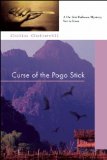
Excerpted from The Curse of the Pogo Stick by Colin Cotterill Copyright © 2008 by Colin Cotterill . Excerpted by permission of Random House, a division of Random House, Inc. All rights reserved. No part of this excerpt may be reproduced or reprinted without permission in writing from the publisher.






The Flower Sisters
by Michelle Collins Anderson
From the new Fannie Flagg of the Ozarks, a richly-woven story of family, forgiveness, and reinvention.
The House on Biscayne Bay
by Chanel Cleeton
As death stalks a gothic mansion in Miami, the lives of two women intertwine as the past and present collide.

The Funeral Cryer by Wenyan Lu
Debut novelist Wenyan Lu brings us this witty yet profound story about one woman's midlife reawakening in contemporary rural China.
Your guide toexceptional books
BookBrowse seeks out and recommends the best in contemporary fiction and nonfiction—books that not only engage and entertain but also deepen our understanding of ourselves and the world around us.