Summary | Excerpt | Reviews | Beyond the Book | Readalikes | Genres & Themes | Author Bio
Critics' Opinion:
Readers' Opinion:
First Published:
Apr 2008, 320 pages
Paperback:
May 2009, 320 pages
 Book Reviewed by:
Kim Kovacs
Buy This Book

Chapter One
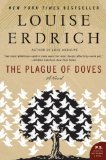
In the year 1896, my great-uncle, one of the first Catholic priests of aboriginal blood, put the call out to his parishioners that they should gather at Saint Joseph's wearing scapulars and holding missals. From that place they would proceed to walk the fields in a long, sweeping row, and with each step loudly pray away the doves. His human flock had taken up the plow and farmed among German and Norwegian settlers. Those people, unlike the French who mingled with my ancestors, took little interest in the women native to the land and did not intermarry. In fact, the Norwegians disregarded everybody but themselves and were quite clannish. But the doves ate their crops the same.
When the birds descended, both Indians and whites set up great bonfires and tried driving them into nets. The doves ate the wheat seedlings and the rye and started on the corn. They ate the sprouts of new flowers and the buds of apples and the tough leaves of oak trees and even last year's chaff. The doves were plump, and delicious smoked, but one could wring the necks of hundreds or thousands and effect no visible diminishment of their number. The pole-and-mud houses of the mixed-bloods and the bark huts of the blanket Indians were crushed by the weight of the birds. They were roasted, burnt, baked up in pies, stewed, salted down in barrels, or clubbed dead with sticks and left to rot. But the dead only fed the living and each morning when the people woke it was to the scraping and beating of wings, the murmurous susurration, the awful cooing babble, and the sight, to those who still possessed intact windows, of the curious and gentle faces of those creatures.
My great-uncle had hastily constructed crisscrossed racks of sticks to protect the glass in what, with grand intent, was called the rectory. In a corner of that one-room cabin, his younger brother, whom he had saved from a life of excessive freedom, slept on a pallet of fir boughs and a mattress stuffed with grass. This was the softest bed he'd ever lain in and the boy did not want to leave it, but my great-uncle thrust choirboy vestments at him and told him to polish up the candelabra that he would bear in the procession.
This boy was to become my mother's father, my Mooshum. Seraph Milk was his given name, and since he lived to be over one hundred, I was present and about eleven years old during the time he told and retold the story of the most momentous day of his life, which began with this attempt to vanquish the plague of doves. He sat on a hard chair, between our first television and the small alcove of bookshelves set into the wall of our government-owned house on the Bureau of Indian Affairs reservation tract. Mooshum would tell us he could hear the scratching of the doves' feet as they climbed all over the screens of sticks that his brother had made. He dreaded the trip to the out-house, where many of the birds had gotten mired in the filth beneath the hole and set up a screeching clamor of despair that drew their kind to throw themselves against the hut in rescue attempts. Yet he did not dare relieve himself anywhere else. So through flurries of wings, shuffling so as not to step on their feet or backs, he made his way to the out-house and completed his necessary actions with his eyes shut. Leaving, he tied the door closed so that no other doves would be trapped.
The out-house drama, always the first in the momentous day, was filled with the sort of detail that my brother and I found interesting. The out-house, well-known to us although we now had plumbing, and the horror of the birds' death by excrement, as well as other features of the story's beginning, gripped our attention. Mooshum was our favorite indoor entertainment, next to the television. But our father had removed the television's knobs and hidden them. Although we made constant efforts, we never found the knobs and came to believe that he carried them upon his person at all times. So we listened to our Mooshum instead. While he talked, we sat on kitchen chairs and twisted our hair. Our mother had given him a red coffee can for spitting snoose. He wore soft, worn, green Sears work clothes, a pair of battered brown lace-up boots, and a twill cap, even in the house. His eyes shone from slits cut deep into his face. The upper half of his left ear was missing, giving him a lopsided look. He was hunched and dried out, with random wisps of white hair down his ears and neck. From time to time, as he spoke, we glimpsed the murky scraggle of his teeth. Still, such was his conviction in the telling of this story that it wasn't hard at all to imagine him at twelve.

The foregoing is excerpted from The Plague of Doves by Louise Erdrich. All rights reserved. No part of this book may be used or reproduced without written permission from HarperCollins Publishers, 10 East 53rd Street, New York, NY 10022



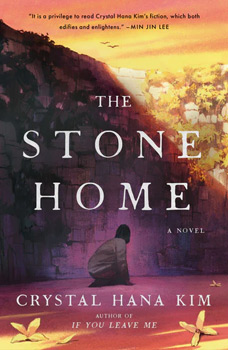
The Stone Home
by Crystal Hana Kim
A moving family drama and coming-of-age story revealing a dark corner of South Korean history.
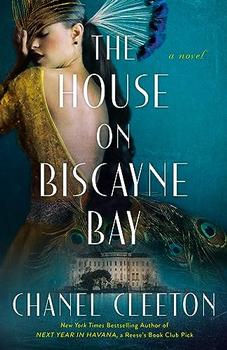
The House on Biscayne Bay
by Chanel Cleeton
As death stalks a gothic mansion in Miami, the lives of two women intertwine as the past and present collide.
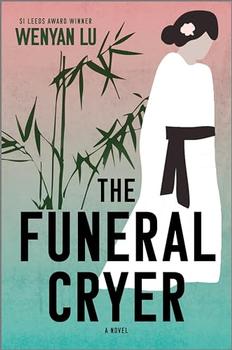
The Funeral Cryer by Wenyan Lu
Debut novelist Wenyan Lu brings us this witty yet profound story about one woman's midlife reawakening in contemporary rural China.
Your guide toexceptional books
BookBrowse seeks out and recommends the best in contemporary fiction and nonfiction—books that not only engage and entertain but also deepen our understanding of ourselves and the world around us.