Summary | Excerpt | Reviews | Beyond the Book | Readalikes | Genres & Themes | Author Bio

Critics' Opinion:
Readers' Opinion:
First Published:
Jan 2008, 304 pages
Paperback:
Jan 2009, 304 pages
 Book Reviewed by:
Paul Hughes
Buy This Book

Linnaeus's family designation for banana, Musa, derives from
mauz, the Arabic word for the fruit. This makes sense, since the Koran
also situates the banana in the sacred garden. There, Eden's forbidden tree
is called the talh, an archaic Arabic word that scholars usually
translate as "tree of paradise" (or sometimes even more directly as "banana
tree"). The Islamic sacred text describes the tree as one whose "fruits
piled one above another, in long extended shade…whose season is not limited,
and [whose] supply will not be cut off." Sure enough, that description
matches the concentric rings of banana bunches and the plant's
multigenerational life span.
But let's swing back to the Judeo-Christian Bible, for a moment. In the
Western story of Eden, Adam and Eve are said to react to their nakedness by
covering themselves with "fig leaves." Fig greenery might cover the
essentials, barely. Banana leaves are actually used to make clothing (as
well as rope, bedding, and umbrellas) in many parts of the world, even
today. In this case, the word for the Edenic fruit isn't mistranslated, just
misunderstood: Bananas have been called figs throughout history. Alexander
the Great, after sampling the fruit in India, described it as such, as did
Spanish explorers in the New World. The clincher comes from ancient Hebrew.
In that language, the language of the Torah (the first five books of the Old
Testament, including Genesis), notes Levin, a word for the forbidden fruit
translates directly: It is called the "fig of Eve."
AS THEY IMAGINED EDEN, the authors of the Bible would have, most
likely, drawn from the landscape around them. And what was around them? Over
the centuries, there have been dozens of attempts to scientifically locate
the "genuine" Eden. Some have been exercises in theological speculation
(like the Mormon notion that Eden sat somewhere near St. Louis). Others try
to match landmarks in the text with real geological features. In Genesis,
for example, four rivers—the Tigris, Euphrates, Pison, and Gihon—are said to
have bounded the paradise. The first two still exist today, flowing through
Iraq and Iran. The other pair are mysteries. In the early 1980s, however,
archaeologist Juris Zarins used satellite imagery to locate vestiges of two
long-vanished waterways. By calculating variations in climate and terrain,
Zarins concluded that the four rivers did intersect in what was once lush
valley, now submerged offshore in the Persian Gulf.
A Middle Eastern Eden could have been hospitable to bananas, and the
people living there almost certainly would have been familiar with the
fruit. Even today, the region is a growth center for the fruit, which is
farmed in Jordan, Egypt, Oman, and Israel. Those same areas are not terribly
friendly to the apple, which grows there today in limited quantities, and
with the assistance of modern agriculture.
Finally, it's interesting to note that mankind's true condemnation to a
life of struggle doesn't begin when Adam and Eve are cast out of biblical
Eden but afterward, in the story of Cain and Abel. The brothers work
diligently and, from the abundance around them, make offerings to God: Abel
makes an animal sacrifice and Cain fruit. Cain's tribute displeases God,
and, angered, Cain kills his younger brother. As punishment, God condemns
Cain to "till the ground," which will "no longer yield to you its strength."
Just like farmers today, in the Holy Land and across the world, Cain was
forced to struggle with weather, drought, pests, and blight. In that
struggle, the first human communities sought out crops that were easiest to
grow: roots (like taro, yam, and cassava) and fruit—like bananas.
Reprinted by arrangement with Hudson Street Press, a member of Penguin Group (USA) Inc., from Banana by Dan Koeppel. Copyright © Dan Koeppel, 2008.



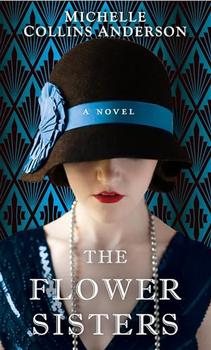
The Flower Sisters
by Michelle Collins Anderson
From the new Fannie Flagg of the Ozarks, a richly-woven story of family, forgiveness, and reinvention.
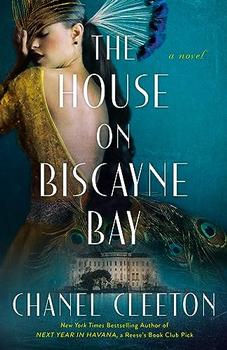
The House on Biscayne Bay
by Chanel Cleeton
As death stalks a gothic mansion in Miami, the lives of two women intertwine as the past and present collide.

The Funeral Cryer by Wenyan Lu
Debut novelist Wenyan Lu brings us this witty yet profound story about one woman's midlife reawakening in contemporary rural China.
Your guide toexceptional books
BookBrowse seeks out and recommends the best in contemporary fiction and nonfiction—books that not only engage and entertain but also deepen our understanding of ourselves and the world around us.