Summary | Excerpt | Reading Guide | Reviews | Readalikes | Genres & Themes | Author Bio
Critics' Opinion:
Readers' Opinion:
First Published:
May 2007, 307 pages
Paperback:
Apr 2009, 272 pages

Past and present religious atrocities have occurred not because we are evil, but because it is a fact of nature that the human species is, biologically, only partly rational. Evolution has meant that our prefrontal lobes are too small, our adrenal glands are too big, and our reproductive organs apparently designed by committee; a recipe which, alone or in combination, is very certain to lead to some unhappiness and disorder. But still, what a difference when one lays aside the strenuous believers and takes up the no less arduous work of a Darwin, say, or a Hawking or a Crick. These men are more enlightening when they are wrong, or when they display their inevitable biases, than any falsely modest person of faith who is vainly trying to square the circle and to explain how he, a mere creature of the Creator, can possibly know what that Creator intends. Not all can be agreed on matters of aesthetics, but we secular humanists and atheists and agnostics do not wish to deprive humanity of its wonders or consolations. Not in the least. If you will devote a little time to studying the staggering photographs taken by the Hubble telescope, you will be scrutinizing things that are far more awesome and mysterious and beautiful—and more chaotic and overwhelming and forbidding—than any creation or “end of days” story. If you read Hawking on the “event horizon,” that theoretical lip of the “black hole” over which one could in theory plunge and see the past and the future (except that one would, regrettably and by definition, not have enough “time”), I shall be surprised if you can still go on gaping at Moses and his unimpressive “burning bush.” If you examine the beauty and symmetry of the double helix, and then go on to have your own genome sequence fully analyzed, you will be at once impressed that such a near-perfect phenomenon is at the core of your being, and reassured (I hope) that you have so much in common with other tribes of the human species—“race” having gone, along with “creation” into the ashcan—and further fascinated to learn how much you are a part of the animal kingdom as well. Now at last you can be properly humble in the face of your maker, which turns out not to be a “who,” but a process of mutation with rather more random elements than our vanity might wish. This is more than enough mystery and marvel for any mammal to be getting along with: the most educated person in the world now has to admit—I shall not say confess—that he or she knows less and less but at least knows less and less about more and more.
As for consolation, since religious people so often insist that faith answers this supposed need, I shall simply say that those who offer false consolation are false friends. In any case, the critics of religion do not simply deny that it has a painkilling effect. Instead, they warn against the placebo and the bottle of colored water. Probably the most popular misquotation of modern times—certainly the most popular in this argument—is the assertion that Marx dismissed religion as “the opium of the people.” On the contrary, this son of a rabbinical line took belief very seriously and wrote, in his Contribution to the Critique of Hegel’s Philosophy of Right, as follows:
Copyright © 2007 by Christopher Hitchens


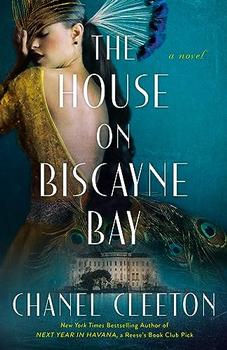
The House on Biscayne Bay
by Chanel Cleeton
As death stalks a gothic mansion in Miami, the lives of two women intertwine as the past and present collide.
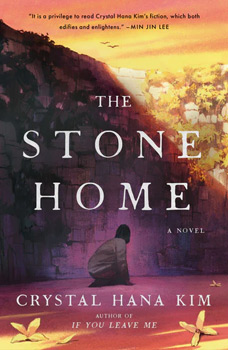
The Stone Home
by Crystal Hana Kim
A moving family drama and coming-of-age story revealing a dark corner of South Korean history.
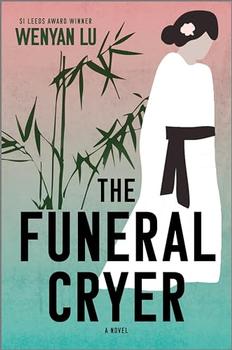
The Funeral Cryer by Wenyan Lu
Debut novelist Wenyan Lu brings us this witty yet profound story about one woman's midlife reawakening in contemporary rural China.
Your guide toexceptional books
BookBrowse seeks out and recommends the best in contemporary fiction and nonfiction—books that not only engage and entertain but also deepen our understanding of ourselves and the world around us.