Summary | Excerpt | Reviews | Beyond the Book | Readalikes | Genres & Themes | Author Bio
Critics' Opinion:
Readers' Opinion:
First Published:
Aug 2007, 368 pages
Paperback:
Aug 2008, 368 pages
 Book Reviewed by:
Lee Gooden
Buy This Book

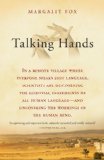
Introduction
The narrative sections of this book document a journey to a remarkable place: an isolated Middle Eastern village whose inhabitants "speak" sign language -- a language unlike any other in the world, witnessed by few outsiders and never before described. For the last several years, a team of four linguists, two from the United States and two from Israel, has been working in the village, documenting this extraordinary language and, little by little, deciphering it. In the summer of 2003, I was granted the immense privilege of accompanying the team on a three-day research trip to the village. To my knowledge, I am the only journalist from outside the region who has ever been there.
From the time the linguists first set foot in the village, they have striven ferociously to protect the privacy of the people they are studying. That is their job. Before they could even begin their fieldwork, the team spent many painstaking months earning the trust of the villagers. When I first learned of the project, and broached the idea of this book, the linguists felt, with ample justification, that the presence of any newcomer, much less a journalist, had the potential to capsize their entire endeavor. Because of this, I acceded to more constraints on my reporting than I normally would. These were arrived at in the course of nearly a year of transatlantic negotiations with the team's leader, Dr. Wendy Sandler of the University of Haifa, as I sought permission to make the trip.
During my time in the village I was, by prearrangement, a mostly silent observer of the linguists as they went about their work; at no time was I allowed to interview the villagers independently. (Given the breathtaking gulf between their native language and mine, this would have been no small trick anyhow.) Although the linguists continue to make regular research trips to the village, I was permitted to go along only this once. All of the scenes described in the narrative, and all of the dialogue, I saw and heard firsthand during the course of this visit. The only exception is the tale of the larcenous mice, which I have reconstructed based on an interview with the victim. My descriptions of the history and daily life of Al-Sayyid are based on my own observations, and on interviews with members of the research team.
There were other conditions. In exchange for permission to accompany the team, I agreed to show Dr. Sandler all portions of my manuscript pertaining to Al-Sayyid. Because of the exquisite cross-cultural sensitivity their work demands, the linguists are ethically obliged -- and, by extension, so am I -- not to disclose certain personal details about the life and inhabitants of Al-Sayyid that they have learned in the course of their visits. In the end, I chose to show the entire manuscript to Dr. Sandler as well as to the three other linguists on her team, Drs. Irit Meir, Carol Padden and Mark Aronoff. I have welcomed their corrections on matters of fact, their clarifications of technical material, and their suggestions for avenues of further inquiry. Matters of interpretation and emphasis, however, remain mine alone, as do any residual errors.
Dr. Sandler also expressed deep concern that with the publication of my book, this insular, traditional community might be overrun with curiosity-seekers and members of the news media. In keeping with the linguists' own practice, standard for this type of anthropological research, I have changed the name of every villager mentioned in the narrative. I have also disguised the precise location of the village, along with certain other identifying details. Consider Al-Sayyid a kind of signing Brigadoon (although it is very real, and I have seen it), a place utterly impossible for any outsider to find. I trust strongly that none will try.
In one other instance in the narrative, the brief account in Chapter 7 of a scholar who is said to make scientific generalizations about a language that "only he speaks," certain identifying details have been changed to protect the individual's privacy.
Text copyright © 2007 by Margalit Fox






The Flower Sisters
by Michelle Collins Anderson
From the new Fannie Flagg of the Ozarks, a richly-woven story of family, forgiveness, and reinvention.
The House on Biscayne Bay
by Chanel Cleeton
As death stalks a gothic mansion in Miami, the lives of two women intertwine as the past and present collide.

The Funeral Cryer by Wenyan Lu
Debut novelist Wenyan Lu brings us this witty yet profound story about one woman's midlife reawakening in contemporary rural China.
Your guide toexceptional books
BookBrowse seeks out and recommends the best in contemporary fiction and nonfiction—books that not only engage and entertain but also deepen our understanding of ourselves and the world around us.