
-
Your next favorite book
is waiting.
Summary | Excerpt | Reviews | Beyond the Book | Readalikes | Genres & Themes | Author Bio
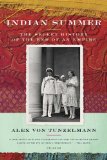
The Secret History of the End of an Empire
by Alex Von Tunzelmann Book Reviewed by:
The warmth shared by India’s new prime minister and Lady Mountbatten was obvious. It was equally obvious that Lord Mountbatten minded not at all. In contrast to the erupting turmoil across the subcontinent, the scene between imperial lord and victorious revolutionary that night was one of astonishing civility. For half a century Nehru had devoted his life to this single goal of throwing off the yoke of British Empire. Now it was done, and his first action as prime minister was to pay a call to the power he had just displaced—and to offer it a job. “When one thinks of the sad years that have led up to recent events,” noted Lady Mountbatten, “I suppose this was the most surprising development of all.”8
Nehru and Prasad were invited into Mountbatten’s study, followed by an unruly gaggle of reporters. Photographers scrambled onto the furniture, standing on French-polished tables to get the best angles, firing off a blitz of flashbulbs which shattered noisily over the journalists who squeezed to the front. The exhausted Prasad began to stammer an invitation for Lord Mountbatten to become governor-general of the new Indian nation, but lost his words. Nehru stepped in to complete them, and Mountbatten graciously accepted. He then poured out glasses of port for those present. “To India,” he proclaimed, holding his glass aloft. Nehru replied, “To King George VI.” Few missed the significance of the moment. Some years before, Nehru had refused to attend a banquet in Ceylon on the grounds that toasts would be proposed to the king and the government.9
But while in Delhi the gentlemen toasted nations and kings, their new world was turning into a battlefield. As viceroy, Lord Mountbatten had wielded unprecedented power over the fates of two nations and 400 million people. He had transferred power in a way that, within the next couple of days, would trigger a state of civil war in both nations, followed by a war between the two of them. Millions of people would be displaced; millions would be wounded; hundreds of thousands, perhaps millions more, would die. During the next few days, riots would spread across the divided states of the Punjab and Bengal, and a holocaust would begin.
The following night, the Mountbattens held a grand reception for Nehru at their palace. In the gorgeous expanse of the Mughal Gardens, water flowed from fountains around terraces of pink stone from Jaipur; squirrels scampered up the trunks of bougainvillea trees; the heavy scent of roses hung around sunken beds. The party was a dazzling swan song for British India. Everyone had expected that such a day would be glorious in India’s history; but, thanks to Mountbatten, it had somehow been made glorious in Britain’s as well. Thanks to his impressive gift for public relations, the end of empire was presented as the purpose of empire: India was like a well-nurtured and fattened chick, raised to fly from the imperial nest, while Britain, the indulgent parent, looked on with pride. And so the British were able to celebrate their loss alongside the Indians, who celebrated their victory. Comforting fictions were established that happy night: that the British left India with dignity, having seen the errors of their ways through Gandhi’s soft but compelling persuasion; that the Indian independence campaign won its prize by nonviolence and civil disobedience; that the departure of the British was completed with enough goodwill to pave the way for genuine friendship between India and the West, and separately between Pakistan and the West; that the end of the British Empire in India was a triumph for freedom.10
The world was redefined that night, but not in the way that most of those present thought. On either side of Old Europe, two new powers were rising to world superiority—and both took a close interest in the new dominions of India and Pakistan. In the East, Stalin’s Russia was in the process of supporting Communist movements across Europe and Asia, bolstering the influence of Moscow and extending its borders. In the West, the president of the United States of America had announced the Truman Doctrine just five months before. He had stated his intent to promote democracy across the world and resist the tide of communism flowing forth from Russia. The Americans had become particularly concerned about its flow into India, and Russian agents were already suspected of funding Indian Communist parties in Bengal. That very night, Nehru’s sister and close confidante, Vijaya Lakshmi Pandit, was in Moscow, preparing to present her credentials to Stalin as free India’s first ambassador. Though its envoys were on good terms with Nehru, the U.S. government was alarmed by these developments and moved fast to create a new alliance with Pakistan. During the nineteenth century, Britain and Russia had played the “Great Game” for control of central Asia, centered in Afghanistan and the territory that would become West Pakistan. In 1947, the United States was gearing up to play a new Great Game against Russia, and the slow but significant rise of a fundamentalist Islamic movement would ensure that Afghanistan and Pakistan would remain at the center of international politics well into the next century.
Copyright © 2007 by Alex von Tunzelmann. All rights reserved.





Outside of a dog, a book is man's best friend. Inside of a dog it's too dark to read.
Click Here to find out who said this, as well as discovering other famous literary quotes!

Can you name the title?
Test your book knowledge with our daily trivia challenge!
Your guide toexceptional books
BookBrowse seeks out and recommends the best in contemporary fiction and nonfiction—books that not only engage and entertain but also deepen our understanding of ourselves and the world around us.


