Summary | Excerpt | Reviews | Beyond the Book | Readalikes | Genres & Themes | Author Bio
Critics' Opinion:
Readers' Opinion:
First Published:
Oct 2005, 304 pages
Paperback:
Oct 2006, 304 pages
 Book Reviewed by:
BookBrowse Review Team
Buy This Book

But it was her acting penchant that also prompted her critics; back when Dad was alive, she frequently described herself as "the first lady of Drew University" or as the "hostess with the mostest." For some in Dad's family as well, her posturing prompted irritation, almost as if there was a family feud between the Oxnam cosmopolitan clan and the Houtses' earthier roots.
I actually felt closest to my mother when she was too weak and too needy to resort to acting. When Dad died, she needed my help sorting out the finances and establishing her new widowed life in Connecticut. I was touched when she vowed to always eat in the dining room, setting another place just so that she could sense Dad's presence. In the 1990s, when she had a near-fatal illness, I rushed to her hospital bedside. She grasped my hands and said, "Thanks so much for being here. I love you." I was so happy to connect that I ran out to the drugstore and bought balloons and a stuffed animal as presents. Finally, she had shown the genuine mother-son love that I had longed for all my life. Looking back on her life, I feel grateful for those loving moments, but also sorry for a mother who seemed so much better at promoting her "ideal family" than she was at dealing with her own feelings. Once, late in her life, after I was married, when I had pushed her hard on this "always acting" matter, she stood up and pointed to where she had been sitting. Her voice changed into a deep rasping, and she said, "I hate that person. I hate everything she does." Then, realizing that it was a very odd revelation, she quickly sat back down and pretended nothing had happened. My wife and I simply stared in astonishment.
Early on, I became aware that Mom and Dad had very high expectations for my success. When Mom talked with family or friends, she would often tell them, "There's Robbey. He reads books when other kids are playing. He's such a good student, you know." I sometimes thought that Mom, along with Dad, wanted me to prove something to my father's family — was it that their son might also be a superstar? After all, I had my father's first name, "Robert" — and "Bromley" was my grandfather's middle name that he always used. It wasn't that the pressure was overt, at least not most of the time, but rather that the notion of a high-achieving son was built into an understated WASP family ethic. Successes produced smiles and failures prompted frowns. That was enough for me. I bought into the system with unquestioning passion.
I was always obsessed with success, feeling fleeting glee when I achieved it, then on to the next challenge. But failure, even partial failure or even almost-success, filled me with searing guilt and self-loathing. The successes never stayed with me. I harbored agonizing memories of every single mistake or shortcoming. To this day, I can reconstruct those ghastly moments in perfect detail.
Throughout my life — beginning as a teenager and later as an adult — perceived failures prompted severe self-punishments. Hiding in an attic or a secluded forest, I would scream at myself: "You're stupid! A stupid idiot! I hate you!" I pummeled myself with clenched fists slamming against body and arms, and then hammered my forehead against a tree or a wall. For days, I would sit sullenly, recalling the terrible episode, often writing the words You're stupid! on a notepad or whatever scrap of paper was at hand.
So, given the inner penalties for failure, my outer pressure to succeed was pretty strong. An early test was the sport of target archery. Dad, worried that I was going to maim someone with my homemade bow and arrow, declared solemnly: "Boy, if you're going to use a weapon, let's use it right." A firearms instructor in the war who almost lost his life when another soldier accidentally discharged a sidearm in the barracks, Dad was adamant about doing things safely and methodically. So, after buying archery books and making a couple of lovely, if rather hefty, bows, he joined the Newton Archers just outside of Boston. Inventing his own modified military system of teaching archery "by the numbers," Dad became a very competent archer himself, and I, not yet a teenager, was his pupil. His approach to archery taught me many lessons: disciplined practice was the key to success (so I began practicing several hours a day); quality equipment was essential to quality performance (my father bought the very best bows and aluminum arrows); and success in competition made my father happy.
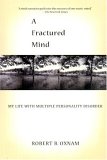
Excerpted from A FRACTURED MIND by Robert B. Oxnam. Copyright 2005 Robert B. Oxnam. All rights reserved. Published by Hyperion.



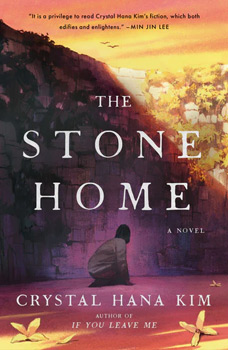
The Stone Home
by Crystal Hana Kim
A moving family drama and coming-of-age story revealing a dark corner of South Korean history.

The House on Biscayne Bay
by Chanel Cleeton
As death stalks a gothic mansion in Miami, the lives of two women intertwine as the past and present collide.

The Funeral Cryer by Wenyan Lu
Debut novelist Wenyan Lu brings us this witty yet profound story about one woman's midlife reawakening in contemporary rural China.
Your guide toexceptional books
BookBrowse seeks out and recommends the best in contemporary fiction and nonfiction—books that not only engage and entertain but also deepen our understanding of ourselves and the world around us.