Summary | Excerpt | Reviews | Beyond the Book | Readalikes | Genres & Themes | Author Bio
Critics' Opinion:
Readers' Opinion:
First Published:
Apr 2006, 704 pages
Paperback:
Mar 2007, 704 pages
 Book Reviewed by:
BookBrowse Review Team
Buy This Book

Part One
The “Set-in”
(Tehran, November 4, 1979)
1
The Desert Angel
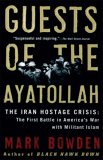
Before dawn Mohammad Hashemi prepared himself to die. He
washed according to ritual, then knelt in his dormitory room facing southwest
toward Mecca, bent his head to the floor, and prayed the prayer for martyrdom.
After that the stout, bushy-haired young man with the thick beard tucked a
handgun in his belt, pulled on a heavy sweater, and set out through the half
darkness for the secret meeting.
It was, in Iran, the thirteenth day of Aban in the year
1358. The old Zoroastrian calendar had been resurrected a half century earlier
by the first self-appointed shah in the Pahlavi line, Reza Khan, in an effort to
graft his royal pretensions to the nation’s ancient traditions. That flirtation
with Persia’s gods and bearded prophets had backfired, sprung up like an
uncorked genie in the previous ten months to unseat his son and the whole
presumptuous dynasty. Aban is Persia’s old water spirit, a bringer of rebirth and renewal to desert lands, and the mist
wetting the windows of high-rises and squeaking on the windshields of early
traffic in this city of more than five million was a kept promise, an ancient
visitation, the punctual return of a familiar and welcome angel. As it crept
downhill through the sprawling capital and across the gray campus of Amir Kabir
University, where Hashemi hurried to his meeting, Iran was in tumult, in
mid-revolution, caught in a struggle between present and past. Towering cranes
posed like skeletal birds at irregular intervals over the city’s low roofline,
stiff sentinels at construction sites stranded in the violent shift of political
climate. The fine rain gently blackened concrete and spotted dust in the canals
called jubeson both
sides of every street, fanning out like veins. Moisture haloed the glow from
streetlamps.
Hashemi was supposed to be a third-year physics major, but
for him, as for so many of Tehran’s students, the politics of the street had
supplanted study. He hadn’t been to a class since the uprising had begun more
than a year ago. It was a heady time to be young in Iran, on the front lines of
change. They felt as though they were shaping not only their own futures but the
future of their country and the world. They had overthrown a tyrant. Destiny or,
as Hashemi saw it, the will of Allah was guiding them. The word on campus was,
“We dealt with the shah and the United States is next!”
Few of the hundred or so converging from campuses all over
the city on Amir Kabir’s School of Mechanics that morning knew why they were
gathering. Something big was planned, but just what was known only to activist
leaders like Hashemi. Shortly after six, standing before an eager crowded room,
he spread out on a long table sketches of the U.S. embassy, crude renderings of
the mission’s compound just a few blocks west. He and others had been scouting
the target for more than a week, watching from the rooftops of tall buildings
across the side streets, riding past on the upper floor of two-decker buses that
rolled along Takht-e-Jamshid Avenue in front, and waiting in the long lines
outside the embassy’s newly opened consulate. The drawings showed the various
gates, guard posts, and buildings, the largest being the chancery, the embassy’s
primary office building; the bunkerlike consulate; and the airy two-story white
mansion that served as home for the American ambassador. There was a murmur of
satisfaction and excitement in the crowd as Hashemi announced they were going to
lay siege to the place.
In retrospect, it was all too predictable. An operating
American embassy in the heart of revolutionary Iran’s capital was too much for
Tehran’s aroused citizenry to bear. It had to go. It was a symbol of everything
the nascent upheaval hated and feared. Washington’s underestimation of the
danger was just part of a larger failure; it had not foreseen the gathering
threat to its longtime Cold War ally Mohammad Reza Pahlavi, the now reviled,
self-exiled shah. A CIA analysis in August 1978, just six months before Pahlavi
fled Iran for good, had concluded that the country “is not in a revolutionary or
even a prerevolutionary situation.” A year and a revolution later America was
still underestimating the power and vision of the mullahs behind it. Like most
of the great turning points in history, it was obvious and yet no one saw it
coming.
Excerpted from Guests of the Ayatollah, (c) 2006 Mark Bowden. Reproduced by permission of Grove/Atlantic, Inc. All rights reserved.





The Stone Home
by Crystal Hana Kim
A moving family drama and coming-of-age story revealing a dark corner of South Korean history.
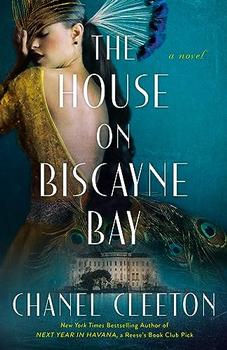
The House on Biscayne Bay
by Chanel Cleeton
As death stalks a gothic mansion in Miami, the lives of two women intertwine as the past and present collide.

The Funeral Cryer by Wenyan Lu
Debut novelist Wenyan Lu brings us this witty yet profound story about one woman's midlife reawakening in contemporary rural China.
Your guide toexceptional books
BookBrowse seeks out and recommends the best in contemporary fiction and nonfiction—books that not only engage and entertain but also deepen our understanding of ourselves and the world around us.