Summary | Excerpt | Reading Guide | Reviews | Beyond the Book | Readalikes | Genres & Themes | Author Bio
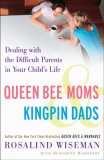
Coping with the Parents, Teachers, Coaches, and Counselors Who Can Rule -- or Ruin --Your Child's Life
Critics' Opinion:
Readers' Opinion:
First Published:
Mar 2006, 352 pages
Paperback:
Feb 2007, 352 pages
 Book Reviewed by:
BookBrowse Review Team
Buy This Book

As parents, we understand that the culture has great power
over our children; they see the latest ad campaign for jeans
and are convinced that their lives would be better if they
bought them. However, we may not realize that we're no less
immune. If you have a car, ask yourself what it says about
you. In full, embarrassing disclosure, I bought an SUV
because I couldn't tolerate the image of driving a
minivan--which would have been a much better choice because
they're cheaper and more fuel-efficient.
We also belong to microcultures where there are similar
unwritten rules we "just know" we have to follow. Your
children's school, your religious institution, your
family--all have unwritten rules you must follow to be
accepted, and there are penalties for the people who break
those rules.
Cultural rule breakers can make others extremely
uncomfortable, so most people don't want them around. These
people are seen as "other," possibly tolerated but rarely
accepted. Very often, rule breakers aren't respected, their
opinions and experiences are easily dismissed, and other
people don't want to be seen as associated with them, even
when they think the rule breakers are right. If we grow up
without learning to question the culture, we take a few
lessons with us from our youth:
So how does this affect parents? I think there is a parent
culture that takes its cues from the overall culture,
tricking us into thinking there is one best, most desirable
way to be a parent. I call it Perfect Parent World.
Welcome to Perfect Parent World
In Perfect Parent World, the kids are perfect. They do their
homework without nagging, effortlessly get into all the
honors classes, get elected to class offices, and give their
parents a steady stream of bragging rights based on their
scholastic and athletic accomplishments. In this mythical
kingdom, the parents are perfect, too. They're financially
stable, wear the right clothes, drive the right cars, never
crack under the strain of car pool, offer our peers
excellent parenting advice, and have great kids whose
pockets are never filled with bad report cards, cigarettes,
or Ecstasy.
Our family doesn't do average. Tammy, mother of a five-year-old, complaining because her
son got an E for "excellent" instead of an O for
"outstanding"
No one I know actually resides in Perfect Parent World, but
most parents I've met--myself included--measure themselves
against this impossible standard, and we imagine that the
moms and dads with the most power and highest social status
occupy that cherished real estate. But who decides who
personifies perfection?
One of the primary ways both boys and girls and men and
women define who has power and social status is by how our
culture defines masculinity and femininity. Girls and boys
are introduced to these cultural constructions very early in
life. In middle school and high school they build groups
based on how closely they perceive their fit into those
cultural constructions, which I call Girl World and Boy
World.
Excerpted from Queen Bee Moms & Kingpin Dads by Rosalind Wiseman with Elizabeth Rapoport Copyright © 2006 by Rosalind Wiseman. Excerpted by permission of Crown, a division of Random House, Inc. All rights reserved. No part of this excerpt may be reproduced or reprinted without permission in writing from the publisher.

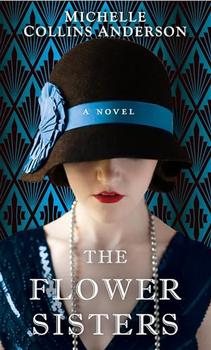
The Flower Sisters
by Michelle Collins Anderson
From the new Fannie Flagg of the Ozarks, a richly-woven story of family, forgiveness, and reinvention.
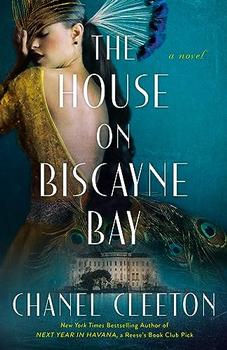
The House on Biscayne Bay
by Chanel Cleeton
As death stalks a gothic mansion in Miami, the lives of two women intertwine as the past and present collide.
The Funeral Cryer by Wenyan Lu
Debut novelist Wenyan Lu brings us this witty yet profound story about one woman's midlife reawakening in contemporary rural China.
Your guide toexceptional books
BookBrowse seeks out and recommends the best in contemporary fiction and nonfiction—books that not only engage and entertain but also deepen our understanding of ourselves and the world around us.