Summary | Excerpt | Reviews | Beyond the Book | Readalikes | Genres & Themes | Author Bio
Critics' Opinion:
Readers' Opinion:
First Published:
Nov 2005, 352 pages
Paperback:
Oct 2006, 352 pages
 Book Reviewed by:
BookBrowse Review Team
Buy This Book

Before Dalgliesh could reply, Harkness broke in, "The security rating,
if it comes off, couldn't be higher."
Dalgliesh thought, And even if you're in the know, which I doubt, you
have no intention of telling me who will be meeting at this top-secret
conference, or why. Security was always on a need-to-know basis. He
could make his guesses, but had no particular curiosity. On the other
hand, he was being asked to investigate a violent death and there were
things he needed to be told.
Before Colin Reeves had time to realise that this was his cue to
intervene, Conistone said, "All that will be taken care of, of course.
We're not expecting problems. There was a similar situation some years
ago—before your time, Harkness—when a VIP politician thought he'd like a
respite from his protection officer and booked two weeks on Combe. The
visitor stood the silence and solitude for two days before realising
that his life was meaningless without his red boxes. I should have
thought that that was the message Combe was established to convey, but
he didn't get it. No, I don't think we'll be worrying our friends south
of the Thames."
Well, that, at least, was a relief. To have the security services
involved was always a complication. Dalgliesh reflected that the secret
service, like the monarchy, in yielding up its mystique in response to
public enthusiasm for greater openness, seemed to have lost some of that
half-ecclesiastical patina of authority bestowed on those who dealt in
esoteric mysteries. Today its head was known by name and pictured in the
press, the previous head had actually written her autobiography, and its
headquarters, an eccentric oriental-looking monument to modernity which
dominated its stretch of the south bank of the Thames, seemed designed
to attract rather than repel curiosity. To surrender mystique had its
disadvantages; an organisation came to be regarded like any other
bureaucracy, staffed by the same fallible human beings and liable to the
same cock-ups. But he expected no problems with the secret service. The
fact that MI5 was represented at middle-grade level suggested that this
single death on an offshore island was among the least of their present
concerns.
He said, "I can't go inadequately briefed. You've given me nothing
except who's dead, where he died and apparently how. Tell me about the
island. Where exactly is it?"
Harkness was in one of his more difficult moods, his ill humour
imperfectly concealed by self-importance and a tendency to verbosity.
The large map on the table was a little crooked. Frowning, he aligned it
more accurately with the edge of the table, pushed it towards Dalgliesh
and stabbed it with his forefinger.
"It's here. Combe Island. Off the coast of Cornwall, about twenty miles
south-west of Lundy Island and roughly twelve miles from the mainland,
Pentworthy in this case. Newquay is the nearest large town." He looked
over at Conistone. "You'd better carry on. It's more your baby than
ours."
Conistone spoke directly to Dalgliesh. "I'll waste a little time on the
history. It explains Combe and if you don't know it you may start under
a disadvantage. The island was owned for over four hundred years by the
Holcombe family, who acquired it in the sixteenth century, although no
one seems clear exactly how. Probably a Holcombe rowed out with a few
armed retainers, hoisted his personal standard and took it over. There
can't have been much competition. The title was later ratified by Henry
the Eighth once he'd got rid of the Mediterranean pirates who'd
established it as a base for their slave-trading raids along the Devon
and Cornish coasts. After that Combe lay more or less neglected until
the eighteenth century, when the family began to take an interest in it,
and visited occasionally to look at the bird-life or spend the day
picnicking. Then a Gerald Holcombe, born in the late eighteen hundreds,
decided to use the island for family holidays. He restored the cottages
and, in 1912, built a house and additional accommodation for the staff.
The family went there every summer in those heady days before the First
World War. The war changed everything. The two elder sons were killed,
one in France, the other at Gallipoli. The Holcombes are the kind of
family who die in wars, not make money from them. That left only the
youngest, Henry, who was consumptive and unfit for military service.
Apparently, after the death of his brothers he was oppressed by a sense
of general unworthiness and had no particular wish to inherit. The money
hadn't come from land but from fortunate investments, and by the late
Twenties they had more or less dried up. So in 1930 he set up a
charitable trust with what was left, found some wealthy supporters and
handed over the island and the property. His idea was that it should be
used as a place of rest and seclusion for men in positions of
responsibility who needed to get away from the rigours of their
professional lives."
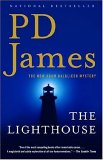
Excerpted from The Lighthouse by P. D. James Copyright © 2005 by P. D. James. Excerpted by permission of Knopf, a division of Random House, Inc. All rights reserved. No part of this excerpt may be reproduced or reprinted without permission in writing from the publisher.


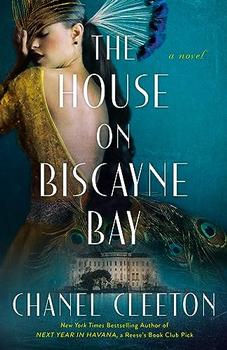
The House on Biscayne Bay
by Chanel Cleeton
As death stalks a gothic mansion in Miami, the lives of two women intertwine as the past and present collide.
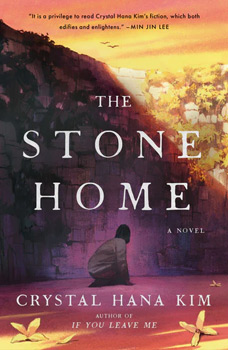
The Stone Home
by Crystal Hana Kim
A moving family drama and coming-of-age story revealing a dark corner of South Korean history.
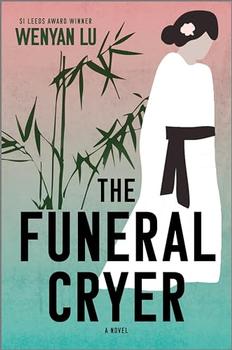
The Funeral Cryer by Wenyan Lu
Debut novelist Wenyan Lu brings us this witty yet profound story about one woman's midlife reawakening in contemporary rural China.
Your guide toexceptional books
BookBrowse seeks out and recommends the best in contemporary fiction and nonfiction—books that not only engage and entertain but also deepen our understanding of ourselves and the world around us.