Summary | Excerpt | Reading Guide | Reviews | Readalikes | Genres & Themes | Author Bio
Critics' Opinion:
Readers' Opinion:
First Published:
Dec 2003, 441 pages
Paperback:
Jan 2005, 464 pages

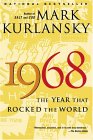
On the second day of 1968, Robert Clark, a thirty-seven-year-old schoolteacher, took his seat in the Mississippi House of Representatives without a challenge, the first black to gain a seat in the Mississippi State Legislature since 1894.
But in the civil rights struggle, action was shifting from the soft-spoken rural South to the hard-edged urban North. Northern blacks were different from blacks in the South. While the mostly southern followers of Martin Luther King, Jr., studied Mohandas Gandhi and his nonviolent anti-British campaign, Stokely Carmichael, who had grown up in New York City, became interested in violent rebels such as the Mau Mau, who had risen up against the British in Kenya. Carmichael, a good-humored man with a biting wit and a sense of theater that he brought from his native Trinidad, had been for years regularly jailed, threatened, and abused in the South, as had all the SNCC workers. And during those years there were always moments when the concept of nonviolence was questioned. Carmichael began hurling back abuse verbally and sometimes physically, confronting segregationists who harassed him. The King people chanted, "Freedom now!" The Carmichael people chanted, "Black Power!" King tried to persuade Carmichael to use the slogan "Black Equality" rather than "Black Power," but Carmichael kept his slogan.
Increasing numbers of black leaders wanted to fight segregation with segregation, imposing a black-only social order that at least paid lip service to excluding even white reporters from press briefings. In 1966 Carmichael became head of SNCC, replacing John Lewis, a soft-spoken southerner who advocated nonviolence. Carmichael turned SNCC into an aggressive Black Power organization, and in so doing Black Power became a national movement. In May 1967 Hubert "Rap" Brown, who had not been a well-known figure in the civil rights movement, replaced Carmichael as the head of SNCC, which by now was nonviolent in name only. In that summer of bloody riots, Brown said at a press conference, "I say you better get a gun. Violence is
necessary - it is as American as cherry pie."
King was losing control over a badly divided civil rights movement in which many believed nonviolence had outlived its usefulness. 1968 seemed certain to be the year of Black Power, and the police were readying themselves. By the beginning of 1968 most American cities were preparing for
war - building up their arsenals, sending undercover agents into black neighborhoods like spies into enemy territory, recruiting citizenry as a standing reserve army. The city of Los Angeles, where thirty-four people had been killed in an August 1965 riot in the Watts section, was contemplating the purchase of bulletproof armored vehicles, each of which could be armed with a .30-caliber machine gun; a choice of smoke screen, tear gas, or fire-extinguishing launchers; and a siren so loud it was said to disable rioters. "When I look at this thing, I think, My God, I hope we'll never have to use it," said Los Angeles deputy chief Daryl Gates, "but then I realize how valuable it would have been in Watts, where we had nothing to protect us from sniper fire when we tried to rescue our wounded officers." Such talk had become good politics since California governor Pat Brown had been defeated the year before by Ronald Reagan, largely because of the Watts riots. The problem was that the vehicles cost $35,000 each. The Los Angeles Sheriff's Office had a more cost-effective
idea - a surplus army M-8 armored car for only $2,500.
In Detroit, where forty-three people died in race riots in 1967, the police already had five armored vehicles but were stockpiling tear gas and gas masks and were requesting antisniper rifles, carbines, shotguns, and 150,000 rounds of ammunition. One Detroit suburb had purchased an army
half-track - a quasi tank. The city of Chicago purchased helicopters for its police force and started training 11,500 policemen in using heavy weapons and crowd control techniques in preparation for the year 1968. From the outset of the year, the United States seemed to be run by fear.
From the USA hardcover edition. Excerpted from 1968 by Mark Kurlansky Copyright © 2003 by Mark Kurlansky. Excerpted by permission of Random House Trade Paperbacks, a division of Random House, Inc. All rights reserved. No part of this excerpt may be reproduced or reprinted without permission in writing from the publisher.




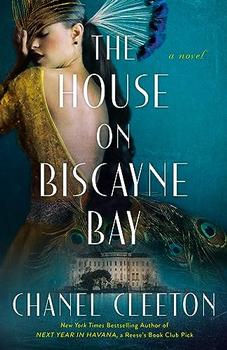
The House on Biscayne Bay
by Chanel Cleeton
As death stalks a gothic mansion in Miami, the lives of two women intertwine as the past and present collide.

The Flower Sisters
by Michelle Collins Anderson
From the new Fannie Flagg of the Ozarks, a richly-woven story of family, forgiveness, and reinvention.

The Funeral Cryer by Wenyan Lu
Debut novelist Wenyan Lu brings us this witty yet profound story about one woman's midlife reawakening in contemporary rural China.
Your guide toexceptional books
BookBrowse seeks out and recommends the best in contemporary fiction and nonfiction—books that not only engage and entertain but also deepen our understanding of ourselves and the world around us.