Summary | Excerpt | Reading Guide | Reviews | Beyond the Book | Readalikes | Genres & Themes | Author Bio
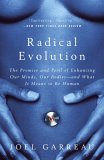
The Promise and Peril of Enhancing Our Minds, Our Bodies -- and What It Means to Be Human
by Joel Garreau
Critics' Opinion:
Readers' Opinion:
First Published:
May 2005, 400 pages
Paperback:
May 2006, 400 pages
 Book Reviewed by:
BookBrowse Review Team
Buy This Book

Ahem. So, okay? This technological change in the nineties is supposed
to be the biggest thing since fire, and the best we can do for headlines
is a tawdry Oval Office sex scandal? You can see the reason for my
confusion. Where was this social upheaval that history taught us to
expect?
As it happens, this is not the first time I've found myself covering
worlds that do not seem to add up. In fact, I've come to welcome such
assignments. They allow us to examine what's going on really. My
previous books on what makes our world tick–The Nine Nations of North
America and Edge City: Life on the New Frontier, which identified
realities already in play that were not yet obvious to everyone–were
similarly preceded by bouts of unsettling perplexity.
This time, two "aha" moments occurred in the course of my reporting. The
first was the reminder that innovation arrives more rapidly than does
change in culture and values. Perhaps, it occurred to me, the nineties
were like the fifties. The fifties were a period of great technological
upheaval– missiles with nuclear warheads, mass-produced suburban
housing, mainframe computers. From television to Sputnik, the list was
endless. And yet the fifties were the boring Eisenhower decade. The
cultural upheaval of sex, drugs and rock and roll–enabled by The Pill,
synthetic psychedelics and the transistor–did not occur until the
sixties. You see similar upheaval in the earlier half of the century
with the dawning of the age of automobiles, refrigeration, radio and
telephones. The twenties, too, were a frivolous decade, promptly
followed by the social upheaval of the thirties.
Perhaps that is the way history works. Perhaps because culture and
values lag technology, when upheaval occurs, it is often of seismic
proportions. If that is so now, then the cultural revolution for which
we are due is just beginning to emerge. That's how tracing the outlines
of that transformation became my beat during the early years of the 21st
century.
The second "aha" moment was more formidable. I remember it as being like
the scene in Jaws where the captain finally glimpses the shark. He
responds, famously: "We're gonna need a bigger boat."
Such a moment came as I realized that this story was not about
computers. This cultural revolution in which we are immersed is no more
a tale of bits and bytes than the story of Galileo is about paired
lenses. In the Renaissance, the big deal was not telescopes. It was
about realizing that the Earth is a minor planet revolving around an
unexceptional star in an unfashionable part of the universe. Today, the
story is no less attitude-adjusting. It is about the defining cultural,
social and political issue of our age. It is about human transformation.
The inflection point at which we have arrived is one in which we are
increasingly seizing the keys to all creation, as astounding as that
might seem. It's about what parents will do when offered ways to
increase their child's SAT score by 200 points. It's about what athletes
will do when encouraged by big-buck leagues to put together medical pit
crews. What fat people will do when offered a gadget that will monitor
and alter their metabolisms. What the aging will do when offered memory
enhancers. What fading baby boomers will do when it becomes obvious that
Viagra and Botox are just the beginning of the sex-appeal industry.
Imagine that technology allows us to transcend seemingly impossible
physical and mental barriers, not only for ourselves but, exponentially,
for our children. What happens as we muck around with the most
fundamental aspects of our identity? What if the only thing that is
truly inevitable is taxes? This is the transcendence of human nature
we're talking about here. What wisdom does transhuman power demand?
Excerpted from Radical Evolution by Joel Garreau Copyright © 2005 by Joel Garreau. Excerpted by permission of Doubleday, a division of Random House, Inc. All rights reserved. No part of this excerpt may be reproduced or reprinted without permission in writing from the publisher.





The Stone Home
by Crystal Hana Kim
A moving family drama and coming-of-age story revealing a dark corner of South Korean history.

The House on Biscayne Bay
by Chanel Cleeton
As death stalks a gothic mansion in Miami, the lives of two women intertwine as the past and present collide.

The Funeral Cryer by Wenyan Lu
Debut novelist Wenyan Lu brings us this witty yet profound story about one woman's midlife reawakening in contemporary rural China.
Your guide toexceptional books
BookBrowse seeks out and recommends the best in contemporary fiction and nonfiction—books that not only engage and entertain but also deepen our understanding of ourselves and the world around us.