Summary | Excerpt | Reviews | Beyond the Book | Readalikes | Genres & Themes | Author Bio
Critics' Opinion:
Readers' Opinion:
First Published:
Jun 2005, 240 pages
Paperback:
May 2006, 311 pages
 Book Reviewed by:
BookBrowse Review Team
Buy This Book

The rebirth of Western thought a millennium after the fall of Rome was
sparked by the rediscovery of Greek and Roman
knowledge, much of which had been safeguarded and extended
by scholars in the Arab world. At the same time, European
explorers, driven by the desire to circumvent the Arab monopoly
on trade with the East, sailed west to the Americas and east to
India and China. Global sea routes were established, and European
nations vied with one another to carve up the globe. During
this Age of Exploration a new range of beverages came to the
fore, made possible by distillation, an alchemical process known
in the ancient world but much improved by Arab scholars. Distilled
drinks provided alcohol in a compact, durable form ideal
for sea transport. Such drinks as brandy, rum, and whiskey were
used as currency to buy slaves and became particularly popular
in the North American colonies, where they became so politically
contentious that they played a key role in the establishment
of the United States.
Hard on the heels of this geographic expansion came its
intellectual counterpart, as Western thinkers looked beyond
long-held beliefs inherited from the Greeks and devised new
scientific, political, and economic theories. The dominant
drink of this Age of Reason was coffee, a mysterious and fashionable
beverage introduced to Europe from the Middle East.
The establishments that sprung up to serve coffee had a
markedly different character from taverns that sold alcoholic
drinks, and became centers of commercial, political, and intellectual
exchange. Coffee promoted clarity of thought, making
it the ideal drink for scientists, businessmen, and philosophers.
Coffeehouse discussions led to the establishment of
scientific societies, the founding of newspapers, the establishment of financial
institutions, and provided fertile ground for
revolutionary thought, particularly in France.
In some European nations, and particularly in Britain, coffee
was challenged by tea imported from China. Its popularity in
Europe helped to open lucrative trade routes with the East and
underpinned imperialism and industrialization on an unprecedented
scale, enabling Britain to become the first global superpower.
Once tea had established itself as Britain’s national drink,
the desire to maintain the tea supply had far-reaching effects
on British foreign policy, contributing to the independence of
the United States, the undermining of China’s ancient civilization,
and the establishment of tea production in India on an
industrial scale.
Although artificially carbonated beverages originated in Europe
in the late eighteenth century, the soft drink came into its own
with the invention of Coca-Cola one hundred years later. Originally
devised as a medicinal pick-me-up by an Atlanta pharmacist,
it became America’s national drink, an emblem of the
vibrant consumer capitalism that helped to transform the United
States into a superpower. Traveling alongside American servicemen
as they fought wars around the world during the twentieth
century, Coca-Cola went on to become the world’s most widely
known and distributed product and is now an icon of the controversial
march toward a single global marketplace.
Drinks have had a closer connection to the flow of history
than is generally acknowledged, and a greater influence on its
course. Understanding the ramifications of who drank what, and
why, and where they got it from, requires the traversal of many
disparate and otherwise unrelated fields: the histories of agriculture,
philosophy, religion, medicine, technology, and commerce.
The six beverages highlighted in this book demonstrate the complex
interplay of different civilizations and the interconnectedness
of world cultures. They survive in our homes today as living
reminders of bygone eras, fluid testaments to the forces that
shaped the modern world. Uncover their origins, and you may
never look at your favorite drink in quite the same way again.

From A History of The World In 6 Glasses by Tom Standage. Copyright Tom Standage 2005. All rights reserved. No part of this book maybe reproduced without written permission from the publisher, Walker & Company.




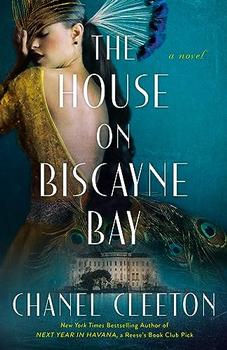
The House on Biscayne Bay
by Chanel Cleeton
As death stalks a gothic mansion in Miami, the lives of two women intertwine as the past and present collide.
The Flower Sisters
by Michelle Collins Anderson
From the new Fannie Flagg of the Ozarks, a richly-woven story of family, forgiveness, and reinvention.

The Funeral Cryer by Wenyan Lu
Debut novelist Wenyan Lu brings us this witty yet profound story about one woman's midlife reawakening in contemporary rural China.
Your guide toexceptional books
BookBrowse seeks out and recommends the best in contemporary fiction and nonfiction—books that not only engage and entertain but also deepen our understanding of ourselves and the world around us.