Summary | Excerpt | Reading Guide | Reviews | Readalikes | Genres & Themes | Author Bio
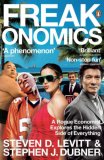
A Rogue Economist Explores the Hidden Side of Everything
Critics' Opinion:
Readers' Opinion:
First Published:
Apr 2005, 256 pages
Paperback:
Apr 2006, 256 pages

An incentive is simply a means of urging people to do more of a good
thing and less of a bad thing. But most incentives don't come about
organically. Someone -- an economist or a politician or a parent -- has to
invent them. Your three-year-old eats all her vegetables for a week? She
wins a trip to the toy store. A big steelmaker belches too much smoke into
the air? The company is fined for each cubic foot of pollutants over the
legal limit. Too many Americans aren't paying their share of income tax? It
was the economist Milton Friedman who helped come up with a solution to this
one: automatic tax withholding from employees' paychecks.
There are three basic flavors of incentive: economic, social, and moral.
Very often a single incentive scheme will include all three varieties. Think
about the anti-smoking campaign of recent years. The addition of a
$3-per-pack "sin tax" is a strong economic incentive against buying
cigarettes. The banning of cigarettes in restaurants and bars is a powerful
social incentive. And when the U.S. government asserts that terrorists raise
money by selling black-market cigarettes, that acts as a rather jarring
moral incentive.
Some of the most compelling incentives yet invented have been put in
place to deter crime. Considering this fact, it might be worthwhile to take
a familiar question -- why is there so much crime in modern society? -- and
stand it on its head: why isn't there a lot more crime?
After all, every one of us regularly passes up opportunities to maim,
steal, and defraud. The chance of going to jail—thereby losing your job,
your house, and your freedom, all of which are essentially economic
penalties -- is certainly a strong incentive. But when it comes to crime,
people also respond to moral incentives (they don't want to do something
they consider wrong) and social incentives (they don't want to be seen by
others as doing something wrong). For certain types of misbehavior, social
incentives are terribly powerful. In an echo of Hester Prynne's scarlet
letter, many American cities now fight prostitution with a "shaming"
offensive, posting pictures of convicted johns (and prostitutes) on websites
or on local-access television. Which is a more horrifying deterrent: a $500
fine for soliciting a prostitute or the thought of your friends and family
ogling you on www.HookersAndJohns.com ...
The foregoing is excerpted from Freakonomics by Steven D. Levitt and Stephen J. Dubner. All rights reserved. No part of this book may be used or reproduced without written permission from HarperCollins Publishers, 10 East 53rd Street, New York, NY 10022


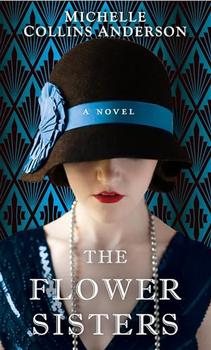
The Flower Sisters
by Michelle Collins Anderson
From the new Fannie Flagg of the Ozarks, a richly-woven story of family, forgiveness, and reinvention.
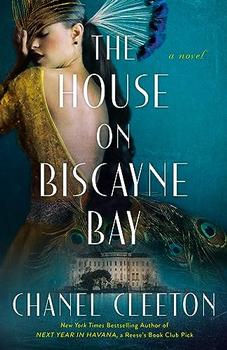
The House on Biscayne Bay
by Chanel Cleeton
As death stalks a gothic mansion in Miami, the lives of two women intertwine as the past and present collide.
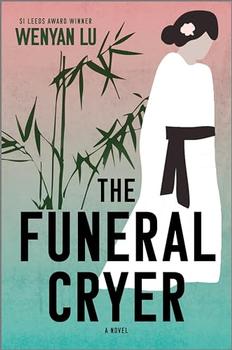
The Funeral Cryer by Wenyan Lu
Debut novelist Wenyan Lu brings us this witty yet profound story about one woman's midlife reawakening in contemporary rural China.
Your guide toexceptional books
BookBrowse seeks out and recommends the best in contemporary fiction and nonfiction—books that not only engage and entertain but also deepen our understanding of ourselves and the world around us.