Summary | Excerpt | Reviews | Beyond the Book | Readalikes | Genres & Themes | Author Bio
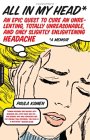
An Epic Quest to Cure an Unrelenting, Totally Unreasonable, and Only Slightly Enlightening Headache
by Paula Kamen
Critics' Opinion:
Readers' Opinion:
First Published:
Feb 2005, 351 pages
Paperback:
Apr 2006, 320 pages
 Book Reviewed by:
BookBrowse Review Team
Buy This Book

Younger women feel less shame in "coming out" about
a whole range of medical problems. Starting out life with a higher status in
society than our mothers, and not feeling as obligated to "prove
ourselves" as equals to men, we are more willing to discuss
"weaknesses." For a generation that has come of age with women
speaking out about sexual abuse and assault, sexual preference, and (previously
stigmatized) breast cancer, speaking out about chronic pain seems only natural.
Politically speaking, we are also more secure than past
generations to discuss these issues because of less of a risk of damaging the
women's movement. In the 1970s, the women's health movement mainly focused
on women's physical strengths, at a time when they had to prove them as
"equals" to men, such as with promoting women's sports and stressing
the "truth" of the women's bodies (when doctors were treating
natural experiences like menopause and childbirth as "diseases"
needing heavy medication and dangerous procedures).
In the past several years, we have seen this beginning
trickle of women "coming out" about stigmatized invisible health
issues of all kinds:
A New Activist Movement (Depression's Stepchild) (chapter
22)
Reflecting a general social movement to begin to address such
problems, Congress has declared 2000-2010 "The Decade of Pain Control and
Awareness." This enhanced social focus on chronic pain follows a general
period of growing awareness on a related issue: depression. Like with depression
in the 1990s, campaigns are now beginning to take hold that portray the problem
as a neurological illness, and not as a moral failing or metaphor for a
psychological conflict.
The source list at the end of the book includes a growing
number of pain-advocacy groups. Some of the leading ones are the American
Chronic Pain Foundation (theacpa.org) and the American Pain Foundation (painfoundation.org).
From the preface to All In My Head, pages ix - xvi. Copyright Paula Kamen 2005. All rights reserved. No part of this book maybe reproduced without written permission from the publisher, Da Capo Press.




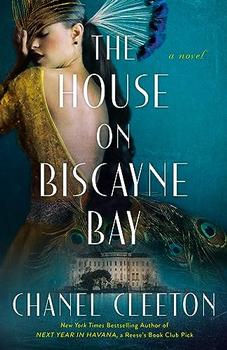
The House on Biscayne Bay
by Chanel Cleeton
As death stalks a gothic mansion in Miami, the lives of two women intertwine as the past and present collide.

The Stone Home
by Crystal Hana Kim
A moving family drama and coming-of-age story revealing a dark corner of South Korean history.

The Funeral Cryer by Wenyan Lu
Debut novelist Wenyan Lu brings us this witty yet profound story about one woman's midlife reawakening in contemporary rural China.
Your guide toexceptional books
BookBrowse seeks out and recommends the best in contemporary fiction and nonfiction—books that not only engage and entertain but also deepen our understanding of ourselves and the world around us.