Summary | Excerpt | Reviews | Beyond the Book | Readalikes | Genres & Themes | Author Bio
Critics' Opinion:
Readers' Opinion:
First Published:
Feb 2005, 368 pages
Paperback:
Dec 2005, 368 pages

1
From the pitched slate roof of the Royal Marsden Hospital, if you look between
the chimney pots and TV aerials, you see more chimney pots and TV aerials. It's
like that scene from Mary Poppins where all the chimney sweeps dance across the
rooftops twirling their brooms.
From up here I can just see the dome of the Royal Albert Hall. On a clear day I
could probably see all the way to Hampstead Heath, although I doubt if the air
in London ever gets that clear.
"This is some view," I say, glancing to my right at a teenager
crouched about ten feet away. His name is Malcolm and he's seventeen today. Tall
and thin, with dark eyes that tremble when he looks at me, he has skin as white
as polished paper. He is wearing pajamas and a woolen hat to cover his baldness.
Chemotherapy is a cruel hairdresser.
The temperature is three degrees Celsius, but the wind chill has chased it below
zero. Already my fingers are numb and I can barely feel my toes through my shoes
and socks. Malcolm's feet are bare.
I won't reach him if he jumps or falls. Even if I stretch out and lean along the
gutter, I will still be six feet short of catching him. He realizes that. He's
worked out the angles. According to his oncologist, Malcolm has an exceptional
IQ. He plays the violin and speaks five languages—none of which he'll speak to
me.
For the last hour I've been asking him questions and telling him stories. I know
he can hear me, but my voice is just background noise. He's concentrating on his
own internal dialogue, debating whether he should live or die. I want to join
that debate, but first I need an invitation.
The National Health Service has a whole raft of guidelines for dealing with
hostage situations and threatened suicides. A critical incident team has been
pulled together, including senior members of staff, police and a
psychologist—me. The first priority has been to learn everything we can about
Malcolm that might help us identify what has driven him to this. Doctors, nurses
and patients are being interviewed, along with his friends and family.
The primary negotiator is at the apex of the operational triangle. Everything
filters down to me. That's why I'm out here, freezing my extremities off, while
they're inside drinking coffee, interviewing staff and studying flip charts.
What do I know about Malcolm? He has a primary brain tumor in the right
posterior temporal region, dangerously close to his brain stem. The tumor has
left him partially paralyzed down his left side and unable to hear from one ear.
He is two weeks into a second course of chemotherapy.
He had a visit from his parents this morning. The oncologist had good news.
Malcolm's tumor appeared to be shrinking. An hour later Malcolm wrote a two-word
note that said, "I'm sorry." He left his room and managed to crawl
onto the roof through a dormer window on the fourth floor. Someone must have
left the window unlocked, or he found a way of opening it.
There you have it—the sum total of my knowledge about a teenager who has a lot
more to offer than most kids his age. I don't know if he has a girlfriend, or a
favorite football team, or a celluloid hero. I know more about his disease than
I do about him. That's why I'm struggling.
My safety harness is uncomfortable under my sweater. It looks like one of those
contraptions that parents strap on to toddlers to stop them running off. In this
case it's supposed to save me if I fall, as long as someone has remembered to
tie off the other end. It might sound ridiculous, but that's the sort of detail
that sometimes gets forgotten in a crisis. Perhaps I should shuffle back toward
the window and ask someone to check. Would that be unprofessional? Yes.
Sensible? Again yes.
Excerpted from Suspect by Michael Robotham Copyright © 2005 by Michael Robotham. Excerpted by permission of Doubleday, a division of Random House, Inc. All rights reserved. No part of this excerpt may be reproduced or reprinted without permission in writing from the publisher


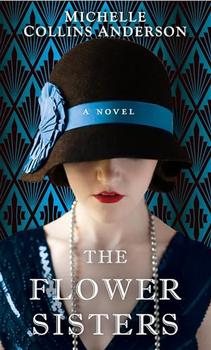
The Flower Sisters
by Michelle Collins Anderson
From the new Fannie Flagg of the Ozarks, a richly-woven story of family, forgiveness, and reinvention.
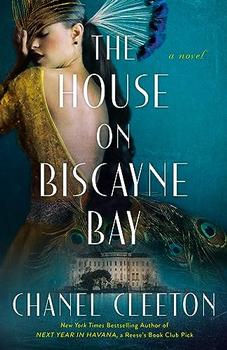
The House on Biscayne Bay
by Chanel Cleeton
As death stalks a gothic mansion in Miami, the lives of two women intertwine as the past and present collide.

The Funeral Cryer by Wenyan Lu
Debut novelist Wenyan Lu brings us this witty yet profound story about one woman's midlife reawakening in contemporary rural China.
Your guide toexceptional books
BookBrowse seeks out and recommends the best in contemporary fiction and nonfiction—books that not only engage and entertain but also deepen our understanding of ourselves and the world around us.