Summary | Excerpt | Reviews | Readalikes | Genres & Themes | Author Bio
Critics' Opinion:
Readers' Opinion:
First Published:
Nov 1998, 322 pages
Paperback:
Nov 1999, 322 pages

"I believe that the very purpose of our life is to seek happiness. That is clear. Whether one believes in religion or not, whether one believes in this religion or that religion, we all are seeking something better in life. So, I think, the very motion of our life is towards happiness…"
With these words, spoken before a large audience in Arizona, the Dalai Lama cut to the heart of his message. But his claim that the purpose of life was happiness raised a question in my mind. Later, when we were alone, I asked, "Are you happy?"
"Yes," he said. He paused, then added, "Yes…definitely." There was a quiet sincerity in his voice that left no doubt - a sincerity that was reflected in his expression and in his eyes.
"But is happiness a reasonable goal for most of us?" I asked. "Is it really possible?"
"Yes. I believe that happiness can be achieved through training the mind."
The concept of achieving true happiness has, in the West, always seemed ill defined, elusive, ungraspable. Even the word "happy" is derived from the Icelandic word happ, meaning luck or chance. Most of us, it seems, share this view of the mysterious nature of happiness. In those moments of joy that life brings, happiness feels like something that comes out of the blue. To my Western mind, it didn't seem the sort of thing that one could develop, and sustain, simply by "training the mind."
When I raised that objection, the Dalai Lama was quick to explain. "When I say ‘training the mind,' in this context I'm not referring to ‘mind' merely as one's cognitive ability or intellect. Rather, I'm using the term in the sense of the Tibetan word Sem, which has a much broader meaning, closer to ‘psyche' or ‘spirit'; it includes intellect and feeling, heart and mind. By bringing about a certain inner discipline, we can undergo a transformation of our attitude, our entire outlook and approach to living.
"When we speak of this inner discipline, it can of course involve many things, many methods. But generally speaking, one begins by identifying those factors which lead to happiness and those which lead to suffering. Having done this, one then sets about gradually eliminating those factors which lead to suffering and cultivating those which lead to happiness. That is the way."
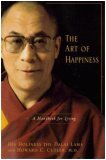
Reprinted from The Art of Happiness by His Holiness the Dalai Lama and Howard C. Cutler, M.D. by permission of Riverhead Books, a member of Penguin Putnam Inc. Copyright 1998 by HH Dalai Lama and Howard C. Cutler, M.D. All rights reserved. This excerpt, or any parts thereof, may not be reproduced in any form without permission.






The Flower Sisters
by Michelle Collins Anderson
From the new Fannie Flagg of the Ozarks, a richly-woven story of family, forgiveness, and reinvention.

The House on Biscayne Bay
by Chanel Cleeton
As death stalks a gothic mansion in Miami, the lives of two women intertwine as the past and present collide.

The Funeral Cryer by Wenyan Lu
Debut novelist Wenyan Lu brings us this witty yet profound story about one woman's midlife reawakening in contemporary rural China.
Your guide toexceptional books
BookBrowse seeks out and recommends the best in contemporary fiction and nonfiction—books that not only engage and entertain but also deepen our understanding of ourselves and the world around us.