Summary | Excerpt | Reading Guide | Reviews | Beyond the Book | Readalikes | Genres & Themes | Author Bio
Critics' Opinion:
Readers' Opinion:
First Published:
Dec 2004, 575 pages
Paperback:
Jan 2006, 592 pages
 Book Reviewed by:
BookBrowse Review Team
Buy This Book

Isn't the rate of human population growth declining, such that we're
already on course for the world's population to level off at some manageable
number of people?
All of these questions illustrate why those famous collapses of past
civilizations have taken on more meaning than just that of a romantic mystery.
Perhaps there are some practical lessons that we could learn from all those past
collapses. We know that some past societies collapsed while others didn't:
what made certain societies especially vulnerable? What, exactly, were the
processes by which past societies committed ecocide? Why did some past societies
fail to see the messes that they were getting into, and that (one would think in
retrospect) must have been obvious? Which were the solutions that succeeded in
the past? If we could answer these questions, we might be able to identify which
societies are now most at risk, and what measures could best help them, without
waiting for more Somalia-like collapses.
But there are also differences between the modern world and its problems, and
those past societies and their problems. We shouldn't be so naïve as to think
that study of the past will yield simple solutions, directly transferable to our
societies today. We differ from past societies in some respects that put us at
lower risk than them; some of those respects often mentioned include our
powerful technology (i.e., its beneficial effects), globalization, modern
medicine, and greater knowledge of past societies and of distant modern
societies. We also differ from past societies in some respects that put us at
greater risk than them: mentioned in that connection are, again, our potent
technology (i.e., its unintended destructive effects), globalization (such that
now a collapse even in remote Somalia affects the U.S. and Europe), the
dependence of millions (and, soon, billions) of us on modern medicine for our
survival, and our much larger human population. Perhaps we can still learn from
the past, but only if we think carefully about its lessons.
Efforts to understand past collapses have had to confront one major
controversy and four complications. The controversy involves resistance to the
idea that past peoples (some of them known to be ancestral to peoples currently
alive and vocal) did things that contributed to their own decline. We are much
more conscious of environmental damage now than we were a mere few decades ago.
Even signs in hotel rooms now invoke love of the environment to make us feel
guilty if we demand fresh towels or let the water run. To damage the environment
today is considered morally culpable.
Not surprisingly, Native Hawaiians and Maoris don't like paleontologists
telling them that their ancestors exterminated half of the bird species that had
evolved on Hawaii and New Zealand, nor do Native Americans like archaeologists
telling them that the Anasazi deforested parts of the southwestern U.S. The
supposed discoveries by paleontologists and archaeologists sound to some
listeners like just one more racist pretext advanced by whites for dispossessing
indigenous peoples. It's as if scientists were saying, "Your ancestors were
bad stewards of their lands, so they deserved to be dispossessed." Some
American and Australian whites, resentful of government payments and land
retribution to Native Americans and Aboriginal Australians, do indeed seize on
the discoveries to advance that argument today. Not only indigenous peoples, but
also some anthropologists and archaeologists who study them and identify with
them, view the recent supposed discoveries as racist lies.
Some of the indigenous peoples and the anthropologists identifying with them
go to the opposite extreme. They insist that past indigenous peoples were (and
modern ones still are) gentle and ecologically wise stewards of their
environments, intimately knew and respected Nature, innocently lived in a
virtual Garden of Eden, and could never have done all those bad things. As a New
Guinea hunter once told me, "If one day I succeed in shooting a big pigeon in
one direction from our village, I wait a week before hunting pigeons again, and
then I go out in the opposite direction from the village." Only those evil
modern First World inhabitants are ignorant of Nature, don't respect the
environment, and destroy it.
From Collapse by Jared Diamond. Copyright Jared Diamond 2005. All rights reserved. No part of this book maybe reproduced without written permission from the publisher.



The Flower Sisters
by Michelle Collins Anderson
From the new Fannie Flagg of the Ozarks, a richly-woven story of family, forgiveness, and reinvention.
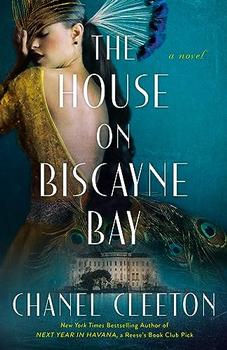
The House on Biscayne Bay
by Chanel Cleeton
As death stalks a gothic mansion in Miami, the lives of two women intertwine as the past and present collide.
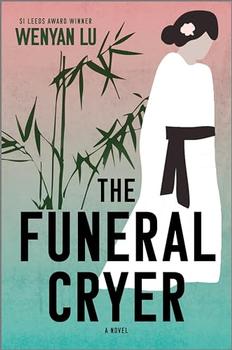
The Funeral Cryer by Wenyan Lu
Debut novelist Wenyan Lu brings us this witty yet profound story about one woman's midlife reawakening in contemporary rural China.
Your guide toexceptional books
BookBrowse seeks out and recommends the best in contemporary fiction and nonfiction—books that not only engage and entertain but also deepen our understanding of ourselves and the world around us.