Summary | Excerpt | Reviews | Beyond the Book | Readalikes | Genres & Themes | Author Bio
Critics' Opinion:
Readers' Opinion:
First Published:
Sep 2004, 336 pages
Paperback:
Sep 2006, 336 pages
 Book Reviewed by:
BookBrowse Review Team
Buy This Book

Word endings fell away. Prepositions came in which took the language away from the Germanic and made it more English. Instead of adding a lump on the end of words, you could use "to" or "with." "I gave the dog to my daughter." "I cut the meat with my knife." The order of words became important and prepositions became more common as signposts around sentences.
It is not necessarily simpler than an inflected language, but it did give English a shove towards modernity. It is also easier for second language users to make themselves understood, easier to get the words wrong and still make sense when the word order has so much meaning hard-wired into it. The grammar change made it capable of greater flexibility.
This had in some degree already begun to happen before the Vikings arrived. It was a gradual, even a hesitant, process not fully settled for centuries. But it was accelerated along the line of the Danelaw and it became another strength.
Perhaps my interest in English began when I was speaking at least two versions of it in my childhood. And within these two were, I suspect, something like the jumbled, shifting sound and sense of much earlier centuries of English.
I spoke a heavily accented dialect in Cumbria until I was about sixteen. There was also a considerable purely local vocabulary. Then the influence of school and BBC English began to erode that accent. The local dialect words were discarded once I began to travel out of the county, simply because no one understood them. But for years I could revert to that accent and remembered those words. Friends back home still employ some of them. They, like me, could switch into the more mainstream English when necessary. The vocabularies intermeshed, sometimes a new word rubbed out an old, it was a jumble, not at all difficult to manage, subject to teasing, snubbing, and as the old yielded more to the new, some regret.
I thought that my experience on a local and much smaller scale might bear some resemblance to the spoken English in the ninth century. To test that, I went through a Cumbrian dialect glossary to look at some of the words I used most commonly.
First, though, the accent. In the 1940s and 1950s,Wigtonians, like so many others everywhere else in small towns and villages, were still largely immobilised in one small area save when wars took off the men or emigration lured away desperate or daring families. It was still heavily influenced by agriculture and agricultural terms which had been just as common more than a hundred, even two or three hundred years before. Its accent was broad. To refined speakers it could appear coarse. Class climbers could even pretend it was unintelligible and subhuman. Yet it carried the deep history of our language and perhaps it had carried it intact for centuries in sound as well as in vocabulary.
The word "I" would always be pronounced "Aah." The definite article "the" would often be clipped to "t" — "the bike" to "t bike," "the horse" to "t horse." "R" would be given justice, as in "rrreet," for right, and even the last "r" on "remember" would be hit.
People were acutely aware of differences so nuanced that to an outsider the shadings would be as impenetrable as those between Darwin's first gradations of finches. Wigton's dialect would be different from that of Aspatria eight miles away and that of Carlisle eleven miles away and hugely different from that of Newcastle sixty miles away. It could still be called more a tribal collection of mutually intelligible dialects rather than a canopy of English under which were several divisions. In short it flourished from the ground up, much, I think, as it did in the ninth century and in many cases for another thousand years.
We thee'd and thou'd each other as if we had just got off the Mayflower. The King James Bible gave us not only cadences and rhythms but metaphors and references. There were a lot of Romany words around because of the gypsy encampments long established in the Wigton area, and horse dealing brought in new words.The Romany word for horse was "grey," and a "good grey" was a good horse. Or it could have been a "baary grey," "baary" also meaning good. "Togs" for "clothes," "cady" for "hat," "chaver" for "boy," "mort" for "girl," "paggered" for "winded," were all words from the gypsies whose women used to make swill baskets from reeds and sell them along with clothes pegs door to door for "lure," money, to us "gadjis," men. "Cower" was a thing, any thing, and "mang nix" was say nothing. There were also hundreds of local pronunciations of non-dialect words— a book was a "byeuk," water was "watter" (as in Wordsworth) and up was "oop," down was "doon," words like play and say would sound like "plaay" and "saay," us would be "uz," face would be "feace," finger would be "fing-er." "Siste" came from seest thou— nowadays we would say "do you see." No doubt we also mixed in words from Latin, French, Italian and Spanish and Indian, but the burr of it and the look of it when put on a page is nearer to Old English than Modern English. It was a Tower of Babel underpinned by English.
From Chapter 2 of The Adventure of English by Melvyn Bragg, pages 16-28. Copyright Melvyn Bragg 2003. All rights reserved. Reproduced by permission of the publisher, Arcade Publishing Inc. No part of this book may be reproduced without written permission from the publisher.
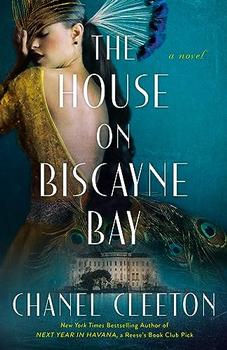
The House on Biscayne Bay
by Chanel Cleeton
As death stalks a gothic mansion in Miami, the lives of two women intertwine as the past and present collide.
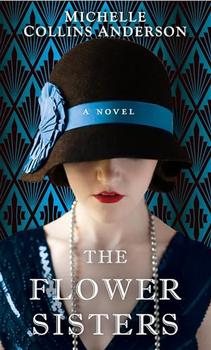
The Flower Sisters
by Michelle Collins Anderson
From the new Fannie Flagg of the Ozarks, a richly-woven story of family, forgiveness, and reinvention.
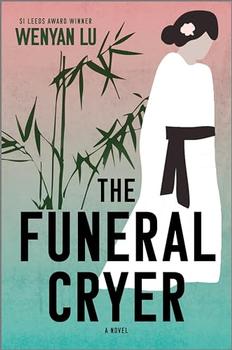
The Funeral Cryer by Wenyan Lu
Debut novelist Wenyan Lu brings us this witty yet profound story about one woman's midlife reawakening in contemporary rural China.
Your guide toexceptional books
BookBrowse seeks out and recommends the best in contemporary fiction and nonfiction—books that not only engage and entertain but also deepen our understanding of ourselves and the world around us.