Summary | Excerpt | Reviews | Readalikes | Genres & Themes | Author Bio
Critics' Opinion:
Readers' Opinion:
First Published:
Aug 2004, 352 pages
Paperback:
Sep 2005, 368 pages
 Book Reviewed by:
BookBrowse Review Team
Buy This Book

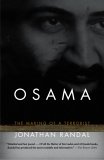
He accurately listed the nationalities and sometimes the names of the
nineteen-man suicide squad, all but four his Saudi compatriots. Osama confirmed
the existence of four hijacking teams, rejoiced in the tradecraft that
deliberately kept each in the dark about the others' existence. He explained
their division between the four witting pilots and the Saudi "muscle"
who, he chuckled, learned the exact nature of their suicide mission only
"just before boarding" the four airliners to cow their passengers into
submission with box cutters once the plane was in the air.[1] Osama said he
knew five days in advance that the operations would take place on September 11
and had a radio tuned in ready to hear the first plane hit the Trade Center's
north tower.
"Be patient," he then told his "overjoyed" guests: more was
to come, as it indeed did over the next hour or so. He recounted that in the
planning stage his engineering training had helped him calculate the number of
likely deaths from the explosive impact of a nearly fully fueled airliner on the
twin towers' metal structures. He acknowledged his surprise that they collapsed
completely. "All that we had hoped for," he allowed, was the
destruction of "three or four floors" where the aircraft hit and those
above the impact.
And, as it turned out, indeed I had been--almost--right about his watching the
crashes on television. His spokesman, Sulaiman Abu Ghaith, had turned on a
television set in an adjoining room and seen the first run of the constantly
repeated footage of the planes hitting the twin towers before excitedly
summoning Osama. "I tried to tell him about what I saw," the spokesman
recounted, "but he made a gesture with his hands, meaning: 'I know, I
know.'"
The specialist literature long ago concluded that modern terrorism's objective
was to inflict maximum casualties with maximum publicity. In those terms Osama
had succeeded beyond his wildest dreams. For days on end television screens the
world over repeatedly showed the scenes of horror that consumed nearly 3,000
lives (and initially were feared to have killed more than twice as many). Yet
his very success left a string of tantalizing questions unanswered. Logically,
he must have realized that the United States would react--and massively. Yet
perhaps his gift for meticulous reckoning finally had gone awry or his
increasingly audacious acts of violence emboldened him to the point that he felt
invulnerable. He had preached that the Americans were paper tigers so long and
hard that he could be excused for relishing the disarray that overtook the U.S.
government and kept a humiliated President George W. Bush out of Washington for
nine embarrassing hours after the fourth and final airliner crashed in
Pennsylvania.
Had such cocksure reasoning now convinced him the United States dared not mount
a major punitive expedition in Afghanistan, where he had come to believe his own
distorted propaganda claims that his Arab volunteers all but single-handedly
defeated the Soviet Red Army in the 1980s? Osama was not alone in suggesting the
dangers of a new foreign intervention in Afghanistan. Russian veterans warned
the United States of the horrors they had experienced there. Those tales of
Afghan savagery and resentment of foreigners, reinforced by nineteenth-century
massacres of British troops at Afghan hands, had played no small role in
dissuading President Bill Clinton and his successor from mounting a major
military operation to punish the increasingly cheeky Taliban regime and its Al-Qaeda
guests. (In fact, high-tech American weaponry, combined with wads of cash and
local Afghan allies, initially routed the foot soldiers of Osama's Al-Qaeda
organization and its Taliban protectors with surprising ease and speed in what
more properly should be called a campaign rather than a war. If there was going
to be an Afghan quagmire, more likely than not it would take the form of trying
to maintain a modicum of law and order on the cheap rather than investing in the
"nation-building" that was so doctrinally repugnant to the
administration.)
Excerpted from Osama by Jonathan Randal Copyright© 2004 by Jonathan Randal. Excerpted by permission of Knopf, a division of Random House, Inc. All rights reserved. No part of this excerpt may be reproduced or reprinted without permission in writing from the publisher.



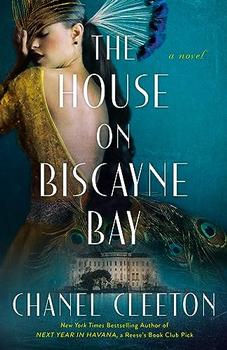
The House on Biscayne Bay
by Chanel Cleeton
As death stalks a gothic mansion in Miami, the lives of two women intertwine as the past and present collide.

The Stone Home
by Crystal Hana Kim
A moving family drama and coming-of-age story revealing a dark corner of South Korean history.

The Funeral Cryer by Wenyan Lu
Debut novelist Wenyan Lu brings us this witty yet profound story about one woman's midlife reawakening in contemporary rural China.
Your guide toexceptional books
BookBrowse seeks out and recommends the best in contemporary fiction and nonfiction—books that not only engage and entertain but also deepen our understanding of ourselves and the world around us.