Summary | Excerpt | Reading Guide | Reviews | Beyond the Book | Readalikes | Genres & Themes | Author Bio
Critics' Opinion:
Readers' Opinion:
First Published:
Oct 2004, 384 pages
Paperback:
Oct 2005, 416 pages

Chapter One
After many years of believing that I never dream of anything, I dreamed of Africa. It happened on a late-August night here at the farm in Keene Valley, about as far from Africa as I have been able to situate myself. I couldn't recall the dream's story, although I knew that it was in Africa, the country of Liberia, and my home in Monrovia, and that somehow the chimps had played a role, for there were round, brown, masklike faces still afloat in my mind when I awoke, safe in my bed in this old house in the middle of the Adirondack Mountains, and found myself overflowing with the knowledge that I would soon return there.
It wasn't a conscious decision to return. More a presentiment is all it was, a foreboding perhaps, advancing from the blackest part of my mind at the same rate as the images of Liberia drifted there and broke and dissolved in those dark waters where I've stored most of my memories of Africa. Memories of Africa and of the terrible years before. When you have kept as many secrets as I have for as long as I have, you end up keeping them from yourself as well. So, yes, into my cache of forgotten memories of Liberia and the years that led me there -- that's where the dream went. As if it were someone else's secret and were meant to be kept from me, especially.
And in its place was this knowledge that I would soon be going back -- foreknowledge, really, because I didn't make the decision until later that day, when Anthea and I had finished killing the chickens and were wrapping them in paper and plastic bags for delivery and pickup.
It was at the end of summer, the beginning of an early autumn, and though barely a year ago, it feels like a decade, so much was altered in that year. The decade here: now, that seems like a few days and nights is all, because nothing except the same thing has happened here day after day, season after season, year after year. No new or old returning lovers, no marriages or divorces, no births or deaths, at least among the humans. Just the farm and the world that nourishes and sustains it. Timeless, it has seemed.
The farm is a commercial operation, inasmuch as I sell most of what I grow, but in truth it's more like an old-fashioned family farm, and to run it I've had to give over my personal clock. I've had to abandon all my urban ways of measuring time and replace them with the farm's clock, which is marked off by the needs and demands of livestock and the crops, by the requirements of soil and the surge and flux of weather. It's no wonder that farmers in the old days were obsessed with the motions of the planets and the waxing and waning of the moon, as if their farms were the bodies of women. I sometimes think it's because I am a woman -- or maybe it's merely because I lived all those years in Liberia, adapted to African time -- that I was able to adapt so easily to the pace and patterns and rhythmic repetitions of nature's clock and calendar.
It was as usual, then, on that August morning, with the darkness just beginning to pull back from the broad river valley to the forests and the mountains looming behind the house, that I woke at five-thirty and came downstairs wearing my flannel nightgown and slippers against the pre-dawn chill, with the dogs clattering behind me, checked the temperature by the moon-faced thermometer outside the kitchen window (still no frost, which was good, because we'd neglected to cover the tomatoes), and put the dogs out. I made coffee for Anthea, who comes in at six and says she can't do a thing until after her second cup, and the other girls, who come in at seven. I lingered for a few moments in the kitchen while the coffee brewed, enjoying the dark smell of it. I never drink coffee, having been raised on tea, a habit I took from my father as soon as he'd let me, but I do love the smell of it when it's brewing and buy organic Colombian beans from a mail-order catalogue and grind them freshly for each pot, just for the aroma.
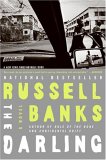
From The Darling by Russell Banks. HarperCollins Publishers. Used by permission.





The House on Biscayne Bay
by Chanel Cleeton
As death stalks a gothic mansion in Miami, the lives of two women intertwine as the past and present collide.

The Flower Sisters
by Michelle Collins Anderson
From the new Fannie Flagg of the Ozarks, a richly-woven story of family, forgiveness, and reinvention.

The Funeral Cryer by Wenyan Lu
Debut novelist Wenyan Lu brings us this witty yet profound story about one woman's midlife reawakening in contemporary rural China.
Your guide toexceptional books
BookBrowse seeks out and recommends the best in contemporary fiction and nonfiction—books that not only engage and entertain but also deepen our understanding of ourselves and the world around us.