
-
Your next favorite book
is waiting.
Summary | Excerpt | Reading Guide | Reviews | Beyond the Book | Readalikes | Genres & Themes | Author Bio
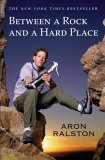
 Book Reviewed by:
Remounting, I roll down the road in the wind-protected lee of the ridgeline
in front of me, but at the top of the next hill, I'm thrust into battle against
the gusts once more. After another twenty minutes pistoning my legs along this
blast furnace of a road, I see a group of motorbikers passing me on their way to
the Maze District of Canyonlands. The dust from the motorbikes blows straight
into my face, clogging my nose, my eyes, my tear ducts, even gluing itself to my
teeth. I grimace at the grit pasted on my lips, lick my teeth clean, and press
on, thinking about where those bikers would be headed.
I've visited the Maze only once myself, for about half an hour, nearly ten
years ago. When our Cataract Canyon rafting party pulled over in the afternoon
to set up camp along the Colorado River at a beach called Spanish Bottom, I
hiked a thousand feet up over the rim rock into a place known as the Doll's
House. Fifty-to-one-hundred-foot-tall hoodoo rock formations towered above me as
I scrambled around the sandstone and granite like a Lilliputian. When I finally
turned around to look back at the river, I jerked to a halt and sat on the
nearest boulder with a view. It was the first time the features and formative
processes of the desert had made me pause and absorb just how small and brave we
are, we the human race.
Down behind the boats at Spanish Bottom, a furious river churned; suddenly, I
perceived in its auburn flow that it was, even at that exact moment, carving
that very canyon from a thousand square miles of desert tablelands. From the
Doll's House, I had the unexpected impression that I was watching the ongoing
birth of an entire landscape, as if I were standing on the rim of an exploding
caldera. The vista held for me a feeling of the dawn of time, that primordial
epoch before life when there was only desolate land. Like looking through a
telescope into the Milky Way and wondering if we're alone in the universe, it
made me realize with the glaring clarity of desert light how scarce and delicate
life is, how insignificant we are when compared with the forces of nature and
the dimensions of space. Were my group to board those two rafts a mile in the
distance and depart, I would be as cut off from human contact as a person could
be. In fifteen to thirty days' time, I would starve in a lonely death as I hiked
the meanders back upriver to Moab, never again to see the sign or skin of
another human. Yet beyond the paucity and the solitude of the surrounding
desert, it was an exultant thought that peeled back the veneer of our
self-important delusions. We are not grand because we are at the top of the food
chain or because we can alter our environment -- the environment will outlast us
with its unfathomable forces and unyielding powers. But rather than be bound and
defeated by our insignificance, we are bold because we exercise our will anyway,
despite the ephemeral and delicate presence we have in this desert, on this
planet, in this universe. I sat for another ten minutes, then, with my
perspective as widened as the view from that bluff, I returned to camp and made
extra-short work of dinner.
Riding down the road past the metal culvert that marks the dried-up source of
the West Fork of Blue John Canyon, I pass through a signed intersection where a
branch of the dirt road splits off toward Hanksville, a small town an hour to the west at the gateway to Capitol Reef
National Park. Hanksville is the closest settlement to the Robbers Roost and the
Maze District, and home to the nearest landline public telephone in the region.
Just a half mile farther, I pass a slanting grassy plain that was an airstrip
until whatever minor catastrophe forced whoever was flying there to head back to
more tenable ground. It's an indication of how small planes and helicopters are
typically the only efficient means of getting from here to there in this
country. Some of the time, though, it's not financially worth leaving here to
get there, even if you can fly. Better just to stay at home.
From Between A Rock and a Hard Place by Aron Ralston, pages 1-30. Copyright © 2004 by Aron Ralston. All rights reserved, no part of this excerpt maybe reproduced without specific permission from the publisher.




People who bite the hand that feeds them usually lick the boot that kicks them
Click Here to find out who said this, as well as discovering other famous literary quotes!

Can you name the title?
Test your book knowledge with our daily trivia challenge!
Your guide toexceptional books
BookBrowse seeks out and recommends the best in contemporary fiction and nonfiction—books that not only engage and entertain but also deepen our understanding of ourselves and the world around us.


