
-
Your next favorite book
is waiting.
Summary | Excerpt | Reviews | Readalikes | Genres & Themes | Author Bio
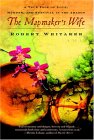
A True Tale of Love, Murder and Survival in the Amazon
by Robert Whitaker
The trip that lay ahead of Isabel stretched more than 3,000 miles. Even if all went well, it would take her six months. The route that she would follow east out of Riobamba would skirt around towering Mount Tungurahua, a volcano known to spit fire and rocks into the sky. The path would then disappear into a deep canyon and tumble quickly out of the Andes into a gloomy rain forest filled with the nerve-wracking cries of howler monkeys. From there, she would have to travel by dugout canoe down the turbulent headwaters of the Amazon, passing through a jungle that was home to clouds of insects and populated by any number of poisonous snakes and wild beasts, including the much feared American "tiger," which was believed to have quite an appetite for human flesh. Other hazards, wrote one eighteenth-century explorer who had gone this route, included "naked savages" who "eat their prisoners."
In the center of town, the scene was growing ever more chaotic. Isabel had hired thirty-one Indian porters to transport her goods on the first leg of the journey, overland to the Rio Bobonaza, and they were busy packing a long line of mules. Isabel's traveling party had grown, too. Her two brothers had decided to come along to assure her safety, and one had decided--in a burst of questionable judgment--to bring along his eldest son, figuring that this would provide an opportunity to take him to Europe, where he could get a better education. Rumors of her impending trek had also spread far beyond Riobamba and had brought two strangers to her door, a French doctor and his traveling companion. They had been making their way along the Peruvian coast and now saw a trip across the Amazon as a more intriguing way to return to France. Both groups were bringing along servants as well: Isabel and her two brothers had two maids and a Negro slave, while the French doctor had one personal attendant, bringing the total number in Isabel's party to forty-one.
Isabel had been advised to travel as lightly, as possible--advice that she found difficult to heed. There was the gear that they needed for the journey--blankets, ponchos, and food--and her many possessions. She was, after all, now moving to France. Fancy dresses, skirts, shawls, gold-buckled shoes, lace-trimmed underwear, and silver-studded belts were just a start. Next came the silver bowls, the fine china, the gold rosaries, the earrings set with emeralds, and various fancy linens. One reed basket after another was filled to the brim, the mules braying as cinches were tightened and the baskets heaved onto their backs. Yet amid this confusion and bustle, Isabel appeared the picture of elegance and charm. She had stepped from her house that morning looking as though she were planning an evening at a lively dance. She wore a light-colored dress that billowed out from her waist, dainty cotton shoes, several silver bracelets, and two gold necklaces. Her appearance reflected who she was: a Riobamban woman who had lived all of her adult life in this village, rarely traveling far from home and enjoying the luxuries that came with being part of the elite class in colonial Peru. She was forty-one years old, a little plump, and the first streaks of white could be seen in her coal-black hair. She, like the other women of Riobamba, had simply dressed up for the occasion.
At last, the train of pack mules began to move. The procession of animals and men headed slowly down the town's main street, kicking up so much dust that Isabel's friends, waving to her as she went by, held scarves to their mouths. The mules brayed, Isabel's two brothers and several of the others rode horses, and Isabel drew up the rear. She was carried aloft in a sedan chair, the Indian porters having been given orders to jostle her as little as possible.
Chapter Two
Not Quite Round
The chain of events that led Isabel Godin to that moment in 1769 when she set off on her trek into the Amazon, had begun more than thirty-five years earlier, in a place far from her Peruvian home. At that time, a debate was raging in European scientific circles, one that was roiling the august halls of the French Academy of Sciences. The English were squaring off with the French, young scientists in the academy were battling their mentors, and tempers were such that when Voltaire jumped into the fray, with his customary stinging wit and on the side of the English, his book was summarily burned and he was forced to flee Paris. The question at hand was a profound one: What was the precise size and shape of the earth? And even more important, what did that shape reveal about the laws of gravitation and planetary motion that governed the universe? Although the argument may have turned rancorous, the fact that this question had become the most pressing scientific topic of the day, one savored by the educated public in Paris and London, represented a coming-of-age for the Enlightenment. The roots of this transforming movement dated back more than a century to the writings of the English philosopher Francis Bacon and the French mathematician René Descartes. In his Discourse on Method, Descartes argued that in order to know the world, it was necessary to doubt all accepted wisdom. That was a heretical idea in 1637, for it meant questioning Christian doctrines about the natural world. Once the mind was emptied of such beliefs, Descartes wrote, insight could arise from "an unclouded and attentive mind, which springs from the light of reason." Seventeenth-century intellectuals adopted this faith in reason as their operating manifesto, even though it brought them into conflict with religious authorities. This approach produced a steady flow of achievements in astronomy, mathematics, and mapmaking, and as it did so, the literate public in France and England developed a keen interest in science, which, in the early eighteenth century, blossomed into the Enlightenment. Paris, a city with a population of 500,000 in 1734, was at the epicenter of this revolution in thought. Upper-class men and women regularly gathered in sitting rooms to discuss art, philosophy, and science. Periodicals carried announcements of public lectures on these topics, which drew standing-room-only crowds. Lending libraries were created and stocked with books on science. As a historian of eighteenth-century France wrote, "Science was the true passion of the century at all literate levels of society, in every urban center of France, and even among the progressively minded gentleman-farmers." The debate over the size and shape of the earth, which erupted in full force in the 1720s, resonated in particular with the French public. As the members of the French Academy of Sciences proudly wrote, this question had a long history and was so elemental that the intellectual progress of human civilization could be charted by following the steps that societies had made in solving it.
From The Map Maker's Wife by Robert Whitaker. Copyright 2004 Robert Whitaker. All rights reserved.







Books are the carriers of civilization
Click Here to find out who said this, as well as discovering other famous literary quotes!

Can you name the title?
Test your book knowledge with our daily trivia challenge!
Your guide toexceptional books
BookBrowse seeks out and recommends the best in contemporary fiction and nonfiction—books that not only engage and entertain but also deepen our understanding of ourselves and the world around us.


