Summary | Excerpt | Reading Guide | Reviews | Readalikes | Genres & Themes | Author Bio
Critics' Opinion:
Readers' Opinion:
First Published:
May 2004, 257 pages
Paperback:
Apr 2005, 272 pages

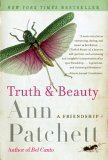
Chapter One
The thing you can count on in life is that Tennessee will always be scorching hot in August. In 1985 you could also pretty much count on the fact that the U-Haul truck you rented to drive from Tennessee to Iowa, cutting up through Missouri, would have no air-conditioning or that the air-conditioning would be broken. These are the things I knew for sure when I left home to start graduate school. The windows were down in the truck and my stepsister, Tina, was driving. We sat on towels to keep our bare legs from adhering to the black vinyl seats and licked melted M&Ms off our fingers. My feet were on the dashboard and we were singing because the radio had gone the way of the air conditioner. "Going to the chap-el and we're—gonna get mar-ar-aried." We knew all the words to that one. Tina had the better voice, one more reason I was grateful she had agreed to come along for the ride. I was twenty-one and on my way to be a fiction writer. The whole prospect seemed as simple as that: rent a truck, take a few leftover pots and pans and a single bed mattress from the basement of my mother's house, pack up my typewriter. The hills of the Tennessee Valley flattened out before we got to Memphis and as we headed north the landscape covered over with corn. The blue sky blanched white in the heat. I leaned out the window and thought, Good, no distractions.
I had been to Iowa City once before in June to find a place to live. I was looking for two apartments then, one for myself and one for Lucy Grealy, who I had gone to college with. I got a note from Lucy not long after receiving my acceptance letter from the Iowa Writers' Workshop. She said that initially when she heard I had gotten into the workshop she was sorry, because she had wanted to be the only student there from Sarah Lawrence. But then our mutual friend Jono Wilks had told her that I was going up early to find housing and if this was the case, would I find a place for her as well? She couldn't afford to make the trip to look herself and so it went without saying that she was on a very tight budget. I sat at the kitchen table and looked at her handwriting, which seemed oddly scrawny and uncertain, like a note on a birthday card from an elderly aunt. I had never seen her writing before, and certainly these were the only words she had ever addressed to me. While Lucy and I would later revise our personal history to say we had been friends since we met as freshmen, just for the pleasure of adding a few more years to the tally, the truth was we did not know each other at all in college. Or the truth was that I knew her and she did not know me. Even at Sarah Lawrence, a school full of models and actresses and millionaire daughters of industry, everyone knew Lucy and everyone knew her story: she had had a Ewing's sarcoma at the age of nine, had lived through five years of the most brutal radiation and chemotherapy, and then undergone a series of reconstructive surgeries that were largely unsuccessful. The drama of her life, combined with her reputation for being the smartest student in all of her classes, made her the campus mascot, the favorite pet in her dirty jeans and oversized Irish sweaters. She kept her head tipped down so that her long dark blond hair fell over her face to hide the fact that part of her lower jaw was missing. From a distance you would have thought she had lost something, money or keys, and that she was vigilantly searching the ground trying to find it.
It was Lucy's work-study job to run the film series on Friday and Saturday nights, and before she would turn the projector on, it was up to her to walk in front of the screen and explain that in accordance with the New York State Fire Marshal, exits were located at either side of the theater. Only she couldn't say it, because the crowd of students cheered her so wildly, screaming and applauding and chanting her name, "LOO-cee, LOO-cee, LOO-cee!" She would wrap her arms around her head and twist from side to side, mortified, loving it. Her little body, the body of an underfed eleven-year-old, was visibly shaking inside her giant sweaters. Finally her embarrassment reached such proportions that the audience recognized it and settled down. She had to speak her lines. "In accordance with the New York State Fire Marshal," she would begin. She was shouting, but her voice was smaller than the tiny frame it came from. It was no more than a whisper once it passed the third row.
From Truth & Beauty by Ann Patchett. HarperCollins Publishers. Used by permission.





The Flower Sisters
by Michelle Collins Anderson
From the new Fannie Flagg of the Ozarks, a richly-woven story of family, forgiveness, and reinvention.

The House on Biscayne Bay
by Chanel Cleeton
As death stalks a gothic mansion in Miami, the lives of two women intertwine as the past and present collide.

The Funeral Cryer by Wenyan Lu
Debut novelist Wenyan Lu brings us this witty yet profound story about one woman's midlife reawakening in contemporary rural China.
Your guide toexceptional books
BookBrowse seeks out and recommends the best in contemporary fiction and nonfiction—books that not only engage and entertain but also deepen our understanding of ourselves and the world around us.