Summary | Excerpt | Reading Guide | Reviews | Beyond the Book | Readalikes | Genres & Themes | Author Bio
Critics' Opinion:
Readers' Opinion:
First Published:
May 2004, 256 pages
Paperback:
Aug 2005, 304 pages
 Book Reviewed by:
BookBrowse Review Team
Buy This Book

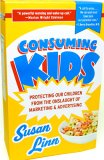
As my daughter progressed through elementary school, the press of commercialism was escalating at breakneck speed. Like all parents, I was coping with the effects of marketing at home. In 1996, as part of my work, I began to track its escalation in a broader sense as well. As the associate director of the Media Center of the Judge Baker Children's Center in Boston, Massachusetts, my mission was and is to work with media to promote the health and well-being of children and to mitigate the media's negative effects. I began to assess the growing body of research and reports documenting the impact of marketing on children. I immersed myself in the myriad books, journals, and newspapers written for and by people responsible for creating commercials and advertising campaigns that target children. I began talking to parent groups—and to children—about the effect of marketing on their lives. In recent years, a significant portion of my time has also been devoted to writing, speaking, and advocating on behalf of children in the marketplace.
Most parents struggle in one way or another to keep corporate culture at bay. In doing so they often feel beleaguered and quite alone. But I see their stories in the context of a large, cohesive, and frightening picture. The most common complaints about marketing to children center on specific products such as violent media, alcohol, tobacco, and, most recently, junk food. Yet to focus only on products is to underestimate the magnitude of the problem. Of equal concern are the sheer volume of advertising to which children are exposed, the values embedded in the marketing messages, and the behaviors those messages inspire.
Children have been targets for some kinds of advertising for a long, long time—from carnival barkers hawking freak shows to ads in comic books and, since their early days, radio and television. But it's not the same today. Comparing the advertising of two or three decades ago to the commercialism that permeates our children's world is like comparing a BB gun to a smart bomb. The explosion of marketing aimed at kids today is precisely targeted, refined by scientific method, and honed by child psychologists—in short, it is more pervasive and intrusive than ever before.
Today's children are assaulted by advertising everywhere—at home, in school, on sports fields, in playgrounds, and on the street. They spend almost forty hours a week engaged with the media—radio, television, movies, magazines, the Internet—most of which are commercially driven. The average child sees about about 40,000 commercials a year on television alone. Many, if not most, children's television programs, including those produced by the Public Broadcasting System (PBS), are funded through licensing, a practice that allows companies to market toys, clothing, and accessories based on characters or logos associated with a program.
Children, including very young children, often watch television by themselves, meaning that no adult is present to help them process marketing messages. Poor children, a population in which children of color are disproportionately represented, watch even more television than their middle- and upper-class counterparts. However, regardless of class, African American and Latino children watch more TV than Caucasian children.
While television remains the major medium through which advertisers target children, it's no longer the only medium. In the 1970s, people concerned about marketing to children worried mainly about the effects of TV commercials on Saturday mornings. Now the average American child lives in a home with three television sets, two CD players, three radios, a video game console, and a computer. Two-thirds of children between the ages of eight and eighteen have televisions in their bedrooms, as do 32 percent of two- to seven-year-olds, and 26 percent of children under two. Electronic media continues to proliferate while, as a nation, our willingness to embrace technology constantly outpaces our understanding of its cultural, social, and ethical implications.
From Consuming Kids by Susan Linn, pages 1-10. Copyright Susan Linn 2004. All rights reserved. No part of this book maybe reproduced without written permission from the publisher, The New Press.






The Flower Sisters
by Michelle Collins Anderson
From the new Fannie Flagg of the Ozarks, a richly-woven story of family, forgiveness, and reinvention.

The House on Biscayne Bay
by Chanel Cleeton
As death stalks a gothic mansion in Miami, the lives of two women intertwine as the past and present collide.

The Funeral Cryer by Wenyan Lu
Debut novelist Wenyan Lu brings us this witty yet profound story about one woman's midlife reawakening in contemporary rural China.
Your guide toexceptional books
BookBrowse seeks out and recommends the best in contemporary fiction and nonfiction—books that not only engage and entertain but also deepen our understanding of ourselves and the world around us.