Summary | Excerpt | Reviews | Readalikes | Genres & Themes | Author Bio
Critics' Opinion:
Readers' Opinion:
First Published:
Feb 2004, 592 pages
Paperback:
Feb 2005, 592 pages

Table of Contents
Preface
Part 1: Reality's Arena
Part II: Time and Experience
Part III: Spacetime and Cosmology
Part IV: Origins and Unification
Part V: Reality and Imagination
Notes
Glossary
Suggestions for Further Reading
Index
Chapter 1: Roads to Reality
SPACE, TIME, AND WHY THINGS ARE AS THEY ARE
None of the books in my father's dusty old bookcase were forbidden. Yet while I was growing up, I never saw anyone take one down. Most were massive tomes–a comprehensive history of civilization, matching volumes of the great works of western literature, numerous others I can no longer recall–that seemed almost fused to shelves that bowed slightly from decades of steadfast support. But way up on the highest shelf was a thin little text that, every now and then, would catch my eye because it seemed so out of place, like Gulliver among the Brobdingnagians. In hindsight, I'm not quite sure why I waited so long before taking a look. Perhaps, as the years went by, the books seemed less like material you read and more like family heirlooms you admire from afar. Ultimately, such reverence gave way to teenage brashness. I reached up for the little text, dusted it off, and opened to page one. The first few lines were, to say the least, startling.
"There is but one truly philosophical problem, and that is suicide," the text began. I winced. "Whether or not the world has three dimensions or the mind nine or twelve categories," it continued, "comes afterward"; such questions, the text explained, were part of the game humanity played, but they deserved attention only after the one true issue had been settled. The book was The Myth of Sisyphus and was written by the Algerian-born philosopher and Nobel laureate Albert Camus. After a moment, the iciness of his words melted under the light of comprehension. Yes, of course, I thought. You can ponder this or analyze that till the cows come home, but the real question is whether all your ponderings and analyses will convince you that life is worth living. That's what it all comes down to. Everything else is detail.
My chance encounter with Camus' book must have occurred during an especially impressionable phase because, more than anything else I'd read, his words stayed with me. Time and again I'd imagine how various people I'd met, or heard about, or had seen on television would answer this primary of all questions. In retrospect, though, it was his second assertion–regarding the role of scientific progress – that, for me, proved particularly challenging. Camus acknowledged value in understanding the structure of the universe, but as far as I could tell, he rejected the possibility that such understanding could make any difference to our assessment of life's worth. Now, certainly, my teenage reading of existential philosophy was about as sophisticated as Bart Simpson's reading of Romantic poetry, but even so, Camus' conclusion struck me as off the mark. To this aspiring physicist, it seemed that an informed appraisal of life absolutely required a full understanding of life's arena–the universe. I remember thinking that if our species dwelled in cavernous outcroppings buried deep underground and so had yet to discover the earth's surface, brilliant sunlight, an ocean breeze, and the stars that lie beyond, or if evolution had proceeded along a different pathway and we had yet to acquire any but the sense of touch, so everything we knew came only from our tactile impressions of our immediate environment, or if human mental faculties stopped developing during early childhood so our emotional and analytical skills never progressed beyond those of a five-year-old–in short, if our experiences painted but a paltry portrait of reality–our appraisal of life would be thoroughly compromised. When we finally found our way to earth's surface, or when we finally gained the ability to see, hear, smell, and taste, or when our minds were finally freed to develop as they ordinarily do, our collective view of life and the cosmos would, of necessity, change radically. Our previously compromised grasp of reality would have shed a very different light on that most fundamental of all philosophical questions.
Excerpted from The Fabric of the Cosmos by Brian Greene Copyright© 2004 by Brian Greene. Excerpted by permission of Knopf, a division of Random House, Inc. All rights reserved. No part of this excerpt may be reproduced or reprinted without permission in writing from the publisher.



The Flower Sisters
by Michelle Collins Anderson
From the new Fannie Flagg of the Ozarks, a richly-woven story of family, forgiveness, and reinvention.
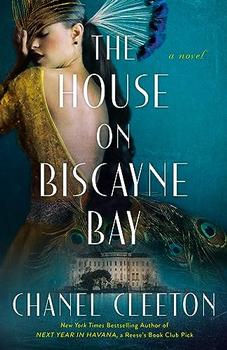
The House on Biscayne Bay
by Chanel Cleeton
As death stalks a gothic mansion in Miami, the lives of two women intertwine as the past and present collide.

The Funeral Cryer by Wenyan Lu
Debut novelist Wenyan Lu brings us this witty yet profound story about one woman's midlife reawakening in contemporary rural China.
Your guide toexceptional books
BookBrowse seeks out and recommends the best in contemporary fiction and nonfiction—books that not only engage and entertain but also deepen our understanding of ourselves and the world around us.