Summary | Excerpt | Reviews | Readalikes | Genres & Themes | Author Bio
Critics' Opinion:
Readers' Opinion:
First Published:
Oct 2003, 480 pages
Paperback:
Nov 2004, 528 pages

Chapter One
The Quest
"He holds him with his skinny hand,
"There was a ship," quoth he.
"Hold off! unhand me, grey-beard loon!"
"Eftsoons his hand dropt he.
On June 7, 1494, Pope Alexander VI divided the world in half, bestowing the western portion on Spain, and the eastern on Portugal.
Matters might have turned out differently if the Pontiff had not been a Spaniard — Rodrigo de Borja, born near Valencia — but he was. A lawyer by training, he assumed the Borgia name when his maternal uncle, Alfonso Borgia, began his brief reign as Pope Callistus III. As his lineage suggests, Alexander VI was a rather secular pope, among the wealthiest and most ambitious men in Europe, fond of his many mistresses and his illegitimate offspring, and endowed with sufficient energy and ability to indulge his worldly passions.
He brought the full weight of his authority to bear on the appeals of King Ferdinand and Queen Isabella, the "Catholic Monarchs" of Spain who had instituted the Inquisition in 1492 to purge Spain of Jews and Moors. They exerted considerable influence over the papacy, and they had every reason to expect a sympathetic hearing in Rome. Ferdinand and Isabella wanted the pope's blessing to protect the recent discoveries made by Christopher Columbus, the Genoese navigator who claimed a new world for Spain. Portugal, Spain's chief rival for control of world trade, threatened to assert its own claim to the newly discovered lands, as did England and France.
Ferdinand and Isabella implored Pope Alexander VI to support Spain's title to the New World. He responded by issuing papal bulls — solemn edicts — establishing a line of demarcation between Spanish and Portuguese territories around the globe. The line extended from the North Pole to the South Pole. It was located one hundred leagues (about four hundred miles) west of an obscure archipelago known as the Cape Verde Islands, located in the Atlantic Ocean off the coast of North Africa. Antonio and Bartolomeo da Noli, Genoese navigators sailing for Portugal, had discovered them in 1460, and ever since, the islands had served as an outpost in the Portuguese slave trade.
The papal bulls granted Spain exclusive rights to those parts of the globe that lay to the west of the line; the Portuguese, naturally, were supposed to keep to the east. And if either kingdom happened to discover a land ruled by a Christian ruler, neither would be able to claim it. Rather than settling disputes between Portugal and Spain, this arrangement touched off a furious race between the nations to claim new lands and to control the world's trade routes even as they attempted to shift the line of demarcation to favor one side or the other. The bickering over the line's location continued as diplomats from both countries convened in the little town of Tordesillas, in northwestern Spain, to work out a compromise.
In Tordesillas, the Spanish and Portuguese representatives agreed to abide by the idea of a papal division, which seemed to protect the interests of both parties. At the same time, the Portuguese prevailed on the Spanish representatives to move the line 270 leagues west; now it lay 370 leagues west of the Cape Verde Islands, at approximately 46' 30' W, according to modern calculations. This change placed the boundary in the middle of the Atlantic, roughly halfway between the Cape Verde Islands and the Caribbean island of Hispaniola. The new boundary gave the Portuguese ample access to the African continent by water and, even more important, allowed the Portuguese to claim the newly discovered land of Brazil. But the debate over the line — and the claims for empire that depended on its placement — dragged on for years. Pope Alexander VI died in 1503, and he was succeeded by Pope Julius II, who in 1506 agreed to the changes, and the Treaty of Tordesillas achieved its final form.


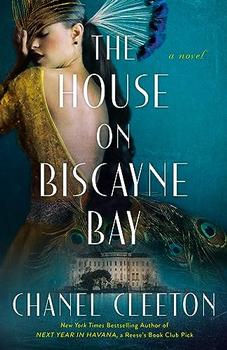
The House on Biscayne Bay
by Chanel Cleeton
As death stalks a gothic mansion in Miami, the lives of two women intertwine as the past and present collide.
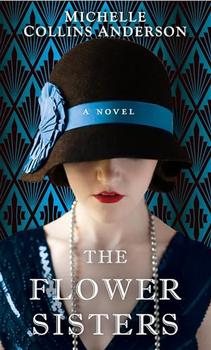
The Flower Sisters
by Michelle Collins Anderson
From the new Fannie Flagg of the Ozarks, a richly-woven story of family, forgiveness, and reinvention.

The Funeral Cryer by Wenyan Lu
Debut novelist Wenyan Lu brings us this witty yet profound story about one woman's midlife reawakening in contemporary rural China.
Your guide toexceptional books
BookBrowse seeks out and recommends the best in contemporary fiction and nonfiction—books that not only engage and entertain but also deepen our understanding of ourselves and the world around us.