Summary | Excerpt | Reviews | Readalikes | Genres & Themes | Author Bio

Critics' Opinion:
Readers' Opinion:
First Published:
Oct 2003, 624 pages
Paperback:
Jun 2004, 624 pages

"Sooner or later," Lara assured him, "you'll get Congress to pass a decent gun law."
Kerry raised his eyebrows, exchanging bitterness for an irony tinged with good-natured frustration. "Before or after we get married?"
Lara smiled, unfazed. "That I can't tell you. But certainly before I find a job."
This was another blind curve on the road to marriage. Though she was developing a degree of fatalism, the resignation of a would-be First Lady to the limitations of her new life, Lara had always been independent, beholden to no one for support or a sense of who she was. That Kerry understood this did not change what she would lose by marrying him--her own identity. Already she had been forced to take leave from NBC: the potential for conflicts of interest, or at least their appearance--that a powerful network might profit by employing the President's fiancee--also applied to any other segment of the media. A brief flirtation with the presidency of the Red Cross--based on her high profile as a television journalist and experience in war zones--had floundered on the fear that major donors might want something from President Kilcannon. Other jobs had similar problems, and the best ones, Lara acknowledged, would take away from her public duties and her private time with Kerry. "I'm sorry," she said at last. "I was being a brat. It may not seem so, but you're actually more important to me than running the Red Cross."
Though he knew this, or at least should, to Lara his expression betrayed a certain relief. "Then your fate is sealed, I'm afraid."
"I guess it is," she answered dryly. "I'm a fool for love."
Once more he drew her close. "The thing is," he continued, "I'm forty-three. Even if we started tomorrow, by the time our first son or daughter graduates from college I'll be on Social Security. If there's any left."
"Tell that to the Pope."
"Oh, I have. I even mentioned that Meg couldn't stand the thought of children." There was a different tone in his voice, Lara thought; hand gently touching her chin, he raised her face to his. "And, at last, he's heard me."
She felt a tingle of surprise. "The annulment?"
Kerry grinned. "Yes. That."
Astonished, Lara pulled back to look at him. "When?"
"Yesterday."
"Why didn't you tell me?"
"I was in Pittsburgh." There was new light in his eyes, and he spoke more softly. "This just seemed like a better time and place."
Knowing how much he wanted this, Lara felt the depth of her love for him. This moment was the last threshold, she knew, before she entered the hall of mirrors which was the Presidency, the omnipresent, often merciless scrutiny which could change lives and warp marriages until even the most private act assumed a public significance. Briefly, she thought of her abortion, felt the familiar stab of fear. Then she thought of Kerry, and imagined their children.
Excerpted from Balance of Power by Richard North Patterson Copyright© 2003 by Richard North Patterson. Excerpted by permission of Ballantine Books, a division of Random House, Inc. All rights reserved. No part of this excerpt may be reproduced or reprinted without permission in writing from the publisher.






The Flower Sisters
by Michelle Collins Anderson
From the new Fannie Flagg of the Ozarks, a richly-woven story of family, forgiveness, and reinvention.
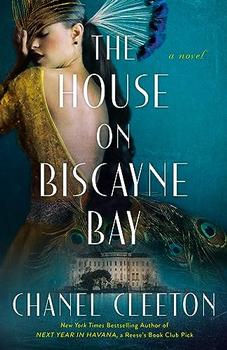
The House on Biscayne Bay
by Chanel Cleeton
As death stalks a gothic mansion in Miami, the lives of two women intertwine as the past and present collide.

The Funeral Cryer by Wenyan Lu
Debut novelist Wenyan Lu brings us this witty yet profound story about one woman's midlife reawakening in contemporary rural China.
Your guide toexceptional books
BookBrowse seeks out and recommends the best in contemporary fiction and nonfiction—books that not only engage and entertain but also deepen our understanding of ourselves and the world around us.