Summary | Excerpt | Reviews | Readalikes | Genres & Themes | Author Bio
Critics' Opinion:
Readers' Opinion:
First Published:
Sep 2003, 426 pages
Paperback:
Aug 2004, 480 pages

America: What went wrong?
The satirical weekly The Onion describes itself as "America's finest news source"—and for the last few years that has been the literal truth. The mock news story for January 18, 2001, reported a speech in which President-elect George W. Bush declared, "Our long national nightmare of peace and prosperity is over." And so it has turned out.
What happened to the good years? For many people, the great emotional turning point—the moment when their dreams of security were shattered—was September 11, 2001. But for me the turn was slower and broader than that.
I don't mean to belittle the horror. But anyone who followed Middle Eastern events knew that the United States was a terrorist target. You may remember that at first everyone assumed that the 1995 bombing in Oklahoma City involved Muslims. Experts on terrorism warned us repeatedly over the years that there would someday be a major attack on U.S. soil—though the sheer size of the mass murder on September 11 was a shock. We knew there were people out there who wanted to hurt us; it wasn't that much of a surprise when they finally scored a hit.
The real surprise was the failure of leadership, private and public, right here at home.
Some people realized that there were business excesses in the 1990s, though they had a hard time getting themselves heard. But the extent and brazenness of the excesses was greater than anyone realized. The bull market, we learned too late, both encouraged and concealed corporate misbehavior on an epic scale. Who could have imagined that famous companies, lauded in business schools as the very models of a major modern corporation, would turn out to be little more than Ponzi schemes? (Actually, some people did say that, but they were dismissed as cranks.)
Even more troubling was the revelation that our political system was far less mature than we thought, that the responsible leadership we had come to take for granted had been a sort of accident. In the 2000 campaign, George W. Bush offered a tax plan and a Social Security plan that were obviously, blatantly based on bogus arithmetic. Yet the media focused on the politics of personality, and avoided explaining the issues. Meanwhile, Alan Greenspan turned out not to be who we thought he was: the stern advocate of austerity and fiscal discipline when a Democrat was in office became an apologist and enabler for irresponsible tax cuts, even in the face of soaring deficits, once the White House had changed hands.
Moreover, the new team showed neither the long-run responsibility nor the short-term flexibility of its predecessors. The original Bush economic plan involved big, long-run tax cuts that phased in only gradually. By 2002 it was clear that this plan had it backwards. Like his father, Bush was presiding over a "jobless recovery"—that is, an economy that was growing, but too slowly to provide new jobs, so that most people found their lives getting worse. This economy badly needed a short-term boost, not a long-run tax cut. And the spectacular deterioration of the budget meant that long-run tax cuts were no longer remotely affordable. Yet Bush's aides continued to insist that their program, formulated back in 1999 at the height of the bubble, was exactly the right solution for the economy's current difficulties. And in early 2003, when they finally seemed to realize that something more was needed, the new "stimulus" plan was practically a clone of the original plan: hardly anything to stimulate the economy now, but lots of long-term tax cuts, mainly for the rich.
More ominously, it gradually became clear that something deeper than mere bad economic ideology was at work. The bigger story was America's political sea change, the central theme of this book's Introduction.
Why me?
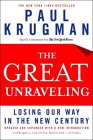
From The Great Unraveling: Losing Our Way in the New Century by Paul Krugman. Copyright Paul Krugman. All rights reserved. No part of this book may be reproduced without written permission from the publisher.



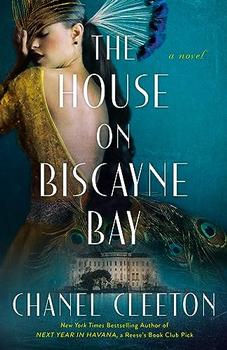
The House on Biscayne Bay
by Chanel Cleeton
As death stalks a gothic mansion in Miami, the lives of two women intertwine as the past and present collide.

The Flower Sisters
by Michelle Collins Anderson
From the new Fannie Flagg of the Ozarks, a richly-woven story of family, forgiveness, and reinvention.

The Funeral Cryer by Wenyan Lu
Debut novelist Wenyan Lu brings us this witty yet profound story about one woman's midlife reawakening in contemporary rural China.
Your guide toexceptional books
BookBrowse seeks out and recommends the best in contemporary fiction and nonfiction—books that not only engage and entertain but also deepen our understanding of ourselves and the world around us.