Summary | Excerpt | Reading Guide | Reviews | Readalikes | Genres & Themes | Author Bio
Critics' Opinion:
Readers' Opinion:
First Published:
Aug 2003, 272 pages
Paperback:
Aug 2004, 253 pages

Until now, we'd seen plenty of crevasses, giant cracks in the ice that can widen into gaps that go down hundreds of feet, even miles, below the surface. But here, the crevasses were gullies, trenches, craters. They were wider than the 6-foot-length (1.8 m) of our fiberglass sleds, the ice ridges between them barely a few feet wide. Avoiding these crevasses was like trying to hop from rock to rock across a river without falling in the water. Except our "rocks" were made of slick ice and our "river" was a sheer drop-off of at least 12 feet (4 m) in many places. We kept leaping from ridge to ridge, hoping all the while that the terrain would get better. At least once or twice every few minutes one of our sleds slid into a crevasse. Sometimes we could tug them out alone, but more often than not, one of us would have to unhitch from her own sled and help the other pull out the errant sled. We were battling for every inch. And the flat light and vast distance of Antarctica played tricks on our eyes. The ice just ahead would tantalizingly appear to flatten out, but as we came upon it, we found it just as turbulent as the trenches we'd just struggled across.
I could see Liv was in pain as well. One fingertip on her right hand had turned yellow on its way to frostbite. She had soaked her fingers in her oatmeal that morning in an attempt to get some feeling back into them. But her mood was worse than her physical condition. She didn't seem to care that the ice had torn a gash in the side of her sled. I could see one of the food bags through the hole.
We both felt the time pressure. We had only fifteen days to finish our trek across Antarctica before we were scheduled to meet our ship in McMurdo Sound. In that time, we still had more than 500 miles (805 km) to cover. Pushing beyond our cutoff date would mean stretching the trip into the beginning of the Antarctic winter, when the weather would become too dangerous for us and for the ship. Already, the windows of respite between the blizzard-like conditions were narrowing. If we had hit Shackleton glacier even a few days earlier, when the snow and wind had whirled until all visibility was gone, we could easily have fallen into one of these crevasses and broken legs, arms, or worse.
We simply had to go faster. And that would be impossible unless the ice smoothed out. Unless the wind picked up. Unless, unless, unless. This trip was starting to feel doomed. It seemed we hadn't had a break in our bad luck at any point in the journey.
Crunch! I felt something snap under my right foot. My crampon had broken. Now I would have to stop and spend precious time to fix it, if that were even possible. I called to Liv, who was a few steps ahead of me, and we both stopped for a meal break. Even with our many layers and windproof parkas, within a few minutes we would go from sweating from exertion to shivering with cold. We drank thermoses of hot sports drink and ate chocolate in exhausted silence. I thought about the schoolgirls we had met in South Africa before starting our trek, the Norwegian kids writing letters to our base camp in Minneapolis, the children in Ecuador who were running every day, trying to add up their miles to total the length of our journey as a way of traveling with us. The image in my head of the hopeful faces of the children excited by our expedition had propelled me across the first 1,000 miles (1,610 km) of ice. Now, they haunted me. Our team back at base camp had told us that more than 3 million kids were tracking our journey on our Web site, listening to our recorded voices giving updates by satellite phone and following the online curriculum we developed. How could I tell those kids that I just couldn't make it? The very point of the trip had been to show them that dreams can become reality. What kind of message would I be sending them if I failed in my lifelong dream to cross Antarctica? I had been fundraising and planning and believing for eleven years. This was my last chance. And it now seemed that I might not make it after all. The thought of disappointing all those kids put a knot in my chest that hurt more than my knees.
From No Horizon Is So Far by Ann Bancroft, Liv Arnesen and Cheryl Dahle. Copyright Ann Bancroft, Liv Arnesen and Cheryl Dahle 2003. All rights reserved. No part of this book may be reproduced without written permission from the publisher, Da Capo Press.


The House on Biscayne Bay
by Chanel Cleeton
As death stalks a gothic mansion in Miami, the lives of two women intertwine as the past and present collide.
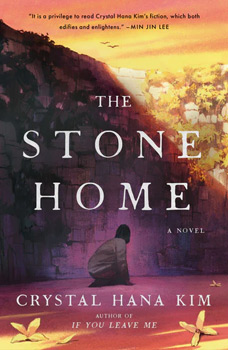
The Stone Home
by Crystal Hana Kim
A moving family drama and coming-of-age story revealing a dark corner of South Korean history.

The Funeral Cryer by Wenyan Lu
Debut novelist Wenyan Lu brings us this witty yet profound story about one woman's midlife reawakening in contemporary rural China.
Your guide toexceptional books
BookBrowse seeks out and recommends the best in contemporary fiction and nonfiction—books that not only engage and entertain but also deepen our understanding of ourselves and the world around us.