Summary | Excerpt | Reading Guide | Reviews | Readalikes | Genres & Themes | Author Bio
Critics' Opinion:
Readers' Opinion:
First Published:
Apr 2003, 320 pages
Paperback:
Jan 2004, 352 pages

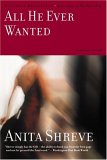
We ousted, and therefore fortunate, diners stood at the center of this universe, too stunned yet to begin to shiver in earnest from the cold and the snow that soaked our boots. Many people were squinting at the blaze or had thrown their arms over their eyes and were staggering backward from the heat. Somewhat bewildered myself, I moved aimlessly through the throng, not having the wits to walk across the quadrangle to Woram Hall, where I might have attained my bed. And so it was that my eyes were caught, in the midst of this chaos, by the sight of a woman who was standing near a lamppost.
I have always been a man who, when glancing at a woman, looks first at the face, and then at the waist (those shallow curves that so signal youth and vitality), and then thirdly at the hair, assessing in an instant its gloss and length. I know that there are men for whom the reverse is true and men whose eyes fix inevitably upon the bodice of a dress and then hope for a glimpse of calf, but on that night, I was incapable of parsing the woman in question in such a calculated manner simply because I was too riveted by the whole.
I will not say plain, for who of us is entirely plain in youth? But neither will I say beautiful, for there was about her face and person a strength of color and of feature that rendered her neither delicate nor pliant, attributes I had previously thought necessary for any consideration of true feminine beauty. She had immoderate height as well, which is often off-putting in a woman. But there was about her a quality of stillness that was undeniably arresting. If I close my eyes now, here in this racketing compartment, I can travel back in time more than three decades and see her unmoving form amidst the nearly hysterical crowd. And even the golden brown of her eyes, a color in perfect complement to the topaz of her dress, an inspired choice of fabric.
(As it happened, this was a skill at which Etna had no peer — that of matching her clothing and jewels to her own idiosyncratic charms.)
The woman had almond-shaped eyes and an abundance of dark brown lashes. Her nostrils and her cheekbones were prominent, as if there were a foreign element to her blood. Her acorn-colored hair, I guessed, would unwind to her waist. She was holding a child in her arms, which I took to be her own. My desire for this unknown woman was so immediate and keen and inappropriate that it quite startled me; and I have often wondered if that punishing desire, that sense of fire within the body, that craven need to touch the skin, was not simply the result of the heightened circumstances of the fire itself. Would I have been so ravished had I seen Etna Bliss across the dining room, or turned and noted her standing behind me on a street corner? I answer myself, as I inevitably do, with the knowledge that it would not have mattered in what place or on what date I first saw the woman — my reaction would have been just as swift and as terrifying.
(In a further aside, I should just like to add here that I have observed in my sixty-four years that passion both erodes and enhances character in equal measure, and not slowly but instantly, and in such a manner that what is left is not in balance but is thrown desperately out of kilter in both directions. The erosion the result of the willingness to do whatever is necessary to obtain the object of one’s desire, even if it means engaging in lies or deception or debasing what was once treasured. The enhancement a result of the knowledge that one is capable of loving greatly, an understanding that leaves one, paradoxically, with a feeling of gratitude and pride in spite of all the carnage.)
(But, of course, I knew none of this at the time.)
When I had attended with some impatience and distraction to a man who had attached himself to my arm, an elderly gentleman with rheumy eyes looking for his wife, I turned back to the place where the woman and child had stood and saw that they were gone. With a sense of panic I can only describe as wholly uncharacteristic and quite possibly deranged — fortunately such agitation was hardly noticeable in that crowd — I searched the quadrangle as a father will for a lost child. Many people were already dispersing to their homes and to cabs (a fact that did little to ease my anxiety), while others had emerged from the surrounding houses with blankets and coats and water and cocoa and even spirits for the victims of the blaze. Some of those who had been in the dining room were now huddled in garments that were either too big or too small for them; they looked like refugees who had beached themselves upon the quadrangle. By now the fire brigade had arrived and was turning its hoses on the hotel. I am not aware that they saved a single soul that night, though they did drench the charred building with water that turned to icicles before morning.
From All He Ever Wanted by Anita Shreve. Copyright 2003. All rights reserved. No part of this book may be reproduced in any form without written permission from the publisher, Little, Brown & Company.



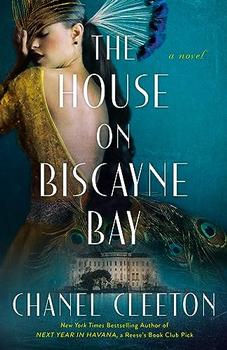
The House on Biscayne Bay
by Chanel Cleeton
As death stalks a gothic mansion in Miami, the lives of two women intertwine as the past and present collide.
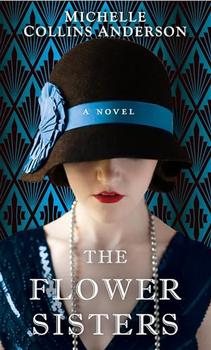
The Flower Sisters
by Michelle Collins Anderson
From the new Fannie Flagg of the Ozarks, a richly-woven story of family, forgiveness, and reinvention.
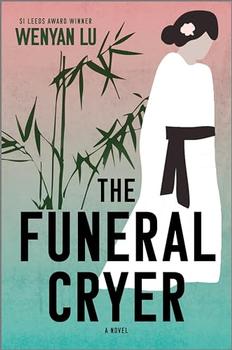
The Funeral Cryer by Wenyan Lu
Debut novelist Wenyan Lu brings us this witty yet profound story about one woman's midlife reawakening in contemporary rural China.
Your guide toexceptional books
BookBrowse seeks out and recommends the best in contemporary fiction and nonfiction—books that not only engage and entertain but also deepen our understanding of ourselves and the world around us.