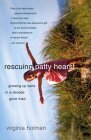
Summary | Excerpt | Reading Guide | Reviews | Readalikes | Genres & Themes | Author Bio
Critics' Opinion:
Readers' Opinion:
First Published:
Feb 2003, 256 pages
Paperback:
Mar 2004, 256 pages

"In an educated, middle-class family?"
"With children at stake?"
"Why didn't anybody do anything?"
"How is this possible?"
I was just busy trying to get through those years -- these were questions I had never had time to ask. For many years I certainly had no answer other than a blank shrug.
Then, in my thirty-third year, I began asking my parents and sister and friends about the years my family was held hostage by my mother's delusions. Now when someone says, "Why couldn't somebody help you?" I can say in reply:
"Here's how. Sit back. Listen. It could happen to you."
1974
The spring before my mother's first psychotic episode we lived in a town house in a complex of town houses and apartments in Virginia Beach. My father worked in a bank in Portsmouth, Virginia; my mother was a stay-at-home wife and mom. My sister was one year old and in a half-body cast to correct her displaced hips, a congenital defect. One day I came home from third grade to find my mother in the den, bent over the sofa, frantically changing my sister's diaper through the large square cut in the gray eggy-smelling crotch of the cast. Mother had her red, polka-dot scarf knotted in her hair and was dressed in a wool dress I'd never seen before. It had blue stripes and little brass buttons embossed with anchors. Her white nylon gloves, reserved for church or weddings, were laid out beside her purse on the foyer table.
"There's a treasure hunt," she told me. "We need to go." I wondered if this was like the scavenger hunts I'd gone on at birthday parties.
"What do we have to get?"
"It's a different kind of treasure hunt. We need to follow the color red. It will lead us there." She put on her lipstick in the hall mirror by holding the golden tube against her bottom lip and turning her head from side to side. She grimaced to wipe a red smear from her teeth.
"Where?" I demanded. "To the party?"
My mother paused and looked confused. She set her hand on her purse and looked as if she might cry. My sister burbled from the floor. Mother suddenly twisted her head and shoulders straight -- she had a lovely erect carriage, like Patricia Neal. "To the most magnificent place," she said mysteriously, and her black eyes darkened. A line of electric thrill ran up my legs and back. Mother hauled my sister up and tried to arrange her yellow ruffled skirt to cover the cast. I grabbed my mother's purse and gloves from the foyer, and we were off.
In the car we followed the color red. Until I started looking, I'd never noticed before how many things were red. Stop signs, other cars, billboards, fire hydrants. We drove and drove until we were in the neighboring city of Chesapeake. We drove until my excitement faded. My sister drained her bottle of formula, and she began to drool and chew idly on the bottle's brown nipple. My mother's scarf slipped from her head.
"When are we going to get there?"
"I don't know," she snapped.
"I want to go home. This is stupid." We were far down a long, newly paved road. Just then I saw a sign. WELCOME TO CHESAPEAKE POINTE. Red balloons were tethered to a red-lettered sign. "This is it!" I screamed. My mother paused at the white split-rail fence and squinted at the sign.
"It may be," she conceded. We drove in.
Chesapeake Pointe was a community of fancy town homes built on man-made hills. There were no real hills in Virginia Beach, and I imagined that this place was built on a hill of bottles and cans, like Mount Trashmore, the local go-cart track. When we pulled into the parking lot, we were greeted by two sales reps, a tiny blonde woman with blood-red nails and lips to match, and a man whose distinguishing feature was his missing arm. Vietnam, I guessed. They filled my mother's hands with flyers and floor plans and then ushered us inside the town homes.
Copyright © 2003 by Virginia Holman



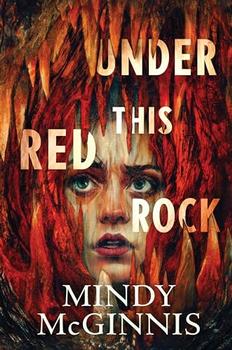


The House on Biscayne Bay
by Chanel Cleeton
As death stalks a gothic mansion in Miami, the lives of two women intertwine as the past and present collide.
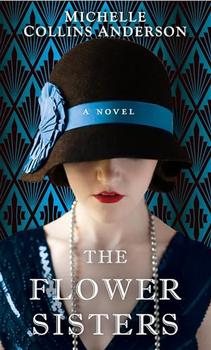
The Flower Sisters
by Michelle Collins Anderson
From the new Fannie Flagg of the Ozarks, a richly-woven story of family, forgiveness, and reinvention.

The Funeral Cryer by Wenyan Lu
Debut novelist Wenyan Lu brings us this witty yet profound story about one woman's midlife reawakening in contemporary rural China.
Your guide toexceptional books
BookBrowse seeks out and recommends the best in contemporary fiction and nonfiction—books that not only engage and entertain but also deepen our understanding of ourselves and the world around us.