Summary | Excerpt | Reviews | Readalikes | Genres & Themes | Author Bio

Critics' Opinion:
Readers' Opinion:
First Published:
Oct 2001, 544 pages
Paperback:
Sep 2002, 627 pages

Today, I believe I know the answer. In 1914, Franz Joseph was eighty-four. He had begun his rule in 1848, as part of the resolution of the Hungarian revolt, at the age of eighteen. About two decades later, in the hope of increasing popular support, Emperor Franz Joseph granted considerable autonomy to Hungary and added the title "King of Hungary" to his name. During the following years, Austro-Hungary expanded south into Bosnia-Herzegovina, which then, as now, was a region of intense ethnic pride and nationalistic conflict.
Toward the end of the nineteenth century, the menace of terrorism spread through the western world; the terrorists of the nineteenth century-called anarchists-wanted to bring an end to all government. Like their twentiethcentury counterparts, they committed acts of violence to provoke countermeasures that would, in turn, bring down the existing order. Anarchists murdered presidents, prime ministers, and members of royal families. (Today, terrorists are more democratic.)
During my childhood walks, I noticed a statue of Queen Elizabeth, Franz Joseph's wife, beside the Danube. Queen Elizabeth was a beautiful lady. I was curious about her and was told that the Hungarian people loved her and that she had had died at the hands of an assassin. While she was on a holiday in Geneva, she had wanted to take a public boat ride on the lake, accompanied only by a lady-in-waiting. Heavily veiled, she had just boarded the boat when an anarchist approached her, lifted her veil to be sure of her identity, and stabbed her to death with an awl.
Franz Joseph was sixty-eight years old and had ruled for fifty years when he lost his wife to a senseless assassination. Now, at eighty-four, he lost his nephew, the successor to the throne, to similar political violence in Sarajevo. Franz Joseph asked that the investigation of the archduke's death be conducted by the Austrian police rather than the regional police of Bosnia-Herzegovina. The Serbs, who were involved in the assassination plot, protested Austrian intervention in their local affairs; they claimed that it was an Austrian plot to gain a more comprehensive annexation. A stalemate was quickly reached. France and Russia backed Serbia. The Germans backed Austro-Hungary.
A few weeks later, the fate of Austro-Hungary was sealed: Franz Joseph signed the documents that started World War I. He reportedly said at the time, "I have considered everything; I have weighed everything." He responded, as the anarchists had hoped he would, like an emotional old man. The assassin was eventually caught and sent to prison, where he died; but the deep disturbances that would plague the twentieth century had been set in motion.
During the first days of July 1914, we set out for our customary family vacation, this time to Velden, which was beside a pretty lake, but with a promise that we would go Toblach a month later. However, Emmi and I came down with measles at the end of July. We were still miserably sick when the declaration of war came. At the time, measles felt worse than war, but the declaration made our parents decide to return home as soon as could be managed. By then, trains full of soldiers were rolling.
In the days that followed, the soldiers, followed by their cannons, marched down Vaci Street, a few blocks from our home. By that time, I was not asking why. I was caught up by the war fever; I was certain that we would win. My father hung a map on his office wall and stuck flags on it to show the location of the battle lines on the eastern front. The dynamic geography of those mobile frontiers marked the beginning of my interest in the larger world.
I remember that early in the war, those fabulous German warriors von Hindenburg and Ludendorff wiped out the Russian troops in East Prussia.2 But the Russians soon recovered and deployed their forces against a weaker opponent-the Austro-Hungarian army. I remember the gloomy news in the fall of 1914. Lemberg (now Lvov), a city a hundred miles from the border of Hungary, had fallen. I had no doubt that we would take it back; Hungarians were, to my mind, brave and successful warriors. But we did not defeat the Russians. The Germans did.
From Memoirs by Edward Teller. Copyright 2001 Edward Teller. All rights reserved. No part of this publication may be reproduced or stored in any form without the prior written permission of the publisher, Perseus Books.

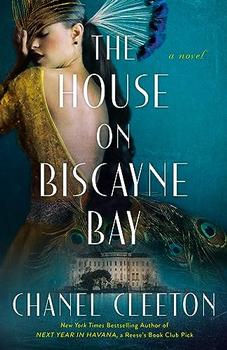
The House on Biscayne Bay
by Chanel Cleeton
As death stalks a gothic mansion in Miami, the lives of two women intertwine as the past and present collide.
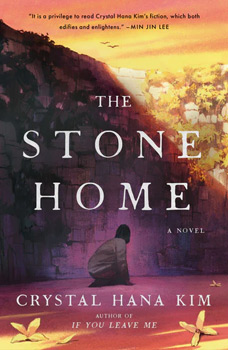
The Stone Home
by Crystal Hana Kim
A moving family drama and coming-of-age story revealing a dark corner of South Korean history.
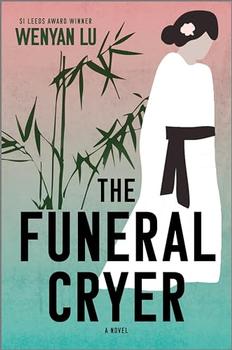
The Funeral Cryer by Wenyan Lu
Debut novelist Wenyan Lu brings us this witty yet profound story about one woman's midlife reawakening in contemporary rural China.
Your guide toexceptional books
BookBrowse seeks out and recommends the best in contemporary fiction and nonfiction—books that not only engage and entertain but also deepen our understanding of ourselves and the world around us.