Summary | Excerpt | Reading Guide | Reviews | Readalikes | Genres & Themes | Author Bio
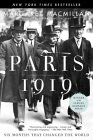
Critics' Opinion:
Readers' Opinion:
First Published:
Oct 2002, 608 pages
Paperback:
Sep 2003, 608 pages

Chapter 1
Woodrow Wilson Comes to Europe
On December 4, 1918, the George Washington sailed out of New York with the American delegation to the Peace Conference on board. Guns fired salutes, crowds along the waterfront cheered, tugboats hooted and Army planes and dirigibles circled overhead. Robert Lansing, the American secretary of state, released carrier pigeons with messages to his relatives about his deep hope for a lasting peace. The ship, a former German passenger liner, slid out past the Statue of Liberty to the Atlantic, where an escort of destroyers and battleships stood by to accompany it and its cargo of heavy expectations to Europe.
On board were the best available experts, combed out of the universities and the government; crates of reference materials and special studies; the French and Italian ambassadors to the United States; and Woodrow Wilson. No other American president had ever gone to Europe while in office. His opponents accused him of breaking the Constitution; even his supporters felt he might be unwise. Would he lose his great moral authority by getting down to the hurly-burly of negotiations? Wilson's own view was clear: the making of the peace was as important as the winning of the war. He owed it to the peoples of Europe, who were crying out for a better world. He owed it to the American servicemen. "It is now my duty," he told a pensive Congress just before he left, "to play my full part in making good what they gave their life's blood to obtain." A British diplomat was more cynical; Wilson, he said, was drawn to Paris "as a debutante is entranced by the prospect of her first ball."
Wilson expected, he wrote to his great friend Edward House, who was already in Europe, that he would stay only to arrange the main outlines of the peace settlements. It was not likely that he would remain for the formal Peace Conference with the enemy. He was wrong. The preliminary conference turned, without anyone's intending it, into the final one, and Wilson stayed for most of the crucial six months between January and June 1919. The question of whether or not he should have gone to Paris, which exercised so many of his contemporaries, now seems unimportant. From Franklin Roosevelt at Yalta to Jimmy Carter or Bill Clinton at Camp David, American presidents have sat down to draw borders and hammer out peace agreements. Wilson had set the conditions for the armistices which ended the Great War. Why should he not make the peace as well?
Although he had not started out in 1912 as a foreign policy president, circumstances and his own progressive political principles had drawn him outward. Like many of his compatriots, he had come to see the Great War as a struggle between the forces of democracy, however imperfectly represented by Britain and France, and those of reaction and militarism, represented all too well by Germany and Austria-Hungary. Germany's sack of Belgium, its unrestricted submarine warfare and its audacity in attempting to entice Mexico into waging war on the United States had pushed Wilson and American public opinion toward the Allies. When Russia had a democratic revolution in February 1917, one of the last reservations that the Allies included an autocracy vanished. Although he had campaigned in 1916 on a platform of keeping the country neutral, Wilson brought the United States into the war in April 1917. He was convinced that he was doing the right thing. This was important to the son of a Presbyterian minister, who shared his father's deep religious conviction, if not his calling.
Wilson was born in Virginia in 1856, just before the Civil War. Although he remained a Southerner in some ways all his life in his insistence on honor and his paternalistic attitudes toward women and blacks he also accepted the war's outcome. Abraham Lincoln was one of his great heroes, along with Edmund Burke and William Gladstone. The young Wilson was at once highly idealistic and intensely ambitious. After four very happy years at Princeton and an unhappy stint as a lawyer, he found his first career in teaching and writing. By 1890 he was back at Princeton, a star member of the faculty. In 1902 he became its president, supported virtually unanimously by the trustees, faculty and students.

Excerpted from Paris 1919 by Margaret MacMillan. Copyright 2002 by Margaret MacMillan. Excerpted by permission of Random House, a division of Random House, Inc. All rights reserved. No part of this excerpt may be reproduced or reprinted without permission in writing from the publisher.




The Stone Home
by Crystal Hana Kim
A moving family drama and coming-of-age story revealing a dark corner of South Korean history.
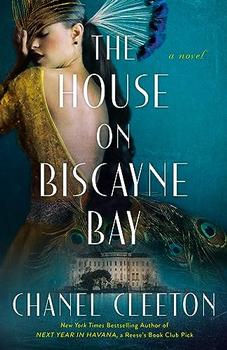
The House on Biscayne Bay
by Chanel Cleeton
As death stalks a gothic mansion in Miami, the lives of two women intertwine as the past and present collide.

The Funeral Cryer by Wenyan Lu
Debut novelist Wenyan Lu brings us this witty yet profound story about one woman's midlife reawakening in contemporary rural China.
Your guide toexceptional books
BookBrowse seeks out and recommends the best in contemporary fiction and nonfiction—books that not only engage and entertain but also deepen our understanding of ourselves and the world around us.