Summary | Excerpt | Reviews | Readalikes | Genres & Themes | Author Bio
Critics' Opinion:
Readers' Opinion:
First Published:
Jan 2002, 400 pages
Paperback:
Apr 2003, 400 pages

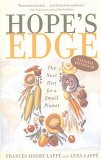
Headlines blast us with seemingly disconnected events-about genetically modified foods, the World Trade Organization, food trade wars-but our hunger to know what all this really means is rarely satisfied. Such concepts as globalization, even persistent world hunger, remain abstractions for most of us, and understanding how all of this determines the quality of our lives and what we can each do about it-that's even less clear.
If we do hear about people questioning the path we're on, they're often dismissed as hopeless Luddites or, as Pulitzer Prize-winning journalist Thomas Friedman called anti-globalization demonstrators, "flat-earth advocates." In the prestigious magazine The Economist, protestors against international financial and development institutions are reduced to mindless "rabble," and mocked as "warriors in the struggle between the forces of global capital and something-or-other."
In other words, the key media shaping our view of the world cannot see what Anna and I saw on our journey. They cannot envision anything beyond today's world, in which multinational corporations, largely unaccountable private entities, wield more power than do elected governments. They cannot see what has been emerging in three decades: the innovations in creating communities that tap nature rather than squander it, and ensure community, not division.
To take off where Diet for a Small Planet stopped, I knew I had to describe this invisible unfolding. So this is the story of the something-or-other.
Most media cannot envision this emergence (and so give it less than a nod), partly because they have no language to describe it; they have no framing ideas to explain it. The media are as trapped as most of us are in the dominant ideas of our modern world, solidified in the last thirty years and reinforced daily by ever more concentrated media. These ideas have become "thought traps," making us believe our only path is the one we're on, blinding us to solutions already in bud and within the reach of each of us. The "thought traps" are literally life-stunting.
THE MAP WE TRAVELED
The three of us quickly realized I couldn't write such a book myself; it required the perspective of two generations. So with Anthony's unwavering support, Anna and I set out on this journey together, to learn from and to give voice to those who are freeing themselves from the thought traps. For clarity's sake, and because at times I reflect on my own life's evolution, we wrote the book largely in my voice, while Anna's accents each chapter. But it turned out to be truly our common work-each experience shared, each word mulled over by both of us.
Chapter 1: Maps of the Mind condenses the destructive thought traps to five, and suggests how they so stifle our imaginations that we end up creating the very polarization and destruction we so fear. Looked at this way, the crisis that my children perceive is actually a crisis of personal meaning-a profound disconnect between the direction our planet is headed and our own deepest sensibilities.
With Chapter 2, the journey begins. In a whirlwind that took us to five continents and nine countries, including the heartland of the United States, our travels became a snapshot of the planet. We take you from magical gardens in California to wind-battered shacks of formerly landless farmers in the Brazilian countryside. You join us in lush, remote Bangladesh villages and on rocky trails in the foothills of the Himalayas. You share with us the sweltering Punjabi heat as we talk with colorfully turbaned Sikhs, and you dance with us in a Kenyan village during one of the country's worst droughts. You meet renegade Wisconsin farmers struggling for survival, and you wind with us through the back roads of France's Brittany.
In all of these places, as different as they appear, we discovered people who are not accepting corporate global capitalism as it is, but are evolving it so that growing and eating good food-and economic life itself-is again embedded in life-affirming values and community. Across cultures and climates and cuisines, they-and millions more like them-are arriving at common insights about what human beings need to thrive. They are drawing a new mental map, one that is liberating rather than stifling.



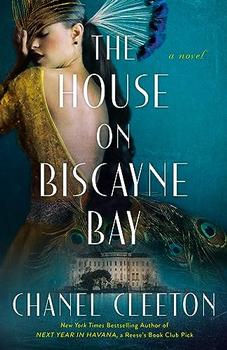
The House on Biscayne Bay
by Chanel Cleeton
As death stalks a gothic mansion in Miami, the lives of two women intertwine as the past and present collide.

The Flower Sisters
by Michelle Collins Anderson
From the new Fannie Flagg of the Ozarks, a richly-woven story of family, forgiveness, and reinvention.

The Funeral Cryer by Wenyan Lu
Debut novelist Wenyan Lu brings us this witty yet profound story about one woman's midlife reawakening in contemporary rural China.
Your guide toexceptional books
BookBrowse seeks out and recommends the best in contemporary fiction and nonfiction—books that not only engage and entertain but also deepen our understanding of ourselves and the world around us.