Summary | Excerpt | Reading Guide | Reviews | Readalikes | Genres & Themes | Author Bio
Critics' Opinion:
Readers' Opinion:
First Published:
Feb 2002, 320 pages
Paperback:
Feb 2003, 320 pages

In those years, Bengal was the seat of British power, Calcutta its capital, its cultural and economic center. The city is endowed with the instruments of Western knowledge, the museums, the colleges, the newspapers, and the Asiatic Society. The old Bengal Presidency included all of today's Bangladesh, the current Indian state of West Bengal, and parts of Assam, Bihar, and Orissa. A reconstituted Bengal Presidency today would have over 330 million people and be the world's third most populous country. China, India, Bengal. There are more of me than there are of you, although I am both.
The eastern regions of Bengal, even before the flight of Hindus during the subcontinent's partition in 1947, and its reincarnation as Bangladesh in 1972, always contained a Muslim majority, though largely controlled by a sizeable and wealthy Hindu minority. The communities speak the same language—Muslims, if the truth be known, more tenaciously than Hindus. But for the outer signs of the faith—the beards and skullcaps of the Muslims, the different dietary restrictions, the caste observances, the vermilion powder on the hair-parting of married Hindu women—there is little, fundamentally, to distinguish them. The communities suffer, as Freud put it, the narcissism of small difference.
The Hindu Bengalis were the first Indians to master the English language and to learn their master's ways, the first to flatter him by emulation, and the first to earn his distrust by unbidden demonstrations of wit and industry. Because they were a minority in their desh, their homeland, dependent on mastering or manipulating British power and Muslim psychology, the Hindus of east Bengal felt themselves superior even to the Hindus of the capital city of Calcutta. Gentlemen like Jai Krishna Gangopadhaya, a pleader in the Dacca High Court, whose surname the colonial authorities lightened to Gangooly, and who, on this particular winter night squats with a priest in a palki that reminds him of wagons for transporting remanded prisoners, was situated to take full advantage of fast-changing and improving times. He spoke mellifluous English and one high court judge had even recommended him for a scholarship to Oxford. Had he played by the rules, he should have been a great success, a prince, and a power.
Jai Krishna's graduation portrait from the second class of India's first law school (Calcutta University, 1859) displays the expected Victorian gravitas and none of the eager confidence of his classmates. He is a young man of twenty who looks forty; his thick, dark eyebrows form an unbroken bar, and his shadow of a mustache—an inversion of prevailing style that favored elaborately curled and wax-tipped mustaches—reveal a young man more eloquent with a disapproving frown than with his words.
For ten years I kept the graduation photo of Bishwapriya Chatterjee, my husband—Indian Institute of Technology, Kharagpur—on our nightstand. Last icon before falling asleep, first worshipful image of the morning. The countries, the apartments, the houses all changed, but the portrait remained. He had that eagerness, and a confident smile that promised substantial earnings. It lured my father into marriage negotiations, and it earned my not unenthusiastic acceptance of him as husband. A very predictable, very successful marriage negotiation.
Had Jai Krishna been a native Calcuttan, or had he come from Dacca, Bengal's second city, he might never have suffered the anxiety of the small-town provincial elevated into urbanity. In my mother-language we call the powerful middle class "bhadra lok," the gentlefolk, the "civilized" folk, for whom the English fashioned the pejorative term "babu," with its hint of fawning insincerity and slavishly acquired Western attitudes. The rest of the population are "chhoto lok," literally, the little people. Jai Krishna Gangooly lacked the reflexive self-confidence of the bhadra lok. In his heart, he was a provincial from Mishtigunj, third son of a village doctor whose practice included the indigent and Muslims. He felt he'd been lifted from his provincial origins because of his father's contacts in the Calcutta Medical College. He was not comfortable in the lawyer's black robes and powdered wig.
Excerpted from Desirable Daughters by Bharati Mukherjee. Copyright © 2002 by Bharati Mukherjee. Excerpted by permission. All rights reserved. No part of this excerpt may be reproduced or reprinted without permission in writing from the publisher.



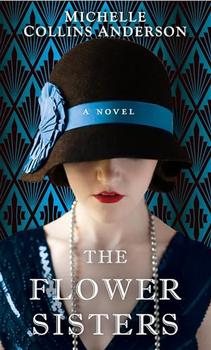
The Flower Sisters
by Michelle Collins Anderson
From the new Fannie Flagg of the Ozarks, a richly-woven story of family, forgiveness, and reinvention.
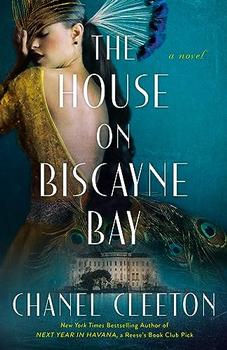
The House on Biscayne Bay
by Chanel Cleeton
As death stalks a gothic mansion in Miami, the lives of two women intertwine as the past and present collide.
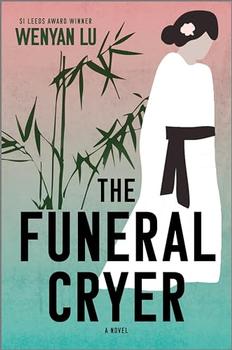
The Funeral Cryer by Wenyan Lu
Debut novelist Wenyan Lu brings us this witty yet profound story about one woman's midlife reawakening in contemporary rural China.
Your guide toexceptional books
BookBrowse seeks out and recommends the best in contemporary fiction and nonfiction—books that not only engage and entertain but also deepen our understanding of ourselves and the world around us.