
-
Your next favorite book
is waiting.
Yrsa Daley-Ward’s The Catch (2025), recently released in paperback, has a bizarre and intriguing premise: twin sisters who were separated at a young age, adopted into different families after their mother’s death, diverge in their reactions when one of them spots a woman who looks exactly like their mother on the streets of London, seemingly not aged at all and living as she might have had they never been born.

Upon the book’s initial release last year, Danez Smith wrote for The New York Times, “Daley-Ward has penned a metaphysical experiment on grief, trauma, family and longing that holds all the excitement of a big summer read.” The Catch is the first novel from Daley-Ward, who has also published poetry, short fiction, and nonfiction, including PEN Ackerley Prize winner The Terrible: A Storyteller's Memoir, and co-written Black Is King, Beyoncé’s 2020 musical film.
The Catch is also the first title in the Well-Read Black Girl Books series under W.W. Norton’s Liveright imprint.
The series came about as a collaboration between Liveright and Glory Edim, founder of the Well-Read Black Girl community, which began in 2015 as an online platform and book club and has since grown into a nonprofit organization and recognized name in the literary world. WRBG’s stated goal is “to introduce a cohort of diverse writers to future generations—contemporary authors who are non-binary, queer, trans, and disabled. To address inequalities and improve communities through reading and reflecting on the works of Black women.”
Edim said of the collaboration with Liveright, “Our new literary series is determined to introduce narratives that are innovative and beguilingly genuine. Daley-Ward’s writing fits the bill; the voices in her manuscript hovered over my head for days.” More recently, the series has seen the hardcover publication of I Hope You Find What You're Looking For (2026) by Bsrat Mezghebe, set in Washington, DC’s Eritrean community as Eritrea is on the cusp of independence from Ethiopian rule in 1991.
The WRBG/Liveright project is one of many organized efforts in recent years to highlight and uplift underrepresented authors, during a time when book bans, which disproportionately affect queer, trans, and racially marginalized authors, have been on the rise.
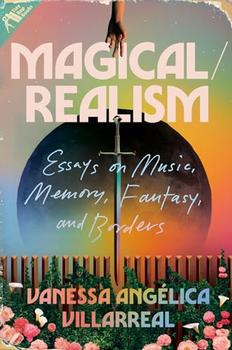
A similar initiative is Tiny Reparations, founded in 2020 by comedian, writer, producer, and actor Phoebe Robinson in partnership with Penguin Random House’s Plume. Tiny Reparations has brought us LaToya Watkins’ family drama Perish (2022) and short story collection Holler, Child (2023), longlisted for the National Book Award; Vanessa Angélica Villarreal’s essay collection Magical/Realism (2024), longlisted for the National Book Award and National Book Critics Circle Award; and the novel Fundamentally (2025) by Nussaibah Younis, an international bestseller shortlisted for the Women's Prize—among other titles.
Projects like this are an opportunity to shape the publishing landscape according to a particular vision. They are also an opportunity for publishers to grow and diversify their catalogs. As Robinson put it while launching her imprint, “We all know there is a lack of diversity in publishing. Tiny Reparations Books recognizes that the publishing landscape isn’t going to change until the actual work starts behind the scenes. I am thrilled to partner with Plume to help take this important step. And I look forward to bringing a wide range of voices to Plume and helping to push the boundaries of publishing."

While the WRBG series and Tiny Reparations are newer developments, they are preceded by others with similar missions who have laid major groundwork in American publishing, such as HarperCollins’ 40-year-old Amistad imprint, “devoted to honoring the legacy of Black literature, amplifying the bold and unapologetic voices of today’s storytellers, and paving the way for inspiring Black-centered stories of the diaspora.” Amistad is the current publisher of Zora Neale Hurston’s classic Their Eyes Were Watching God (1937), which fell out of print before becoming the household name it is today, and is also responsible for Pulitzer winner The Known World (2003) by Edward P. Jones and National Book Award finalist Another Brooklyn (2016) by Jacqueline Woodson.
Many readers of these and other well-known books may be unaware of the careful curation and intentional work that have made them possible or kept them in print. Seeing how imprints and smaller publishing projects operate within the larger publishing scene can foster appreciation for those who help titles reach their audiences, and following diversity-focused initiatives is a meaningful way to structure personal reading and book club discussions, all while supporting authors and staff.
Readers and book groups interested in keeping up with Well-Read Black Girl Books and related projects can follow Glory Edim's newsletter. Amistad offers their own newsletter, and Tiny Reparations advertises new and upcoming titles on the PRH website. Other examples of publishing spaces that prioritize underrepresented writers are Random House’s One World, Hachette Book Group’s Legacy Lit, and Roxane Gay’s imprint at Grove Atlantic.
This year, 2026, marks the 250th anniversary of the United States—in other words, 250 years of American history. In case you hadn’t noticed, at BookBrowse, we love historical fiction, and historical nonfiction, too. So here we present a challenge of sorts: read 26 books this year, each providing a glimpse into life in a different decade of the past two and a half centuries—using our list below as is, or swapping out for your own picks. These titles are all ones we’ve recommended and featured, and you can supplement your reading and book club discussions with our reviews, “beyond the book” articles, reading guides, and other content.
We acknowledge that it is a difficult time for many to engage with American history, and many readers, writers, and book groups approach the concept of America critically as a matter of course. The United States occupies unceded Indigenous territories and carries a legacy of displacement, enslavement, and exclusion that continues to affect a large portion of the population today. This list is meant to reflect those past and current realities, and also the rich, creative array of contemporary writing that engages with it, sometimes directly and sometimes inventively, sometimes with gravity and sometimes irreverently. The selections below range not only across time, but across regional and sub-regional landscapes that represent places within a place, capturing influential figures, key events, and ordinary lives. We hope you enjoy exploring this list and the history it contains.
What will happen in the book world in 2026? Which genres will be popular? Which reading and publishing trends will continue or fall off? What do readers and book clubs need to know going into the new year? Let us be your crystal ball. Here are some predictions we have for 2026, including what will happen with historical fiction, BookTok, audiobooks, book bans, book club content, and more.
Besides getting access to our digital magazine and a wealth of archived content, BookBrowse members can take part in our First Impressions reader review program and book club discussions year-round. In 2025, we discussed or will discuss more than 35 books in our community forum, and we featured nearly 50 titles in First Impressions. Below, we look at some of the books that generated the most enthusiastic and intriguing discussion and that were the most highly rated and positively reviewed. We hope you enjoy browsing through them and find some perfect picks for your TBR or your own book club discussion list.
We also invite you to follow along with or contribute to our discussions and First Impressions reviews in 2026. Members can request free books for review and discussion as they become available, and anyone can participate in the forum. Sign up for a one-time notification to receive an alert when a discussion begins. We look forward to seeing you there!
At BookBrowse, we’re all about bringing you great reading, period. That’s why we don’t only feature reviews of recommended books, but also “beyond the book” articles, bite-sized literary and cultural pieces that expand on an aspect of each featured title. These articles can be read on their own, but also serve as a fantastic entry point into the related book. Below, we’ve selected some of the best articles written by our reviewers this year, one from each of our nine categories. These span subjects ranging from Ukraine’s national soil to American political lawn signs, crime dioramas created by “the mother of forensic science,” Mariah Carey’s career, how author Siphiwe Gloria Ndlovu transformed aspects of the 19th-century adventure novel King Solomon’s Mines, and more. Many of these articles use a small, specific starting point to approach a larger idea. Similarly, they together make up a miniature representation of how you can explore the world through books via our digital magazine all year round.
Our upcoming annual Top 20 list will show subscribers’ favorite books of the year, but in the meantime, we thought you might enjoy knowing about our favorites. So, for the first time ever, each member of the BookBrowse editorial team shared a top pick of 2025 along with some runners-up to create our own loosely structured "best of" list. Unsurprisingly, we found there was a lot of overlap between the books we featured in our digital magazine this year and the ones we chose here, though this overlap wasn’t complete. (What we feature depends on a variety of factors, including prepub reviews and the books individual reviewers decide to cover.) Here’s your chance to get a glimpse of our personal tastes and an inside look at BookBrowse editors as readers. We’re happy to share the books we loved with you, and hope you have fun reading about them!
