return to home  
Join   |  Gift   |  Member Login   |  Library Login
BookBrowse Mobile
Follow Us: 
   Edward O. Wilson: Biography

Edward O. Wilson biography, plus links to book reviews and book excerpts from books by Edward O. Wilson.

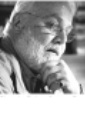
Edward O. Wilson
Edward O. Wilson Link to Edward O. Wilson's Website
Share: 

Edward O. Wilson Biography

Edward O. Wilson was born on June 10, 1929, in Birmingham, Alabama, and grew up in a series of towns in Alabama and Florida as well as Washington, D.C. After earning a B.S. and M.S. in biology at the University of Alabama, he joined the graduate program at University of Tennessee for a year. He then transferred to Harvard University, where he earned a Ph.D. in 1955. From 1953 to 1956 he was a Junior Fellow in Harvard’s Society of Fellows. During this period he commenced a series of research field-trips that were to take him, to many parts of the South Pacific and New World tropics. In 1956 he joined the Harvard faculty, where he is now Pellegrino University Professor Emeritus and Honorary Curator in Entomology.

Early in his career, Wilson conducted work on the classification and ecology of ants in New Guinea and other Pacific islands, and in the American tropics. In 1963 his work and his conception of species equilibrium led him to the theory of island biogeography, which he developed with the late Robert H. MacArthur of Princeton University. In their theory, immigration and extinction, the determinants of biodiversity at the species level, were tied to area (distance of islands from source regions) and the basic properties of ecology and demography. The work culminated in their 1967 book The Theory of Island Biogeography, which has been a standard reference work ever since. The theory greatly influenced the discipline of ecology and became a cornerstone of conservation biology. Applied to “habitat islands,” such as forests in a sea of agricultural land, it has influenced the planning and assessment of parks and reserves around the world. In the late 1960s Wilson, with Daniel Simberloff, conducted experiments in the Florida Keys that documented the basic principles of island biogeographic theory.

In the late 1950s and 1960s, Wilson played a key role in the development of the new field of chemical ecology. With several collaborators he worked out much of the pheromone language of ants, and with William H. Bossert of Harvard University he created the first general theory of properties of chemical communication. Because all plants and microorganisms, as well as the vast majority of animals, communicate primarily or entirely by pheromones, the importance of this work is considerable.

By the late 1970s, Wilson was actively involved in global conservation, adding to both original research and the promotion of biodiversity research. In 1984 he published Biophilia, which explored the evolutionary and psychological basis of humanity’s attraction to the natural environment. This work introduced the word biophilia into the language, and has been influential in the shaping of the modern conservation ethic. In 1988 Wilson edited the volume BioDiversity, based on the proceedings of the first United States national conference on the subject, which also introduced the term biodiversity to the language, now in universal usage. This work was very influential in creating the modern field of biodiversity studies. In 1992 Wilson published Diversity of Life, which synthesized the principles and most important practical issues of biodiversity; this, too, became a standard work. His 2002 work The Future of Life has become equally influential. In 2003, he published Pheidole in the New World, A Dominant, Hyperdiverse Ant Genus, a monograph of 19 percent of the known ant species of the Western Hemisphere. Of the 624 species thus covered, 337 were new to science.

While continuing his research on the systematics and biogeography of ants, Wilson has become increasingly involved in the global conservation movement. In addition to authoring other books and articles on the subject, and lecturing in many countries, he has served on the boards of directors of the American Museum of Natural History, Conservation International, The Nature Conservancy, and World Wildlife Fund, and has been a key consultant of the New York Botanical Garden, Columbia University’s Earth Institute, and many other environmental and scientific organizations.

In 1971 Wilson published his second major synthesis, The Insect Societies, which formulated the existing knowledge of the behavior of ants, social bees, social wasps, and termites, on a foundation of population biology. In it he introduced the concept of a new discipline of sociobiology, the systematic study of the biological basis of social behavior in all kinds of organisms. In 1975 he published Sociobiology: The New Synthesis, which extended the subject to vertebrates and united it more closely to evolutionary biology. The foundational discoveries of sociobiology are generally recognized to be the analysis of animal communication and division of labor, in which Wilson played a principal role, and the genetic theory of the origin of social behavior, which he helped to promote and apply in his 1971 and 1975 syntheses. Sociobiology: The New Synthesis was later ranked in a poll of the officers and fellows of the international Animal Behaviour Society as the most important book on animal behavior of all time, and is regarded today as the founding text of sociobiology and its offshoot, evolutionary psychology.


Sociobiology: The New Synthesis also included a brief analysis of the origins of human nature. This stirred a bitter controversy on the role of biology in human behavior, which has now been largely resolved in favor of the sociobiological view. To more fully cover the subject of culture and answer scientific (as opposed to political) criticism, Wilson published the widely acclaimed On Human Nature in 1978. With Charles Lumsden he developed the first general theory of gene-culture coevolution (and introduced the term) in the 1981 work Genes, Mind, and Culture.

In 1998 Wilson extended his program of evolutionary thought in Consilience: The Unity of Knowledge, which argues for a reversal of the current fragmentation of knowledge and postmodernist ideologies and a return to the ideals of the original Enlightenment, including bridging of the sciences and humanities. He is currently working on books on the theory of evolutionary forces and (with Bert Hölldobler) the biology of superorganisms, as well as conducting field research on the ecology and biogeography of the West Indian ant fauna.

The more than 100 awards received by Wilson from around the world in science and letters include the National Medal of Science, two Pulitzer Prizes for Non-fiction (for On Human Nature and, with Bert Hölldobler, The Ants), the Crafoord Prize of the Royal Swedish Academy of Science (given by the Academy in fields of science it does not cover by the Nobel Prize), Japan’s International Prize for Biology, the Prix de Institut de Vie, Paris, Italy’s presidential Medal and the Nonino Prize in science and letters, the Tyler Prize for Environmental Achievement, the Gold Medal of the Worldwide Fund for Nature, the Audubon Medal of the Audubon Society, the Benjamin Franklin Medal of the American Philosophical Society, and Saudi Arabia’s King Faisal International Prize for Science, and the Dominican Republic’s highest award, the Order of Merit of Duarte, Sanches, and Mella. He also received both of the teaching prizes voted by the students of Harvard College. In 1995 he was named one of the 25 most influential Americans by Time Magazine, and in 2000 one of the century’s 100 leading environmentalists by both Time and Audubon Magazine. In 2005 Foreign Policy named him one of the world’s 100 leading intellectuals.

Wilson lives in Lexington, Massachusetts, with his wife Irene. A daughter, Catherine, and her husband Jonathan, live in nearby Stow.

This biography was last updated on 05/05/2010.

A note about the biographies
We try to keep BookBrowse's biographies both up to date and accurate. However, with over 2000 lives to keep track of it's inevitable that some won't be as current or as complete as we would like. So, please help us - if the information about a particular author is out of date, inaccurate or simply very short, and you know of a more complete source, please let us know. Authors and those connected with authors: If you wish to make changes to your bio, please send your complete biography as you would like it displayed so that we replace the old with the new, including your website URL if relevant.

Become a Member
Click Here
Editor's Choice
  •  May 18 
  •  May 16 
  •  May 15 
The Woman Upstairs
Claire Messud

The Woman Upstairs Jacket

The riveting confession of a woman awakened, transformed, and betrayed by passion and desire for a world beyond her own.
How to Create the Perfect Wife
Wendy Moore

How to Create the Perfect Wife Jacket

Stranger than fiction, blending tragedy and farce, How to Create the Perfect Wife is an engrossing tale of the radicalism, and deep contradictions, at the heart of the Enlightenment.
Happier Endings
Erica Brown

Happier Endings Jacket

A wise and affirming meditation on living fully and preparing for death, written by a highly regarded spiritual teacher.
Click Here
   Most Recent Blog Entries
Jewish Young Adult Books That Are Not About The Holocaust
Books to Give This Mother's Day
A Short History of Chechnya
rss  RSS   rss  subscribe
Recent Reader Reviews
Flight Behavior by Barbara Kingsolver
Although heavy on the scientific details, which slowed down the story for me (OK, I admit, I was one of those liberal arts majors who skipped out on... read more
The House at the End of Hope Street by Menna van Praag
Loved this book. Magical, quirky, enchanting I could go on. All books do not have to be literary fiction, sometimes it is just so comforting to read... read more
Ordinary Grace by William Kent Krueger
Can an wiser, older narrator view the past with more wisdom than he might have possessed forty years earlier in the summer he was thirteen? Ordinary... read more
RSS RSS feed More...  
Most Viewed This Week
Book Club Recommendations
The Gods of Gotham
by Lyndsay Faye
Paperback (Mar/13)
Forgotten Country
by Catherine Chung
Paperback (Mar/13)
Philida
by André Brink
Paperback (Feb/13)
Gone Girl
by Gillian Flynn
Hardback (Jun/12)
More...
First Impressions
Members read and review books often months before they're published. See what they think in First Impressions!
The Laws of Gravity
by Liz Rosenberg
4.5 Stars            (May/13)
The Sisterhood
by Helen Bryan
Four Stars            (Apr/13)
A Dual Inheritance
by Joanna Hershon
Four Stars            (May/13)
More...
  Latest BookBrowse News
U.S. ebook sales up in 2012, but rate of growth is slowing (May 16 2013)
In 2012, trade book sales (i.e. non academic book sales) rose 6.9%, to $15.049 billion, and e-book sales continued to grow, although the rate of growth... Full Story
rss RSS feed More...
 
BookBrowse Poll
Q: Do you mainly read newly published or older books?
Mainly newer books
Mainly older books
A mix of new and old books
Search: Title or Author
Free Newsletters
Bring Up the Bodies

Online Book Club
More about
Five Days
Join the discussion!


Win This Book!
The Pigeon Pie Mystery


Enter To Win Now!

wordplay
Solve this clue:
"I I M B T Give T T R"

and be entered
to win....
frame top
New Author
Interviews
Menna van Praag
Erica Brown
Helga Weiss
Kate Morton
frame bottom
HOME Book Submissions | Advertising | Library Subscriptions | Reviewing for BookBrowse | Contact Us