Atul Gawande, MD, MPH, is a surgeon, writer, and public health researcher. He practices general and endocrine surgery at Brigham and Women's Hospital. He is Professor in the Department of Health Policy and Management at the Harvard T.H. Chan School of Public Health and the Samuel O. Thier Professor of Surgery at Harvard Medical School. He is also Executive Director of Ariadne Labs, a joint center for health systems innovation, and Chairman of Lifebox, a nonprofit organization making surgery safer globally.
Atul has been a staff writer for The New Yorker magazine since 1998 and has written four New York Times bestsellers: Complications, Better, The Checklist Manifesto, and most recently, Being Mortal: Medicine and What Matters in the End. He is the winner of two National Magazine Awards, Academy Health's Impact Award for highest research impact on healthcare, a MacArthur Fellowship, and the Lewis Thomas Award for writing about science.
This bio was last updated on 02/05/2016. In a perfect world, we would like to keep all of BookBrowse's biographies up to date, but with many thousands of lives to keep track of it's simply impossible to do. So, if the date of this bio is not recent, you may wish to do an internet search for a more current source, such as the author's website or social media presence. If you are the author or publisher and would like us to update this biography, send the complete text and we will replace the old with the new.

Ira Byock serves as Executive Director and Chief Medical Officer for the Institute for Human Caring of Providence Health and Services, a 35 hospital health system serving communities across 5 western states. Dr. Byock ... (more)
If you enjoyed:
Better
Try:
The Best Care Possible
by Ira Byock

Catherine Carver completed her first degree in Natural Sciences before going on to study Medicine at the University of Aberdeen, which included time spent in Tanzania working with TB/HIV sufferers. She's worked at the ... (more)
We recommend 29 similar authors

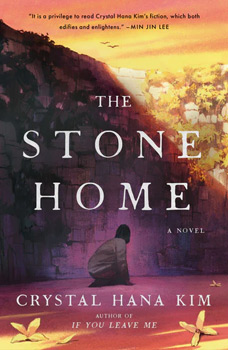
The Stone Home
by Crystal Hana Kim
A moving family drama and coming-of-age story revealing a dark corner of South Korean history.
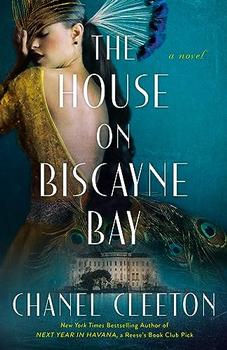
The House on Biscayne Bay
by Chanel Cleeton
As death stalks a gothic mansion in Miami, the lives of two women intertwine as the past and present collide.
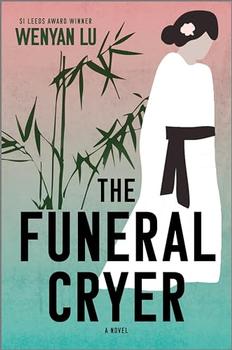
The Funeral Cryer by Wenyan Lu
Debut novelist Wenyan Lu brings us this witty yet profound story about one woman's midlife reawakening in contemporary rural China.
Your guide toexceptional books
BookBrowse seeks out and recommends the best in contemporary fiction and nonfiction—books that not only engage and entertain but also deepen our understanding of ourselves and the world around us.