
-
Your next favorite book
is waiting.
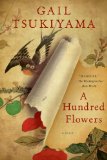
A Novel
A powerful novel about an ordinary family facing extraordinary times at the start of the Chinese Cultural Revolution.
China, 1957. Chairman Mao has declared a new openness in society: "Let a hundred flowers bloom; let a hundred schools of thought contend." Many intellectuals fear it is only a trick, and Kai Ying's husband, Sheng, a teacher, has promised not to jeopardize their safety or that of their young son, Tao. But one July morning, just before his sixth birthday, Tao watches helplessly as Sheng is dragged away for writing a letter criticizing the Communist Party and sent to a labor camp for "reeducation."
A year later, still missing his father desperately, Tao climbs to the top of the hundred-year-old kapok tree in front of their home, wanting to see the mountain peaks in the distance. But Tao slips and tumbles thirty feet to the courtyard below, badly breaking his leg.
As Kai Ying struggles to hold her small family together in the face of this shattering reminder of her husband's absence, other members of the household must face their own guilty secrets and strive to find peace in a world where the old sense of order is falling. Once again, Tsukiyama brings us a powerfully moving story of ordinary people facing extraordinary circumstances with grace and courage.
Published in paperback August 2013. First published in hardcover Aug 2012.
"A gripping tale of a father torn from his family for speaking out against Chairman Mao's Communist Party." - O, the Oprah Magazine
"I was following this family almost as though it were my own and stayed all the way to the end of their story." - All Things Considered, NPR
"Bestselling author Gail Tsukiyama takes us back to those times not by painting a panorama but in her thoughtful and forthright way by showing the consequences for one family." - Library Journal
"Tsukiyama's close attention to detail and descriptive language paint a vivid picture of the daily life of Kai Ying and her family. Tsukiyama gently envelops the reader into the quiet sadness that permeates the entire household while weaving in the multiple hardships the family faces under communism. Strength of community; support and love of family, both natural and adopted; and the ability to heal and overcome loss are major themes within the moving novel." - Booklist
This information about A Hundred Flowers was first featured
in "The BookBrowse Review" - BookBrowse's membership magazine, and in our weekly "Publishing This Week" newsletter. Publication information is for the USA, and (unless stated otherwise) represents the first print edition. The reviews are necessarily limited to those that were available to us ahead of publication. If you are the publisher or author and feel that they do not properly reflect the range of media opinion now available, send us a message with the mainstream reviews that you would like to see added.
Any "Author Information" displayed below reflects the author's biography at the time this particular book was published.
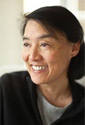
Photo: Kevin Horan
Gail Tsukiyama was born in San Francisco, California, to a Chinese mother from Hong Kong and a Japanese father from Hawaii. She attended San Francisco State University where she earned her Bachelor of Arts Degree and a Master of Arts Degree in English. She is the bestselling author of several novels, including Women of the Silk and The Samurai's Garden, as well as the recipient of the Academy of American Poets Prize and the PEN Oakland/Josephine Miles Literary Award. She divides her time between El Cerrito and Napa Valley, California.
Name Pronunciation
Gail Tsukiyama: Tsu-kee-yah-mah
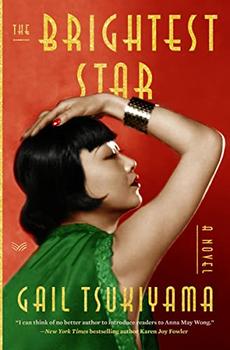

If you liked A Hundred Flowers, try these:

by Eve J.. Chung
Published 2025
A propulsive, extraordinary novel about a mother and her daughters' harrowing escape to Taiwan as the Communist revolution sweeps through China, by debut author Eve J. Chung, based on her family story.
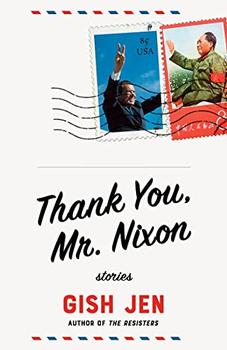
by Gish Jen
Published 2022
The acclaimed, award-winning author of The Resisters takes measure of the fifty years since the opening of China and its unexpected effects on the lives of ordinary people. It is a unique book that only Jen could write - a story collection accruing the power of a novel as it proceeds - a work that Cynthia Ozick has called "an art beyond art. It is ...
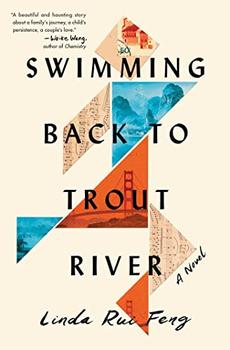
by Linda Rui Feng
Published 2022
A lyrical novel set against the backdrop of China's Cultural Revolution that follows a father's quest to reunite his family before his precocious daughter's momentous birthday, which Garth Greenwell calls "one of the most beautiful debuts I've read in years."



The thing that cowardice fears most is decision
Click Here to find out who said this, as well as discovering other famous literary quotes!

Can you name the title?
Test your book knowledge with our daily trivia challenge!
Your guide toexceptional books
BookBrowse seeks out and recommends the best in contemporary fiction and nonfiction—books that not only engage and entertain but also deepen our understanding of ourselves and the world around us.

