Critics' Opinion:
Readers' rating:
Published Jan 2006
352 pages
Genre: History, Current Affairs and Religion
Publication Information
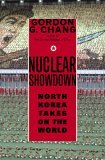
"If we lose, I will destroy the world," said Kim Jong II, supreme leader of the Democratic People's Republic of Korea. Kim's regime insults all of us. Its very existence is an affront to humanity's sense of decency and challenges accepted notions of politics, economics, and social theory. More important, North Korea threatens us.
The Great Leader, as Kim now calls himself, can change the course of history with an act of unimaginable devastation. He possesses an arsenal of nuclear weapons and the ballistic missiles to deliver them. Today he can hit most of the continent of Asia and even parts of the American homeland. In a few years – probably by the end of this decade – the diminutive despot will cast his shadow across the globe: He will be able to land a nuke on any point on the planet.
Even now, everyone is at risk. North Korea has said it might sell weapons to others, thereby making itself the first "nuclear Kmart." Who wants to live in a world where anyone with enough cash and a pickup truck can incinerate a city?
Unfortunately, Kim has paid no price for destabilizing the global order. In fact, many countries, including America, reward him for his fundamental challenge to the international system. Perhaps that is why the world is now further away from a solution to the Korean nuclear crisis than it was a decade ago.
In a contest that will be decided by finesse more than power, Kim is winning. The world's strongest nation does not have much of a future if it cannot defend its most vital interests against a reviled autocrat like Kim from a small country like North Korea.
Nuclear Showdown is the first and only major study to look at all dimensions of this crisis. Gordon G. Chang proposes solutions that go beyond the conventional suggestions seen elsewhere.
'The current administration ... is ... attempting to win approval for a new generation of tactical "mini nukes." It's a strategy that has both eroded international sympathy and exposed the great hypocrisy behind America's nuclear nonproliferation initiatives. Chang goes way too far, however, in asserting that America needs to choose between keeping its nuclear arsenal and keeping New York.' - PW.
'A page-turner, Nuclear Showdown not only is a superb (and frightening) history of the U.S.—North Korea nuclear confrontation, it also provides important insights into the larger U.S.-China relationship which forms the crucial context for that confrontation – a context Gordon Chang knows so well from his many years in Asia, as well as from his extensive investigation of documents relating to this crisis.' – Walter LaFeber, Cornell University.
'....the most readable and complete case for regime change in North Korea there is.' – Henry D. Sokolski, executive director, the Nonproliferation Policy Education Center.
This information about Nuclear Showdown was first featured
in "The BookBrowse Review" - BookBrowse's membership magazine, and in our weekly "Publishing This Week" newsletter. Publication information is for the USA, and (unless stated otherwise) represents the first print edition. The reviews are necessarily limited to those that were available to us ahead of publication. If you are the publisher or author and feel that they do not properly reflect the range of media opinion now available, send us a message with the mainstream reviews that you would like to see added.
Any "Author Information" displayed below reflects the author's biography at the time this particular book was published.

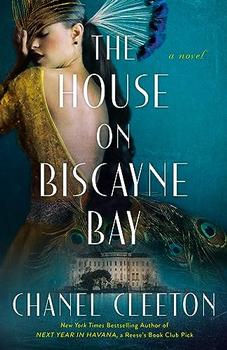
The House on Biscayne Bay
by Chanel Cleeton
As death stalks a gothic mansion in Miami, the lives of two women intertwine as the past and present collide.
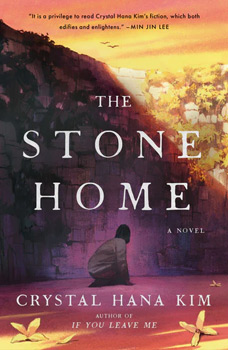
The Stone Home
by Crystal Hana Kim
A moving family drama and coming-of-age story revealing a dark corner of South Korean history.
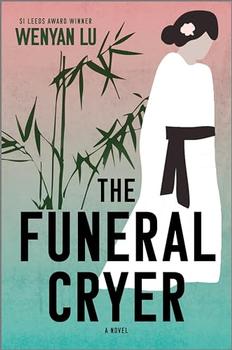
The Funeral Cryer by Wenyan Lu
Debut novelist Wenyan Lu brings us this witty yet profound story about one woman's midlife reawakening in contemporary rural China.
Your guide toexceptional books
BookBrowse seeks out and recommends the best in contemporary fiction and nonfiction—books that not only engage and entertain but also deepen our understanding of ourselves and the world around us.