return to home  
Join   |  Gift   |  Member Login   |  Library Login
BookBrowse Mobile
Follow Us: 
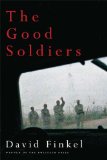
    The Good Soldiers by David Finkel

The Good Soldiers: Book summary and reviews of The Good Soldiers by David Finkel

The Good Soldiers

The Good Soldiers
by David Finkel
Published in USA Sep 2009,
304 pages.

Publication information


Critics' Opinion: 
Readers' Rating: 
About BookBrowse Rankings
Share: 
Buy This Book

The Good Soldiers Summary

It was the last-chance moment of the war. In January 2007, President George W. Bush announced a new strategy for Iraq. He called it the surge. "Many listening tonight will ask why this effort will succeed when previous operations to secure Baghdad did not. Well, here are the differences," he told a skeptical nation. Among those listening were the young, optimistic army infantry soldiers of the 2-16, the battalion nicknamed the Rangers. About to head to a vicious area of Baghdad, they decided the difference would be them.

Fifteen months later, the soldiers returned home forever changed. Pulitzer Prize-winning Washington Post reporter David Finkel was with them in Bagdad, and almost every grueling step of the way.

What was the true story of the surge? And was it really a success? Those are the questions he grapples with in his remarkable report from the front lines. Combining the action of Mark Bowden’s Black Hawk Down with the literary brio of Tim O’Brien's The Things They Carried, The Good Soldiers is an unforgettable work of reportage. And in telling the story of these good soldiers, the heroes and the ruined, David Finkel has also produced an eternal tale—not just of the Iraq War, but of all wars, for all time.

The Good Soldiers Reviews

"Starred Review. Finkel's keen firsthand reportage, its grit and impact only heightened by the literary polish of his prose, gives us one of the best accounts yet of the American experience in Iraq." - Publishers Weekly Pick of the Week

"Starred Review. [An] excellent study of soldiers under fire....A superb account of the burdens soldiers bear." - Kirkus Reviews "This is the finest book yet written on the platoon-level combat of the Iraq war... Unforgettable—raw, moving, and rendered with literary control ... No one who reads this book will soon forget its imagery, words, or characters." - Steve Coll, author of Ghost Wars

The information about The Good Soldiers shown above was first featured in "The BookBrowse Review" - BookBrowse's online-magazine that keeps our members abreast of notable and high-profile books publishing in the coming weeks. In most cases, the reviews are necessarily limited to those that were available to us ahead of publication. If you are the publisher or author of this book and feel that the reviews shown do not properly reflect the range of media opinion now available, please send us a message with the mainstream media reviews that you would like to see added.

The Good Soldiers Reader Reviews

Write your own review

Rated 5 of 5 of 5 by Sheldon Kelly
"The Good Soldiers," by David Finkel
"The Good Soldiers" is a true narrative of a 15-month tour of duty of one US Army infantry battalion while at war in Iraq. It's well-crafted sentences and fluid transitions make it easy to read, to follow, to understand. Perhaps a bit too easy, for readers can find themselves suddenly stunned, maybe breathless, even tearful. And still the tension builds; finally there is an unexpected human crescendo. By now one may ask: Why haven’t I been told such things before?

There is no other book about the Iraq War that has given us such a full-color spectrum of soldiers living (and fighting, dying and being horribly wounded) day to day, month to month during their entire tour of duty. All the while assigned to an area that the battalion’s commander, West Point grad Lieutenant Colonel Ralph Kauzlarich, came to consider an expletive-deleted version of an outhouse without the house.

In that regard, "The Good Soldiers" is not for the timid, or those bothered by soldiers’ combat zone language. As the action grows, as emotions tighten with resolve and hurt, the dialogue grows evermore raw. You watch men evolve under fire, and it’s simultaneously poignant and frightening, this blooding of our hometown warriors.

The narrative opens without throat-clearing, and per the agreement between Pulitzer Prize winning Washington Post reporter David Finkel and Lt. Col. Kauzlarich, there isn’t a speck of partisan rhetoric to be found on the rightness or wrongness of the war. There is a straightforward section that describes soldiers watching base satellite tv as General David Petraeus, commander of all US forces in Iraq, testifies before Congress. They also watch screaming cable pundits and wish they’d come to their remote base for “the full pucker.”

The only other hints of political imperative are the italicized headings placed before each chapter. These are chronological excerpts from President Bush’s speeches addressing what became known as The Surge. The first, January 2007, announces his decision to increase US troop levels by five combat brigades. Most of them, including Kauzlarich’s “2-16" - Second Battalion, 16th Infantry Regiment, 4th Infantry Brigade Combat Team, First Infantry Division - would be deployed to the most dangerous zones around the Baghdad. The last chapter’s italicized heading is from President Bush’s speech to the troops on April, 2008. ‘You’’ll come home with pride in your success and the gratitude of a whole nation. God bless you.’

Bookended between these excerpts were the lives of 2-16's young soldiers (average age, 19; youngest, 17), and their leaders.

This is their story of their tour of duty, which on the very day of their first deadly attack, was extended from a promised 12 months to 15. An irony, yes, but war’s ironies soon become so commonplace they’re almost expected. Even the unit’s dust-covered base in Rustamiyah, on the eastern edge of Baghdad, home to 350,000, seems an irony: The 2-16 had been briefed that their biggest threat would be IEDs (improvised explosive devices), and that they were often hidden in piles of trash. Yet, when they arrived they saw a ‘vast landscape’ of trash. The air reeked of it and raw sewage, burning their throats. ‘We ain’t ever gonna be able to find an IED in all this shit,’ a soldier says quietly.

Of course, they do find them, even as they themselves are found, even as a deadlier type of bomb comes into play: the EFP, explosively formed penetrator, which can send its shrapnel slicing horrifically through Humvees and the men inside. Meanwhile, Kazalarich and his executive officer, Major Brent Cummings, attempt to implement General Petraeus’ new strategy of Counter-Insurgency, engaging Iraqis in civil affairs, starting with futile attempts to rebuild the local sewage treatment plant. But the war is relentless. Attacks by EFPs, IEDs, RPGs, snipers, rockets, mortars are followed by a solemn stream of memorial services for the fallen.

It is from close inside this crucible of war that we see the bravery of the 2-16, (even that of two Iraqi interpreters, including a young woman named Rachel, who tries to save a dying soldier during an ambush). We hear the infantrymen’s macabre humor, learn their frontline superstitions, discover their almost clinical methods of possibly saving one foot or hand if and when they’re hit while in an Humvee. We also learn that the front right seat is deadliest - and that one top-rated gung-ho Sergeant, on his third combat tour, always insisted on sitting there when leading his men.

“ ... no one knew. Here was all this stuff, pounding heart, panicked breathing ... electric eyes, and no one regarded him as anything but the great soldier he’d always been, the one who never complained, who hoisted bleeding soldiers onto his back, who’d suddenly begun insisting on being in the right front seat of the lead Humvee of every mission, not because he wanted to be dead, but because that’s what selfless leaders do.

“He was the great Sergeant ... who one day walked to the aid station and went through the door marked COMBAT STRESS ...” Finkel writes, “He was injured. He was dead. He was done.” It had taken one-thousand days.

Finkel, 54, father of two daughters, husband to a former military brat, spent eight months in Rustamiyah, going in and out of ‘‘the wire’’ with the 2-16; another seven in research and following its wounded soldiers to Army Hospitals. Because he wanted this to be truly a ‘soldiers book’ he chose to omit himself from the narrative. Thus, no first-person accounts of his own fear during combat or what he felt watching young men suffer. No, like WWII's Ernie Pyle, he merely hangs on to his notebook, transcribes the events as they unfold and lets those fighting and suffering tell us themselves.

#
(An edited version of this review was published December 13, 2009, in the Virginia Pilot's Sunday editions.)

David Finkel is a staff writer for The Washington Post, and is also the leader of the Post's national reporting team. He won the Pulitzer Prize for explanatory reporting in 2006 for a series of stories about U.S.-funded democracy efforts in Yemen. Finkel lives in Silver Spring, Maryland, with his wife and two daughters.

Recently Published History, Science & Current Affairs

more...


Become a Member
Click Here
Editor's Choice
  •  May 21 
  •  May 20 
  •  May 18 
Helga's Diary
Helga Weiss

Helga's Diary Jacket

The remarkable diary of a young girl who survived the Holocaust—appearing in English for the first time.
Fever
Mary Beth Keane

Fever Jacket

A bold, mesmerizing novel about the woman known as "Typhoid Mary," the first known healthy carrier of typhoid fever in the burgeoning metropolis of early twentieth century New York.
The Woman Upstairs
Claire Messud

The Woman Upstairs Jacket

The riveting confession of a woman awakened, transformed, and betrayed by passion and desire for a world beyond her own.
Click Here
   Most Recent Blog Entries
Movies Based on Books: Summer 2013 (May - August)
Jewish Young Adult Books That Are Not About The Holocaust
Books to Give This Mother's Day
rss  RSS   rss  subscribe
Recent Reader Reviews
Z: A Novel of Zelda Fitzgerald by Therese Fowler
Z, the novel about the life of Zelda Sayre Fitzgerald is at points charming and; like another reviewer, I kept thinking of the movie, "Midnight... read more
Flight Behavior by Barbara Kingsolver
Although heavy on the scientific details, which slowed down the story for me (OK, I admit, I was one of those liberal arts majors who skipped out on... read more
The House at the End of Hope Street by Menna van Praag
Loved this book. Magical, quirky, enchanting I could go on. All books do not have to be literary fiction, sometimes it is just so comforting to read... read more
RSS RSS feed More...  
Most Viewed This Week
1. The Help
Kathryn Stockett
2. The Immortal Life of Henrietta Lacks
Rebecca Skloot
3. A Child Called It
Dave Pelzer
4. Half the Sky
Nicholas D. Kristof, Sheryl WuDunn
5. The Glass Castle
Jeannette Walls
More...
Book Club Recommendations
The Gods of Gotham
by Lyndsay Faye
Paperback (Mar/13)
Forgotten Country
by Catherine Chung
Paperback (Mar/13)
Philida
by André Brink
Paperback (Feb/13)
Gone Girl
by Gillian Flynn
Hardback (Jun/12)
More...
First Impressions
Members read and review books often months before they're published. See what they think in First Impressions!
The Sisterhood
by Helen Bryan
Four Stars            (Apr/13)
The Caretaker
by A .X. Ahmad
Four Stars            (May/13)
The Last Girl
by Jane Casey
Four Stars            (May/13)
Golden Boy
by Abigail Tarttelin
4.5 Stars            (May/13)
More...
  Latest BookBrowse News
British Parliament asks Amazon to clarify why it pays $9 million in income tax on $23 billion of UK sales. (May 20 2013)
Amazon will be called back to give further evidence to members of the British Parliament "to clarify how its activities in the U.K. justify its low corporate... Full Story
rss RSS feed More...
 
BookBrowse Poll
Q: Which of these Summer movies based on books would you like to see? (Info on each movie here)
The Great Gatsby
Epic
Man of Steel
World War Z
The Lone Ranger
The Wolverine
R.I.P.D.
Percy Jackson
Paranoia
The Mortal Instruments
Select Any That Apply
Search: Title or Author
Free Newsletters
The Light Between Oceans

Online Book Club
More about
The Comfort of Lies
Join the discussion!


Win This Book!
On Sal Mal Lane


"Piercingly intelligent and shatter-your-heart profound."

Enter To Win Now!

wordplay
Solve this clue:
"I I M B T Give T T R"

and be entered
to win....
frame top
New Author
Interviews
Menna van Praag
Erica Brown
Helga Weiss
Kate Morton
frame bottom
HOME Book Submissions | Advertising | Library Subscriptions | Reviewing for BookBrowse | Contact Us