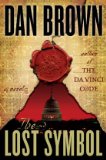
Critics' Opinion:
Readers' rating:
Published Sep 2009
528 pages
Genre: Thrillers
Publication Information
The Lost Symbol once again features Dan Brown’s unforgettable protagonist, Robert Langdon. Brown's longtime editor, Jason Kaufman, Vice President and Executive Editor at Doubleday said, "Nothing ever is as it first appears in a Dan Brown novel. This book’s narrative takes place in a twelve-hour period, and from the first page, Dan's readers will feel the thrill of discovery as they follow Robert Langdon through a masterful and unexpected new landscape. The Lost Symbol is full of surprises."
"As Browniacs have long predicted, the chase involves the secrets of Freemasonry and is set in Washington, where some of those secrets are built into the architecture and are thus hidden in plain sight....The new book clicks even if at first it looks dangerously like a clone.... The Lost Symbol manages to take a twisting, turning route through many such aspects of the occult even as it heads for a final secret that is surprising for a strange reason: It’s unsurprising. It also amounts to an affirmation of faith. In the end it is Mr. Brown’s sweet optimism, even more than Langdon's sleuthing and explicating, that may amaze his readers most." - The New York Times, Janet Maslin
"All of this is going to feel very familiar to readers of the previous Langdon books, even though Brown has shifted from foreign places to plant his thriller firmly on American soil.... Brown's narrative moves rapidly, except for those clunky moments when people sound like encyclopedias.... And yet, it's hard to imagine anyone, after reading The Lost Symbol, debating about Freemasonry in Washington, D.C., the way people did Brown's radical vision of Jesus and Mary Magdalene in Code. That book hit a deep cultural nerve for obvious reasons; The Lost Symbol is more like the experience on any roller coaster -- thrilling, entertaining and then it's over." - Los Angeles Times, Nick Owchar
"The plot of The Lost Symbol churns forward with a brutalist energy that makes character but a flesh appendage on its iron machine. It's fun, but you feel a little bruised afterward.... He's set himself a huge challenge. What he did for Christianity in Angels & Demons and The Da Vinci Code, Brown is now trying to do for America: reclaim its richness, its darkness, its weirdness. It's probably a quixotic effort, but it is nevertheless touchingly valiant. We're not just overweight tourists in T-shirts and fanny packs, he says. Our history is as sick and weird as anybody's! There's signal in the noise, order in the chaos! It just takes a degree from a nonexistent Harvard department to see it." - Time
"The downside of this not being quite the literary train wreck expected is that there is less distraction from the familiar hokum which, precisely because it is so familiar, looks ever-less like ingenious puzzle-spinning and ever-more like a wearisome party trick. Like divorce and civil war, The Da Vinci Code famously divided families. The Lost Symbol might well reunite them. They could all find it simply bland." - The Daily Telegraph (UK)
"Even after the book’s climactic showdown, you must slog through another 50-plus pages of exposition that Brown couldn’t cram into the main narrative. Sometimes it seems that authors, like their villains, don’t know when to leave well enough alone. C+" - Entertainment Weekly
This information about The Lost Symbol was first featured
in "The BookBrowse Review" - BookBrowse's membership magazine, and in our weekly "Publishing This Week" newsletter. Publication information is for the USA, and (unless stated otherwise) represents the first print edition. The reviews are necessarily limited to those that were available to us ahead of publication. If you are the publisher or author and feel that they do not properly reflect the range of media opinion now available, send us a message with the mainstream reviews that you would like to see added.
Any "Author Information" displayed below reflects the author's biography at the time this particular book was published.
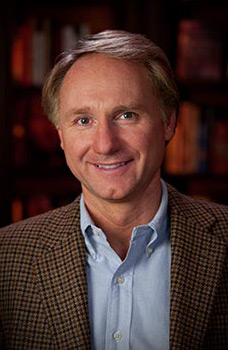
Dan Brown is the author of many bestselling novels, including
the #1 New York Times bestseller, The Da Vinci Code. He is a graduate of Amherst
College and Phillips Exeter Academy, where he spent time as an English teacher
before turning his efforts fully to writing.
In 1996, Dan’s interest in code-breaking and covert government
agencies led him to write his first novel, Digital Fortress, which quickly
became a #1 national bestselling eBook. Set within the clandestine National
Security Agency, the novel explores the fine line between civilian privacy and
national security. Brown’s follow-up techno-thriller, Deception Point,
centered on similar issues of morality in politics, national security, and
classified technology.
The son of a Presidential Award winning math ...
... Full Biography
Author Interview
Link to Dan Brown's Website

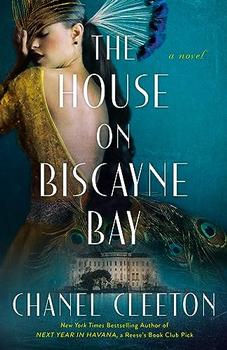
The House on Biscayne Bay
by Chanel Cleeton
As death stalks a gothic mansion in Miami, the lives of two women intertwine as the past and present collide.
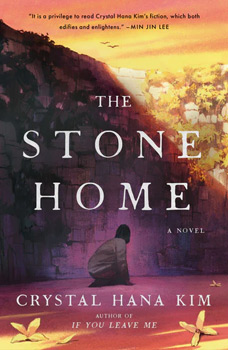
The Stone Home
by Crystal Hana Kim
A moving family drama and coming-of-age story revealing a dark corner of South Korean history.

The Funeral Cryer by Wenyan Lu
Debut novelist Wenyan Lu brings us this witty yet profound story about one woman's midlife reawakening in contemporary rural China.
Your guide toexceptional books
BookBrowse seeks out and recommends the best in contemporary fiction and nonfiction—books that not only engage and entertain but also deepen our understanding of ourselves and the world around us.