Critics' Opinion:
Readers' rating:
Published Sep 2007
736 pages
Genre: History, Current Affairs and Religion
Publication Information
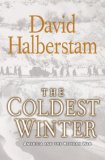
The Coldest Winter is a successor to Halberstam's The Best and the Brightest, even though in historical terms it precedes it. Halberstam considered The Coldest Winter the best book he ever wrote, the culmination of forty-five years of writing about America's postwar foreign policy.
Up until now, the Korean War has been the black hole of modern American history. The Coldest Winter changes that. Halberstam gives us a masterful narrative of the political decisions and miscalculations on both sides. He charts the disastrous path that led to the massive entry of Chinese forces near the Yalu, and that caught Douglas MacArthur and his soldiers by surprise. He provides astonishingly vivid and nuanced portraits of all the major figures -- Eisenhower, Truman, Acheson, Kim, and Mao, and Generals MacArthur, Almond, and Ridgway. At the same time, Halberstam provides us with his trademark highly evocative narrative journalism, chronicling the crucial battles with reportage of the highest order.
"Starred Review. Commanding and evocative . . . Halberstam's final work stands as the coda to his enduringly famous The Best and the Brightest.
""For anyone who aspires to a position of national leadership, no matter the circumstances of his or her birth, this book should be mandatory reading. And anyone who feels a need, as a confused former prisoner of war once felt the need, for insights into how a great and good nation can lose a war and see its worthy purposes and principles destroyed by self-delusion can do no better than to read and reread David Halberstam’s The Best and the Brightest." - from the Foreword by Senator John McCain.
"The most comprehensive saga of how America became involved in Vietnam. . . . [I]t is also The Iliad of the American empire and The Odyssey of this nation’s search for its idealistic soul." - The Boston Globe.
"Some readers may find The Coldest Winter to be something of a quagmire itself. Halberstam acknowledges in an author's note that it does not have a "linear" structure. Rather, "it takes you on its own journey, and you learn along the way. It becomes not just the story of the Chinese entering the war and what happened in those critical weeks. On the way there is a great deal of political history to be learned, all of which forms the background on both sides. And there are other battles. People kept telling me about the brutal fighting in the earlier Pusan Perimeter days, and so I had to learn about that." In the process, we reach page 395 before the weather turns cold. By then, Douglas MacArthur, for five years unanswerable to anyone as occupation boss of Japan, was running the war by remote control -- never spending, as Halberstam acidly notes, "a night in the field in Korea." He was already 70, and his willfulness was unyielding, abetted by pseudo-intelligence subserviently packaged by staff toadies in Tokyo." - The Washington Post.
This information about The Coldest Winter was first featured
in "The BookBrowse Review" - BookBrowse's membership magazine, and in our weekly "Publishing This Week" newsletter. Publication information is for the USA, and (unless stated otherwise) represents the first print edition. The reviews are necessarily limited to those that were available to us ahead of publication. If you are the publisher or author and feel that they do not properly reflect the range of media opinion now available, send us a message with the mainstream reviews that you would like to see added.
Any "Author Information" displayed below reflects the author's biography at the time this particular book was published.
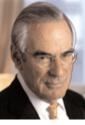
Photo by Porter Gifford
David Halberstam was one
of America's most distinguished journalists and historians, a man whose
newspaper reporting and books helped define the era we live in. He
graduated from Harvard in 1955, took his first job on the smallest daily in
Mississippi, and then covered the early civil rights struggle for the Nashville
Tennessean. He joined The New York Times in 1960, went overseas
almost immediately, first to the Congo and then to Vietnam. His early
pessimistic dispatches from Vietnam won him the Pulitzer in 1964 at the age of
thirty. Many of his books, including The Best and the Brightest, The Powers That Be, The Reckoning, and The Fifties,
have been national bestsellers.
Over the years, he developed a pattern of alternating a book with a weighty
theme with one that ...
Name Pronunciation
David Halberstam: dayvid HAL-buhr-STAM

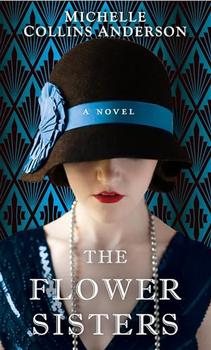
The Flower Sisters
by Michelle Collins Anderson
From the new Fannie Flagg of the Ozarks, a richly-woven story of family, forgiveness, and reinvention.
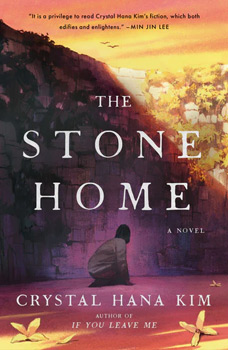
The Stone Home
by Crystal Hana Kim
A moving family drama and coming-of-age story revealing a dark corner of South Korean history.
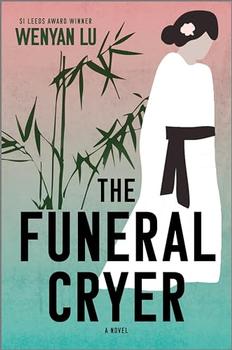
The Funeral Cryer by Wenyan Lu
Debut novelist Wenyan Lu brings us this witty yet profound story about one woman's midlife reawakening in contemporary rural China.
Your guide toexceptional books
BookBrowse seeks out and recommends the best in contemporary fiction and nonfiction—books that not only engage and entertain but also deepen our understanding of ourselves and the world around us.